








Gilt Chinoiserie Coffee Table
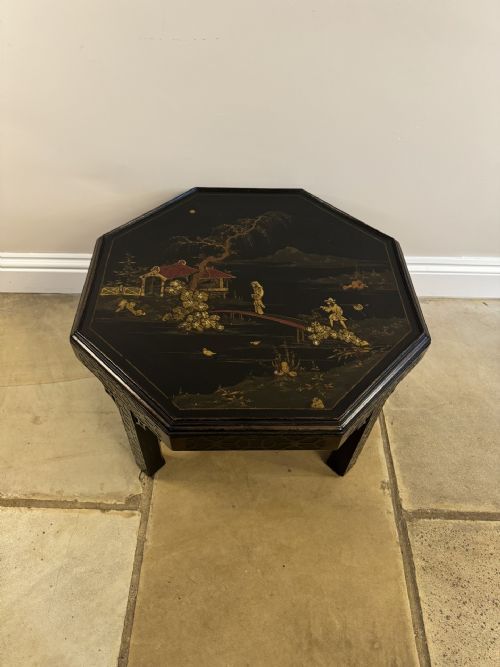
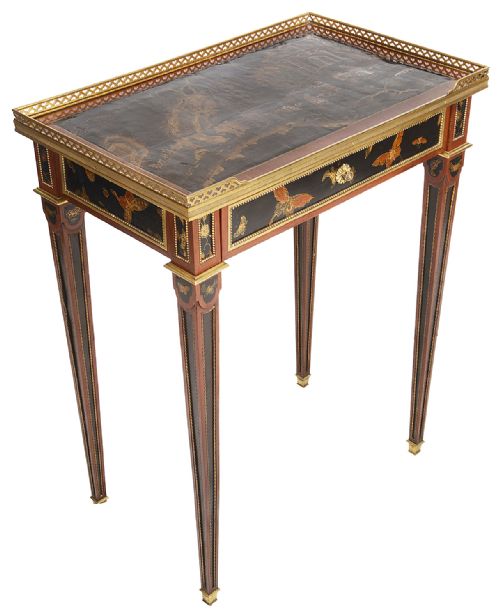
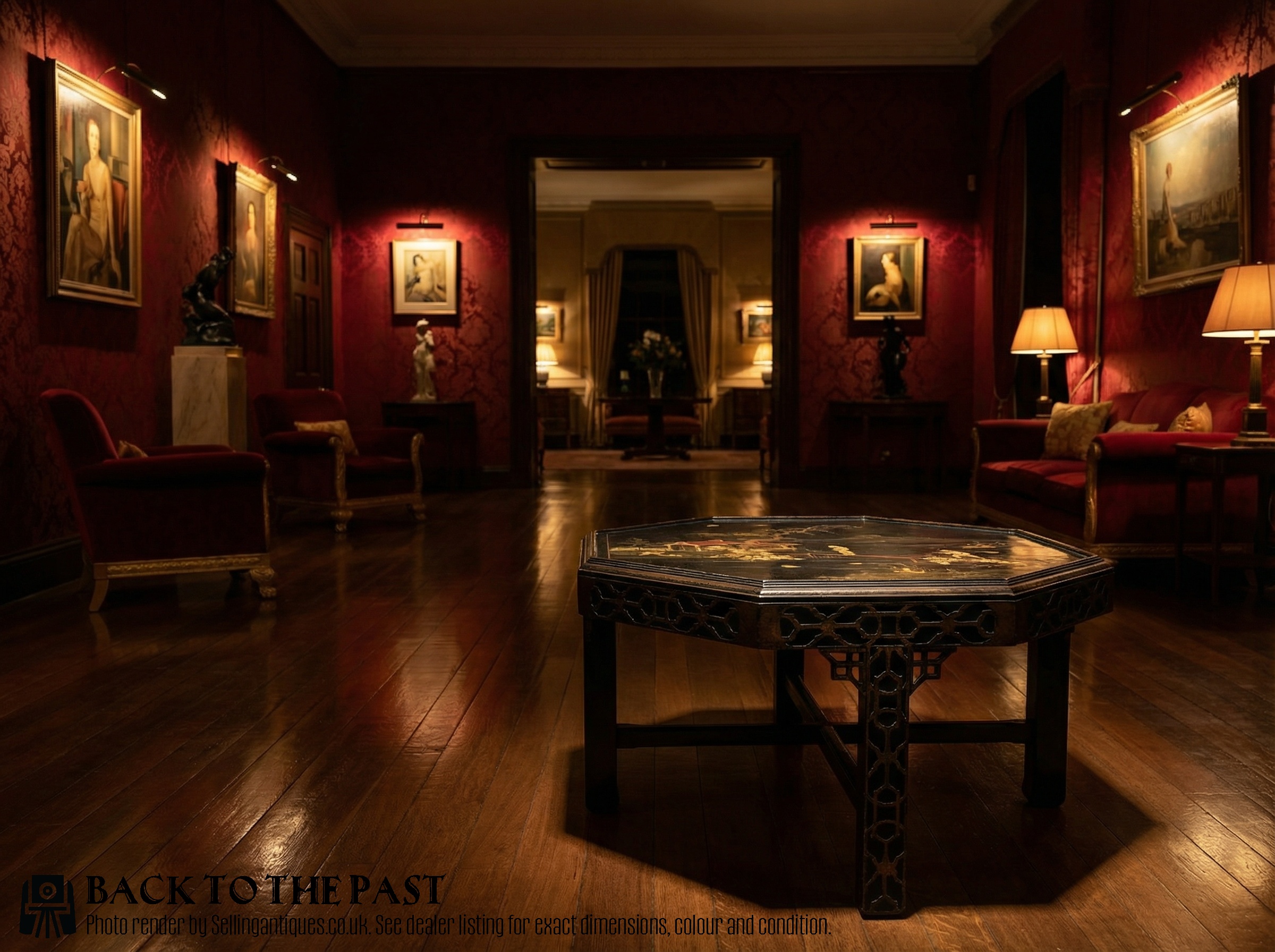
A gilt chinoiserie coffee table brings hand-painted lacquer, gold leaf and low lines into a room, offering a decorative surface that grounds a seating area.
Gilt Chinoiserie Coffee Table
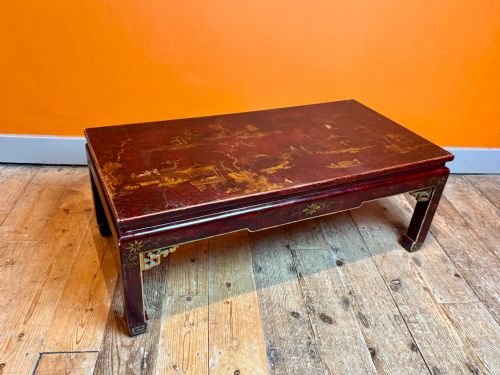
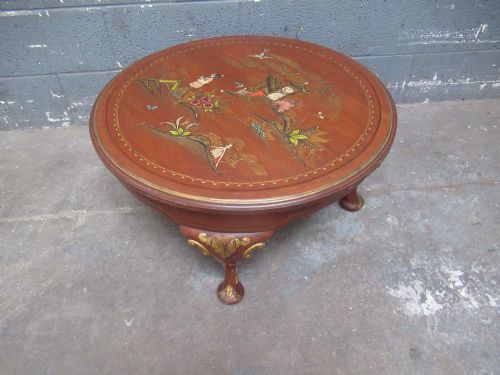
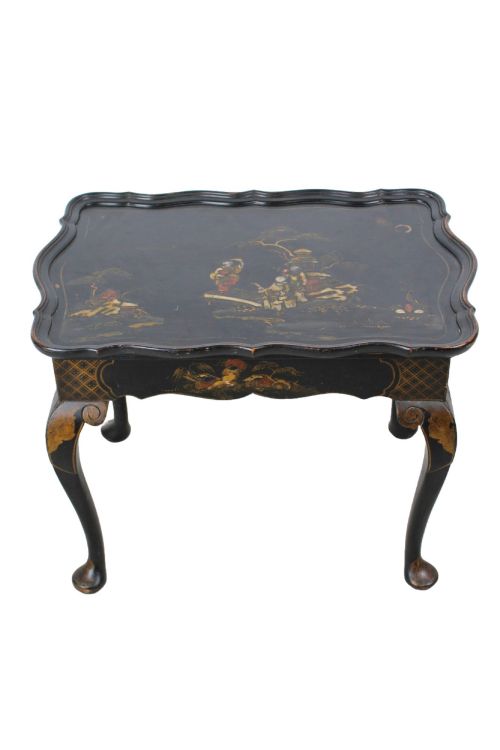
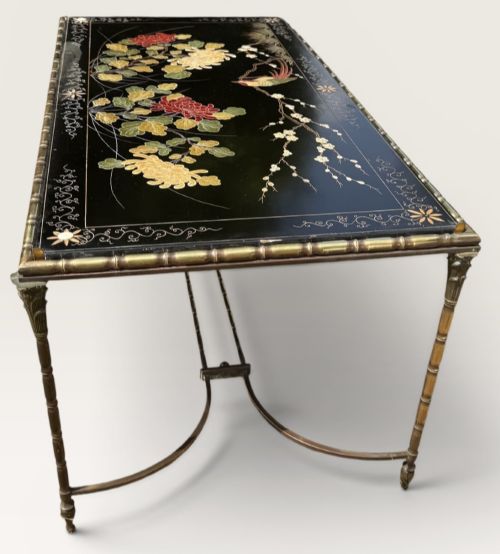
When you search for a gilt chinoiserie coffee table, you are looking at low tables and tray tables adapted from earlier serving trays and occasional pieces. The selection spans the nineteenth century through to the 1930s, taking in Victorian, Edwardian and mid-century French interpretations. You will find square, circular and rectangular formats, along with nests of tables.
The version you are most likely to meet on this page is a nineteenth-century papier-mâché or wooden tray mounted on a low stand, decorated with gold motifs on a dark ground. Edwardian and 1930s examples also appear frequently, often featuring black lacquer and raised relief work.
How they were made
The primary materials recorded in these listings are wood, papier-mâché, lacquer and brass, finished with gold leaf, gilt paint or soapstone. Makers built the surfaces from layered paper pulp or timber before applying dark lacquer coats.
Artisans applied gilt decoration by hand, sometimes building up raised relief details to give depth to the figures and landscapes. Trays were frequently made to lift off their folding or fixed stands for dual utility.
Gilt Chinoiserie Coffee Table Retail Price Guide 2026
Typical asking prices for gilt chinoiserie coffee table among the pieces listed under this phrase on Sellingantiques today, from the lower quarter to the upper quarter. They describe what is for sale here now, not the wider market.
Listings span the nineteenth century through to the 1930s, incorporating Victorian, Edwardian and mid-century French periods.
What varies in quality
Quality rests in the crispness of the hand-painted gold detail and the depth of the lacquer finish. Superior pieces exhibit finely rendered figures and landscapes that retain their definition across the entire surface.
The integrity of the papier-mâché or wood substrate and the stability of the stand separate finer examples from standard production. Original stands and intact gilt paint command attention.
Maison Bagues
The Gilt Chinoiserie Coffee Table Glossary
- Chinoiserie
- European decorative art influenced by Chinese artistic traditions, typically featuring imaginary landscapes, figures and pavilions.
- Papier-mâché
- A composite material made from paper pulp mixed with glue and resin, pressed and dried to form strong, smooth trays.
- Lacquer
- A durable resin finish applied in multiple layers and polished to a hard, glossy surface.
- Gilt
- Covered thinly with gold leaf or gilt paint to create a metallic decorative effect.
- Tray table
- A removable serving tray supported by a folding or fixed wooden stand.
Gilt Chinoiserie Coffee Table: Frequently Asked Questions
Are these trays removable from their stands?
Many of the tray tables feature loose trays that lift completely off their folding or fixed wooden bases, reflecting their origins as serving items.
Other examples are built as fixed coffee tables where the top is secured directly to the frame.
How do I date a papier-mâché tray?
Nineteenth-century pieces often utilise pressed papier-mâché bases with hand-applied lacquer and gilt, showing distinct wear patterns.
Edwardian and later twentieth-century pieces tend to use solid wood substrates alongside updated lacquer techniques.
Can I use a tray table for daily drinks?
These tables function well for everyday placement of books and cups, provided you protect the lacquer surface from excessive moisture and heat.
Using coasters helps preserve the original gold leaf and painted details over time.
What is the difference between Victorian and Edwardian pieces?
Victorian examples heavily favour papier-mâché construction with dense floral and figural chinoiserie motifs on black grounds.
Edwardian interpretations lean towards lighter wooden frames and nests of tables finished with simplified gilt decoration.