


Oriental Hall Console Table
An oriental hall console table brings structural form and cultural heritage to an entranceway, offering a surface grounded in centuries of Asian cabinet-making.
Oriental Hall Console Table
An oriental hall console table is primarily found in forms derived from altar tables, side tables, and writing desks originating across China, Tibet, and Burma. These pieces date predominantly from the nineteenth century, alongside examples from the eighteenth century, nineteen-hundreds, Edwardian period, and nineteen-twenties.
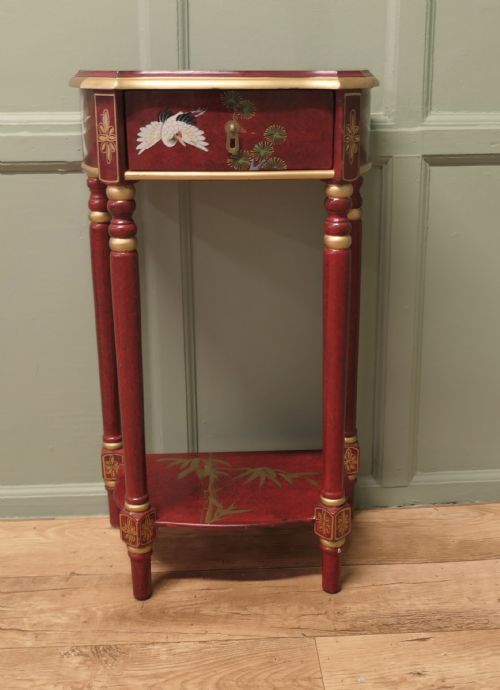
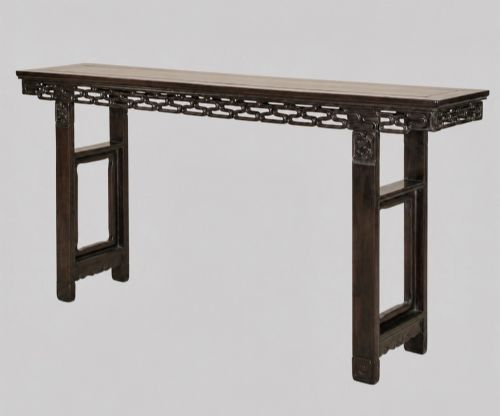
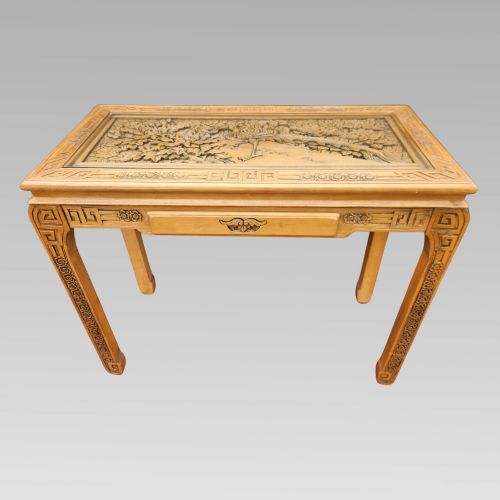
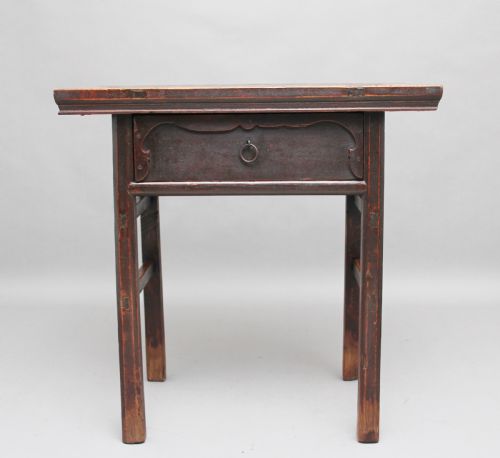
Buyers meet variations ranging from long altar tables and carved hardwood consoles to red lacquered demi-lune tables, bamboo half-moon tables, and elm side tables. Many display styles rooted in Qing Dynasty design, Chinoiserie, Chinese export, and provincial traditions.
These tables function effectively in modern hallways as narrow display surfaces or functional writing desks, bridging traditional craftsmanship with domestic utility.
How they were made
Cabinet-makers relied heavily on native timbers such as elm, hardwood, rosewood, and Hongmu, alongside bamboo for specific half-moon frames. These dense woods provided the structural integrity required for long altar tables and heavy side tables.
Surface decoration frequently incorporated red or black lacquer finishes, sometimes paired with inset glass or marble tops to create contrasting textures. Artisans also applied detailed carving techniques to depict motifs such as dragons and traditional ornamentation.
Materials recorded across the inventory include marble, brass, and glass alongside red and black lacquered wood.
What varies in quality
Quality rests upon the selection and stability of the timber, distinguishing dense native hardwoods and well-seasoned elm from softer, less durable substitutes. The crispness and depth of hand-carved detailing across aprons and legs further separate standard utility pieces from finer decorative works.
The integrity of the original lacquer, brass fittings, and marble or glass inserts dictates the overall preservation of the piece. Surfaces retaining their authentic finish and patination demonstrate superior craftsmanship compared to heavily altered or over-restored examples.
The Oriental Hall Console Table Glossary
- Altar table
- A traditional rectangular piece featuring upturned ends or elaborate carved aprons, originally designed for ritual use before adapting to domestic halls.
- Demi-lune
- A half-moon shaped table designed to sit flat against a wall, frequently found in pairs or as card tables within the selection.
- Hongmu
- A category of dense, dark Asian hardwood prized for its weight, strength, and suitability for traditional carved furniture.
- Lacquer
- A protective and decorative coating derived from tree sap, applied in multiple layers and polished to a smooth red or black finish.
- Chinoiserie
- A European artistic style reflecting Chinese aesthetic influences, often applied to decorative console and side tables.
Oriental Hall Console Table: Frequently Asked Questions
What is an oriental hall console table?
An oriental hall console table is a narrow surface derived from traditional altar tables, side tables, and writing desks originating in China and neighbouring regions. These pieces are designed to fit against entranceway walls while displaying distinct regional styles and timbers.
They combine functional surface space with decorative craftsmanship, utilising woods like elm and hardwood alongside traditional lacquer finishes.
How were these tables used originally?
Many examples began as altar tables utilised for domestic or ceremonial displays, whilst others served as writing desks, side tables, or occasional furniture. Their elongated proportions and sturdy construction made them adaptable for various rooms within traditional households.
Over time, these forms transitioned into domestic hallways and living spaces for decorative placement and storage.
How do I style a console table in a hallway?
A console table works well placed flat against an entryway wall, serving as a drop-zone for daily items or a foundation for lamps and decorative objects. Pairing the table with a mirror or placing a pair of demi-lune tables together creates a balanced focal point.
Selecting a piece with drawers provides hidden storage while maintaining a clean surface line.
How do I identify nineteenth-century Chinese furniture?
Nineteenth-century pieces often display traditional joinery methods executed in dense hardwoods, elm, or Hongmu without reliance on modern metal fasteners. Stylistic markers include Qing Dynasty carving motifs, red or black lacquer applications, and altar table proportions.
Examining the natural wear and patination across the timber helps distinguish nineteenth-century examples from later twentieth-century reproductions.