






Oriental Decorative Charger Plate
An oriental decorative charger plate brings bold colour and intricate hand-painted detail to a room, offering a striking centrepiece for display.
Oriental Decorative Charger Plate
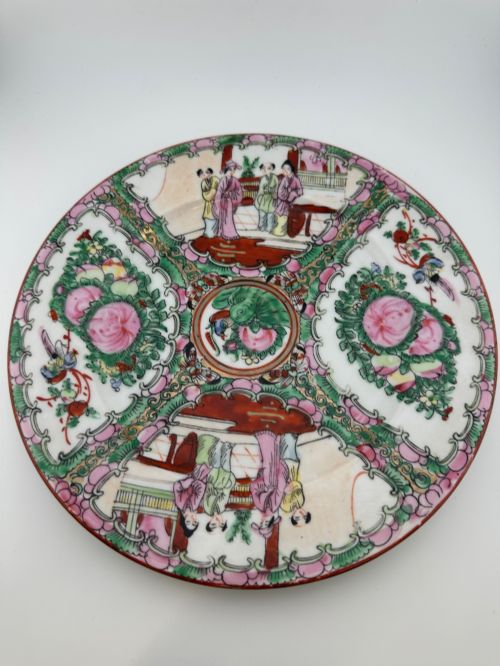
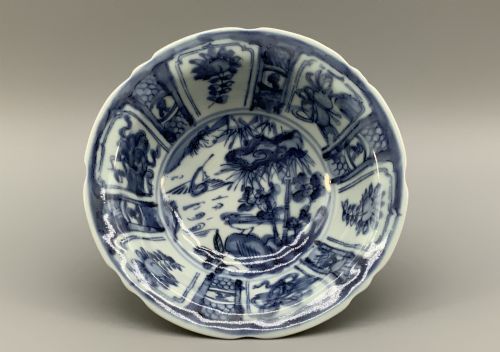
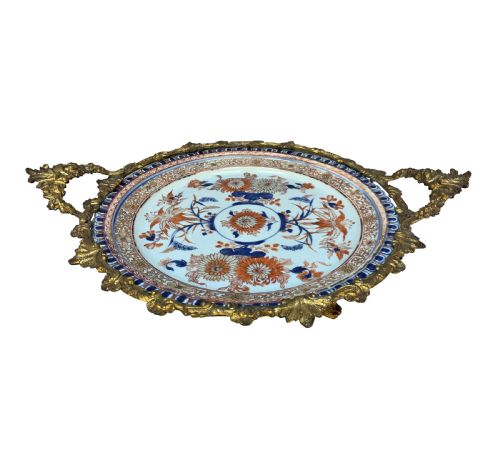
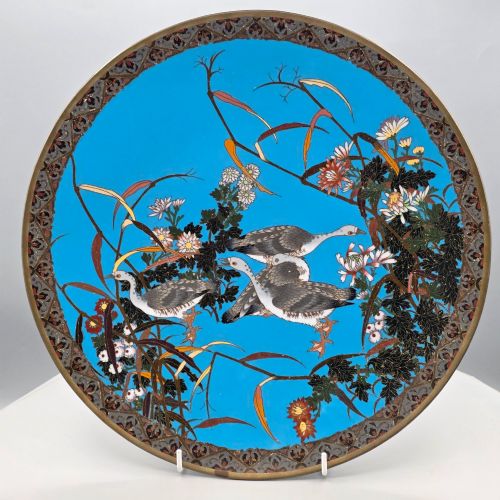
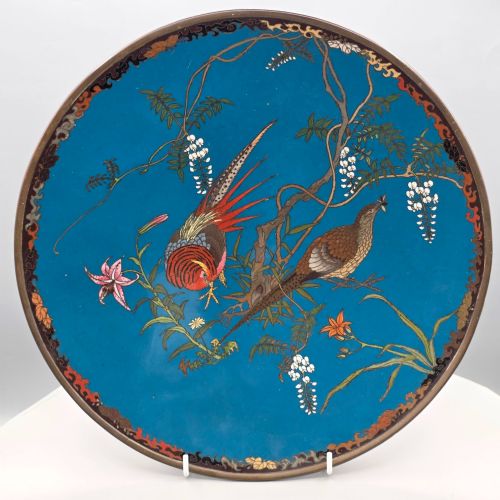
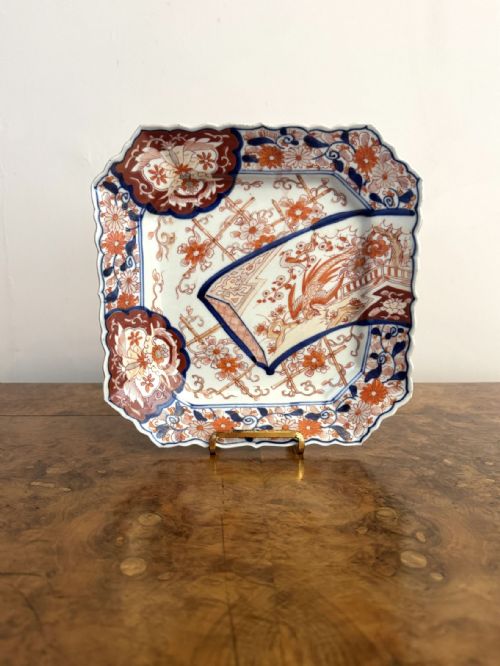
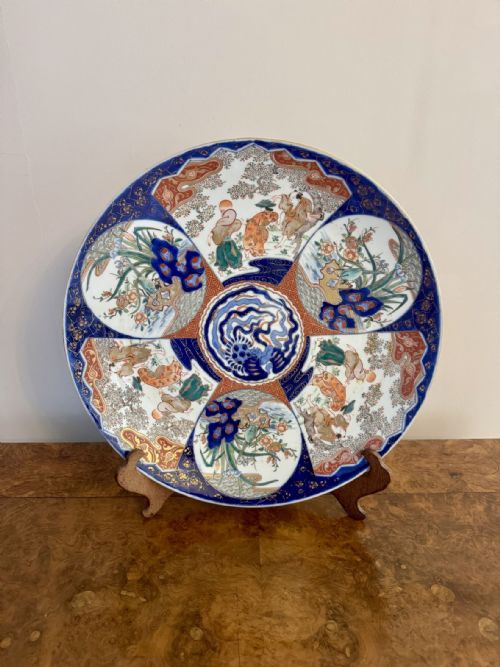
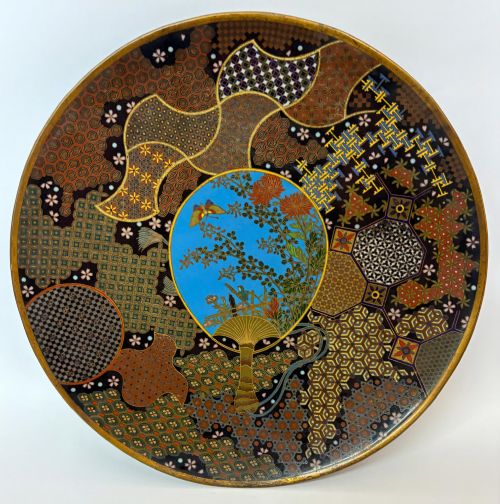
An oriental decorative charger plate encompasses large display dishes and trays originating from Japan and China, spanning periods from the eighteenth century through to the early twentieth century. The selection found here relies heavily on Japanese Imari porcelain, Satsuma ware, and detailed cloisonne enamel pieces dating predominantly from the Meiji period.
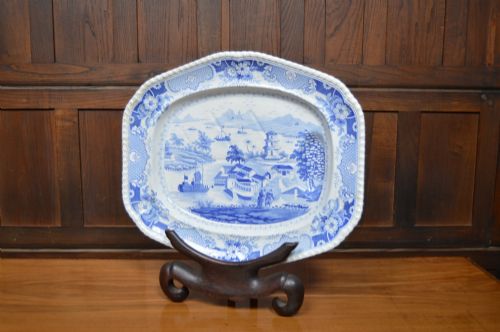
These substantial plates and chargers served primarily for visual display rather than dining, utilising expansive surfaces to showcase elaborate floral patterns, birds, dragons, and landscapes. Collectors encounter round, square, octagonal, and scalloped forms created for export and domestic markets alike.
How they were made
Porcelain examples utilise high-fired clay bodies finished with cobalt blue underglaze, enamel overglazes, and occasional gilt highlights applied by hand. Cloisonne pieces employ fine copper or brass wire soldered to a metal base to form cells, which are subsequently filled with coloured enamel paste and fired.
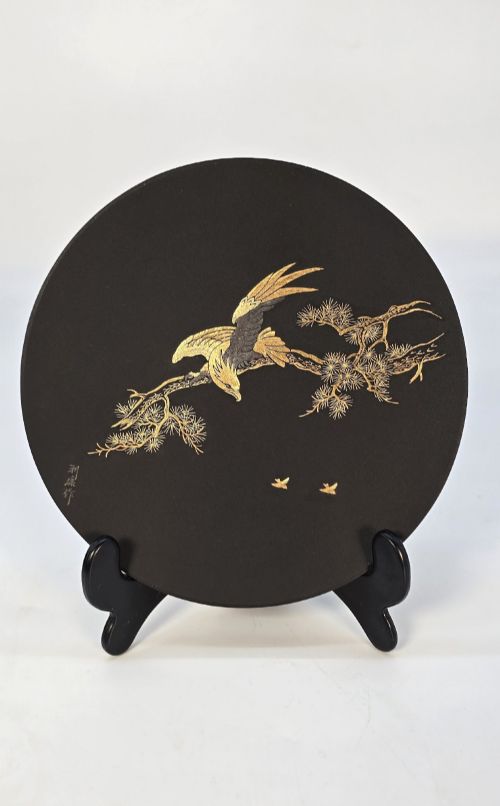
Metal items incorporate patinated iron or bronze foundations enhanced with meticulous gold and silver inlay work. Artisans combined traditional ceramic throwing, moulding, and cloisonne techniques to achieve durable yet highly decorative surfaces.
Listings feature items from the eighteenth century, the Victorian era, and the Meiji period, executed in porcelain, cloisonne enamel, and patinated iron.
What varies in quality
The refinement of the hand-painted or enamelled design dictates the standing of each piece, distinguishing hurried production from careful artistry. Precision in wirework alignment on cloisonne chargers and depth of pigment saturation on porcelain plates reveal the skill of the original workshop.
Intricacy of subject matter, such as multi-layered compositions featuring fauna or auspicious symbols, separates standard decorative wares from master-level creations. Preservation of original gilding and enamel integrity further defines the distinction between average and exceptional specimens.
The Oriental Decorative Charger Plate Glossary
- Charger
- A large decorative plate intended for display rather than practical dining use. These substantial dishes dominate cabinet shelves and wall mounts.
- Imari
- A traditional style of Japanese porcelain featuring distinct cobalt blue and iron red decoration, frequently enriched with gold. The palette remains instantly recognisable across various production periods.
- Cloisonne
- An enamel technique where metal wires form small compartments on a copper or brass body to hold coloured glass paste before firing. This method creates vibrant, patterned surfaces.
- Satsuma
- A type of Japanese earthenware characterised by a pale, ivory-coloured cracked glaze and intricate polychrome enamel painting. Pieces often incorporate raised gilt details known as moriage.
- Meiji Period
- The era of Japanese history spanning from eighteen sixty-eight to nineteen twelve, noted for exceptional craftsmanship and the opening of trade with the West. Items from this time display remarkable technical ambition.
Oriental Decorative Charger Plate: Frequently Asked Questions
How do I tell Japanese Imari from Chinese export porcelain?
Japanese Imari typically displays a heavier body with a dense palette of cobalt blue, iron red, and abundant gold highlights. The decorative motifs often feature complex floral and panel designs unique to Japanese traditions.
Chinese export porcelain of comparable periods often employs lighter porcelain bodies and distinct blue and white or famille rose colourways. Examining the paste, weight, and specific pigment tones helps clarify the origin.
What is the difference between cloisonne and porcelain chargers?
Cloisonne chargers utilise a metal base, usually copper or brass, with soldered wire partitions holding coloured enamel pastes. This creates a tactile, metallic-veined surface with a smooth, vitreous finish.
Porcelain chargers start as fired ceramic clay painted with cobalt or enamel pigments beneath or over a transparent glaze. They present a smooth, ceramic exterior without metal wire boundaries.
How should I display a heavy charger plate safely?
Due to their substantial weight and size, these plates require robust support systems such as heavy-duty wall brackets or secure, deep plate stands. Placement should avoid high-traffic areas where accidental knocks might occur.
Ensuring the mounting hardware grips the rim securely protects the piece from slipping. Direct sunlight should also be avoided to preserve the vibrancy of enamel and gilt finishes.