


Oriental Cloisonne Plate
An oriental cloisonne plate brings intricate metalwork and vibrant enamels into a room, offering a rich piece of nineteenth-century craftsmanship.
Oriental Cloisonne Plate
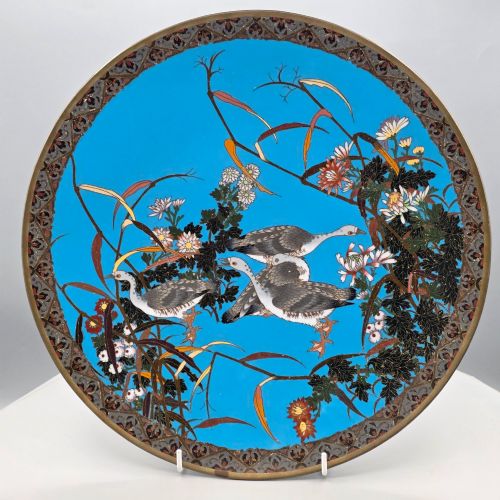
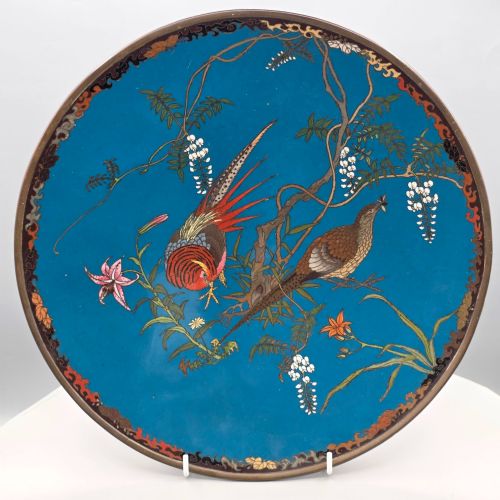
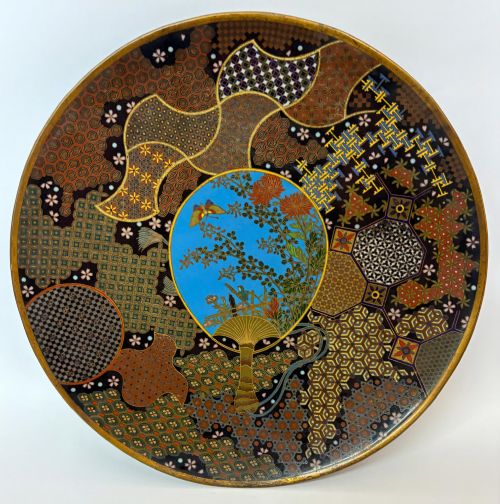
When you search for an oriental cloisonne plate, you encounter decorative chargers, trays, and plaques originating primarily from Japanese Meiji and Edo periods, alongside Qing Dynasty examples.
The most common forms on this page are large chargers and medium plates depicting nature scenes with birds, fish, dragons, and auspicious symbols.
Pieces range from compact dishes measuring thirty-one centimetres to massive chargers spanning fifty centimetres, often shaped as circles, squares, or octagons.
How they were made
Artisans formed vessels from copper, bronze, or brass bodies, applying thin brass or copper wire to map intricate surface designs.
Coloured enamel paste filled the cells created by the wire framework before firing and polishing produced a smooth, gleaming finish.
Certain examples utilise totai shippo techniques, incorporating a transparent base over a translucent core or simulating textures like tree bark.
A solitary frog occasionally joins butterflies and chrysanthemums on the wirework surface.
What varies in quality
Quality rests in the precision of the wirework and the complexity of the subject, where tighter cellular grids and detailed iconography elevate a piece.
Subtlety in enamel shading and the flawless execution of challenging subjects like leaping koi, dragons, or human figures distinguish finer examples from standard decorative items.
Kinkozan
The Oriental Cloisonne Plate Glossary
- Cloisonne Enamel
- A metalwork technique where thin wire partitions hold coloured glass pastes before firing. This method defines the primary surface texture of every piece.
- Charger
- A large decorative plate intended for display rather than dining. These items form the majority of the larger scale listings.
- Meiji Period
- A Japanese historical era lasting from eighteen sixty-eight to nineteen twelve. Many of the most intricate plates originate from this timeframe.
- Totai Shippo
- A wire-based enamelling method that removes the opaque metal backing to let light pass through parts of the design. It creates a translucent effect.
- Ho-o Bird
- A mythical Chinese and Japanese phoenix frequently depicted among floral motifs. The symbol appears widely across chargers and plaques.
Oriental Cloisonne Plate: Frequently Asked Questions
How were these plates displayed originally?
These decorative chargers and plaques were primarily manufactured for display on walls, cabinets, or stands rather than everyday domestic utility. Their generous scale and detailed motifs suited formal interiors.
Collectors today continue this tradition by mounting large chargers on sturdy plate stands or hanging plaques securely on walls to showcase the metalwork.
What subjects appear on these plates?
Motifs drawn from the natural world dominate the surface designs, featuring birds such as geese, owls, ibis, and phoenixes alongside koi fish, dragons, and butterflies.
Other examples incorporate landscape views featuring Mount Fuji or panels filled with traditional auspicious symbols and samurai figures.
How do I distinguish Edo and Meiji pieces?
Pieces attributed to the late Edo period often display robust proportions and heavy bronze or copper bodies with bold subject matter like large dragons or leaping koi.
Meiji period items frequently demonstrate finer wirework, tighter cellular patterns, and varied enamel palettes depicting detailed landscapes or flora.
Can I clean an enamel plate safely?
Maintenance requires only gentle dusting with a soft, dry cloth to protect the polished metal wires and vitreous enamel surfaces from abrasive damage.
Liquid cleaners, water immersion, and harsh chemicals should be avoided entirely to preserve the historic finish of the copper, brass, and enamel.