






Oriental Carved Tripod Table
An oriental carved tripod table brings intricate Far Eastern craftsmanship and rich timber into a room, offering both a sturdy surface and a focal point.
Oriental Carved Tripod Table
When you search for an oriental carved tripod table, you encounter small occasional surfaces produced across the nineteenth and early twentieth centuries. These pieces display distinct regional aesthetics spanning Chinese, Japanese, Indian, and Burmese workshops.
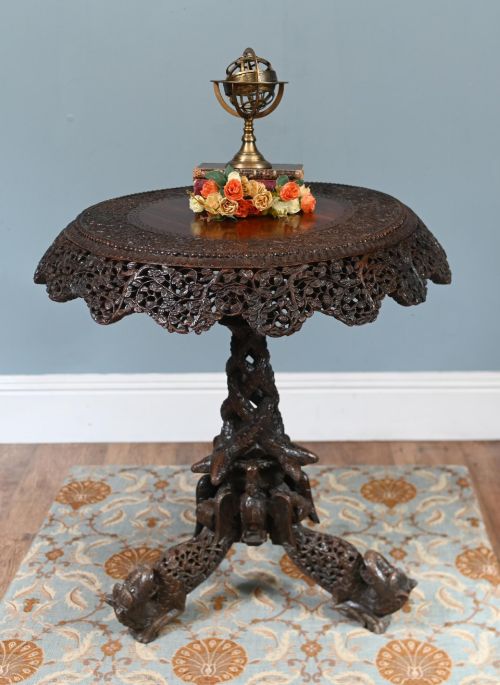
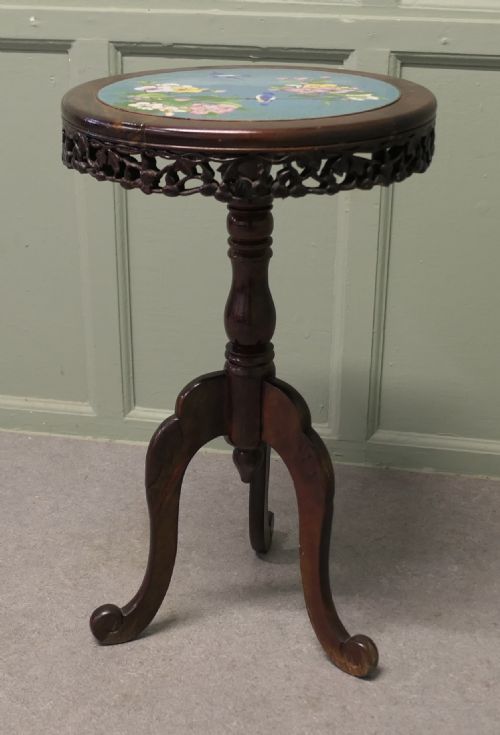
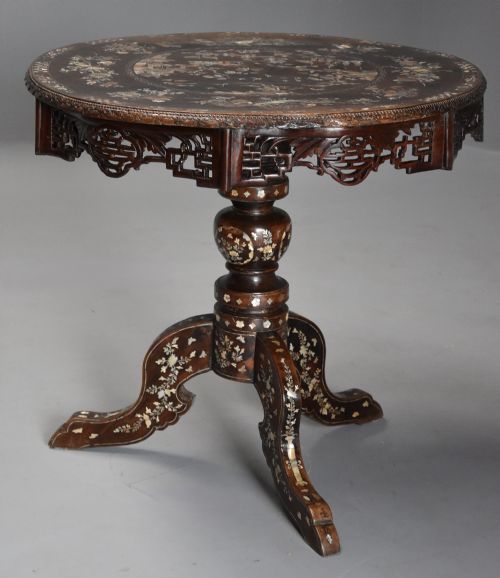
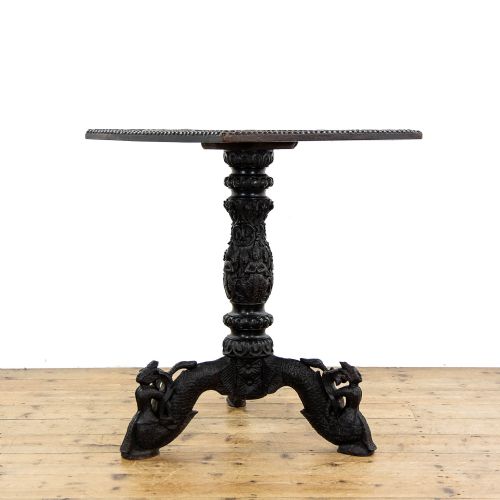
The most frequent examples on this page take the form of side tables and centre tables featuring circular tops supported by three legs. Hardwoods dominate the selection, often complemented by intricate relief carving depicting dragons, foliage, or animal motifs.
Materials and construction methods
Cabinetmakers utilised dense tropical timbers such as teak, rosewood, and padauk to provide a stable foundation for deep chisel work. These heavy woods permitted high levels of detail without compromising structural integrity.
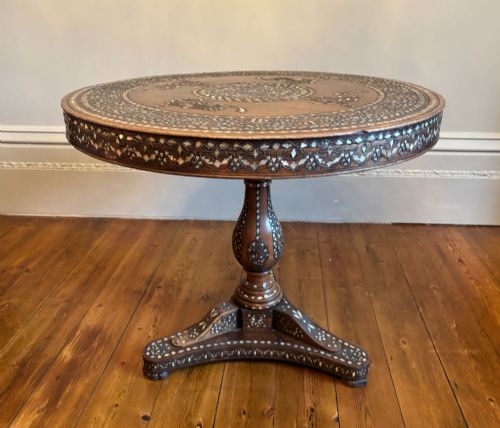
Surface decoration frequently incorporated specialised techniques, including bone inlay, mother of pearl embellishment, and inset marble or cloisonne enamel panels. Joinery relied on traditional framing methods suited to the expansion properties of exotic hardwoods.
Oriental Carved Tripod Table Retail Price Guide 2026
Typical asking prices for oriental carved tripod table among the pieces listed under this phrase on Sellingantiques today, from the lower quarter to the upper quarter. They describe what is for sale here now, not the wider market.
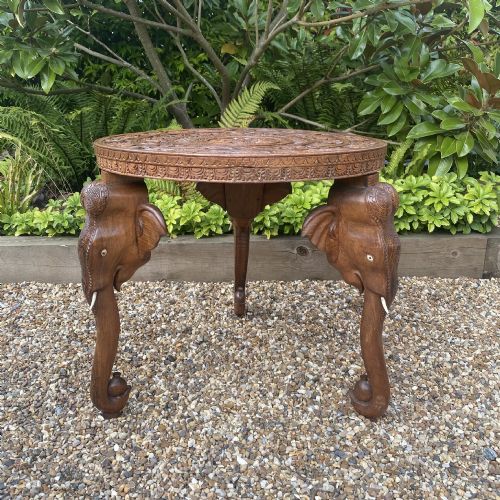
Several nineteenth-century examples incorporate carved elephant heads directly into the pedestal structure.
Distinguishing quality in carving and design
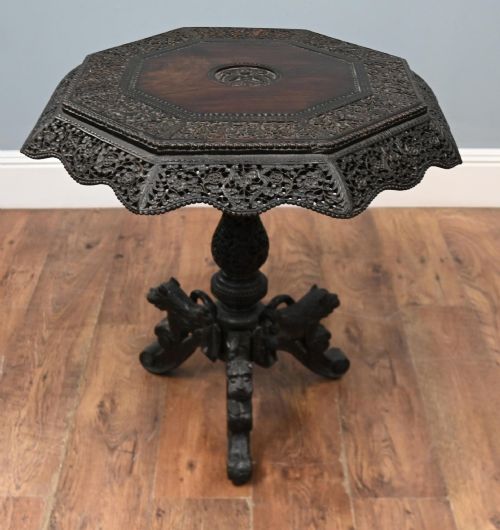
The standard of a piece rests largely on the depth and crispness of the hand carving rather than the mere presence of decoration. Superior examples display undercut details and expressive figures that maintain proportion across the entire frame.
Material selection and structural harmony also separate standard production from exceptional work. Tables integrating secondary elements like glazed cinnabar or precise cloisonne panels demonstrate greater ambition from the maker.
The Oriental Carved Tripod Table Glossary
- Tripod table
- A small freestanding table supported by three legs radiating from a central pillar. This format remained popular for occasional and tea tables throughout the nineteenth century.
- Tilt top table
- A table designed with a mechanism allowing the surface to fold vertical when not in use. This feature saved space in period domestic interiors.
- Cloisonne enamel
- A decorative metalwork technique where enamel paste fills compartments wired to a metal base. These panels occasionally form the central inset of table tops.
- Hardwood
- Dense timber derived from broad-leaved trees, including teak, rosewood, and padauk. These woods resisted heavy carving damage and supported intricate designs.
- Chinoiserie
- European artistic styles reflecting Chinese motifs and decorative patterns. Items of this aesthetic frequently appeared in British homes during the nineteenth and early twentieth centuries.
Oriental Carved Tripod Table: Frequently Asked Questions
How were these tables used originally?
Households utilised these small surfaces for serving tea, displaying ornaments, or holding lamps in reception rooms. Their compact size allowed them to move easily around domestic spaces.
Tilt-top variants offered the added benefit of folding away against a wall when floor space was required.
How do I care for a hardwood table?
Keep the timber away from direct heat sources and strong sunlight to prevent the wood from drying out or splitting. Dust the carved recesses regularly with a soft brush.
Apply a traditional wax polish sparingly to maintain the sheen of rosewood, teak, or padauk without building up heavy residue.
How can I tell the regional origin?
Regional origins emerge through distinct motifs and timber choices, such as dragon carvings on Chinese rosewood or elephant imagery on Anglo-Indian padauk. Inset materials like cloisonne enamel often point towards Japanese workshops.
Examining the underlying construction methods helps separate British colonial interpretations from pieces made directly for export markets.