

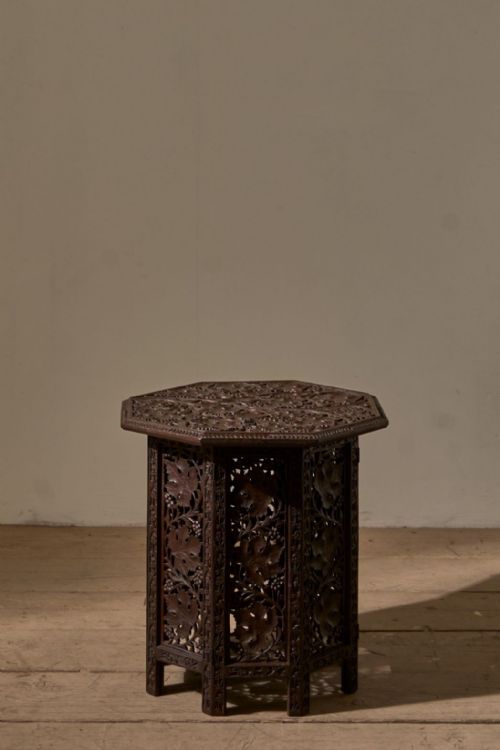
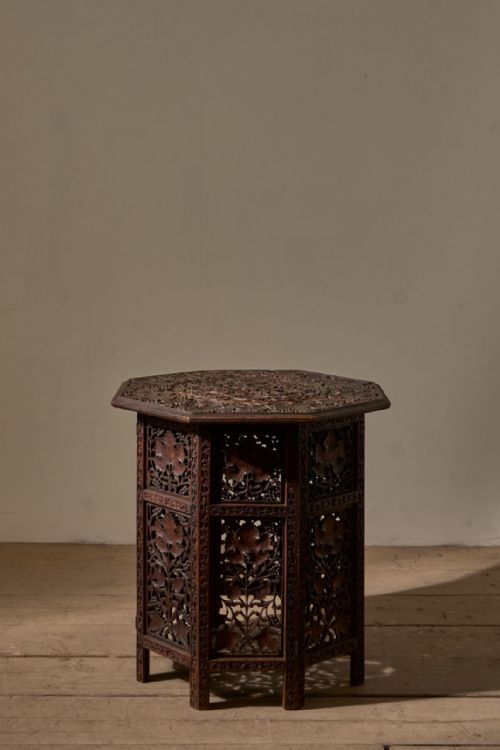


Carved Padauk Side Table
A carved padauk side table brings dense tropical timber and intricate colonial or export carving into a room, offering both sturdy function and exceptional craftsmanship.
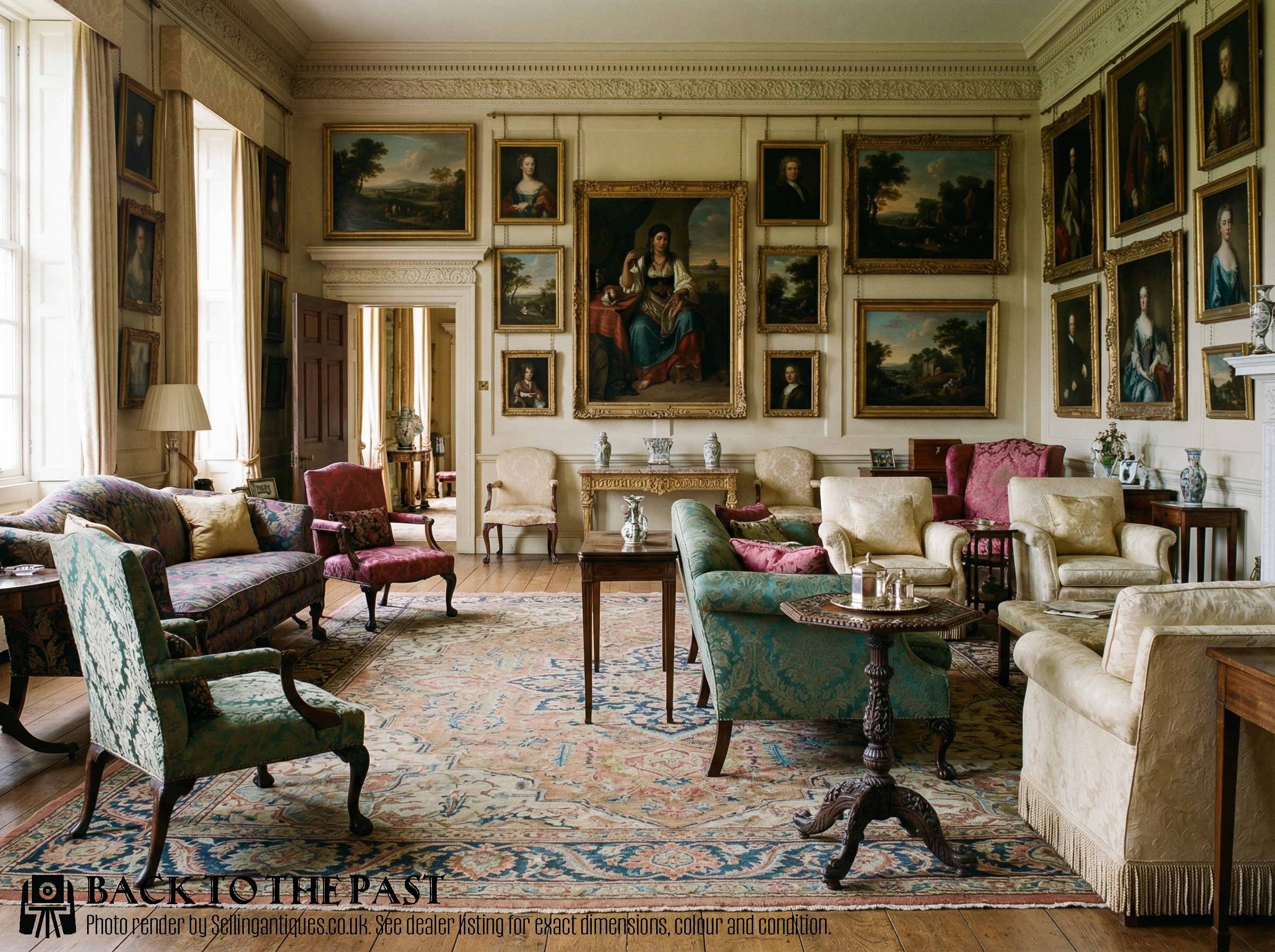
Carved Padauk Side Table
When you search for a carved padauk side table, you encounter nineteenth-century pieces shaped by Anglo-Indian, Anglo-Burmese, North Indian, and Chinese Export traditions. These objects encompass side tables, console tables, occasional tables, buffets, and plant stands produced across the Victorian era.
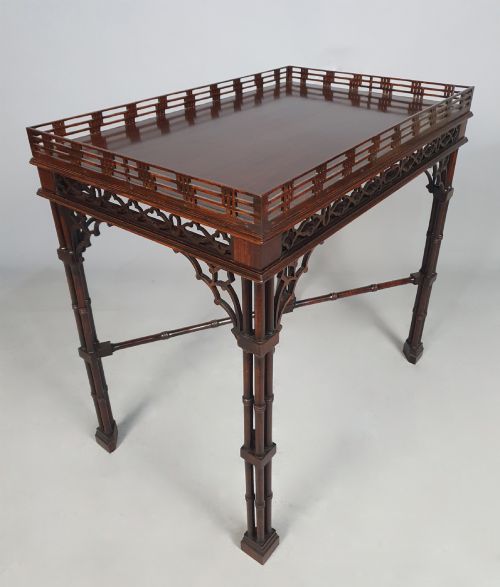
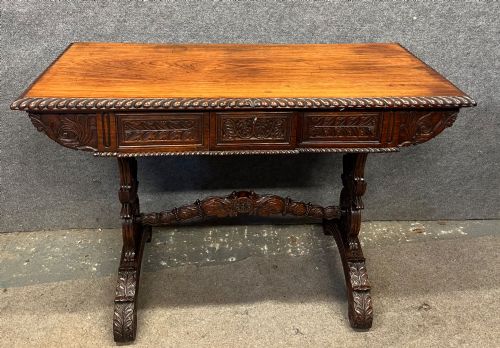
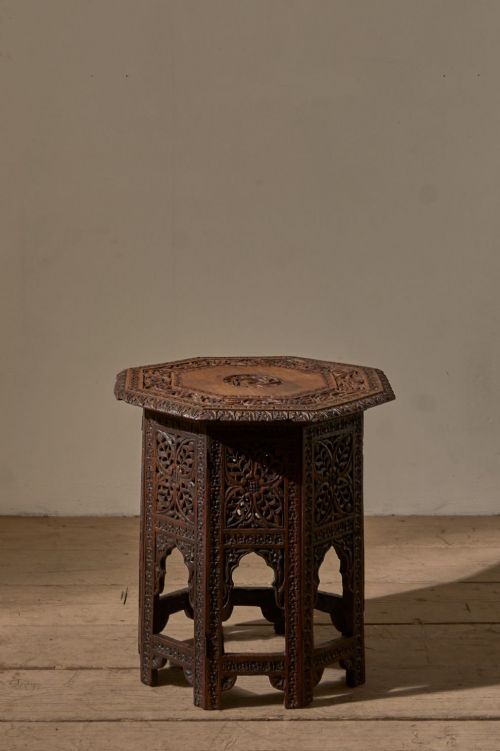
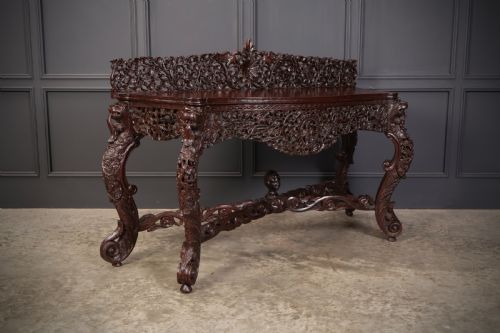
The most common examples on this page are nineteenth-century Anglo-Indian side tables featuring dense surface ornamentation such as leaf designs and dragon motifs. You will also find variations including marble-topped surfaces, three-tier buffets, and collapsible occasional tables designed for portability.
Originating from distant workshops during the nineteenth century, these tables serve as functional furniture and decorative statements. Their forms range from circular occasional pieces to large console tables and heavy buffets.
How they were made
Cabinetmakers utilised heavy tropical hardwoods like padauk wood and teak, which provide the dense foundation necessary for deep relief carving. These timbers naturally resist wear while offering a rich, dark grain that takes intricate chisel work exceptionally well.
Many examples incorporate contrasting materials, pairing the carved hardwood frames with inset marble tops, brass fittings, or delicate bone inlay. Joinery techniques varied from rigid construction to clever collapsible designs that allowed colonial tables to fold flat.
Carved Padauk Side Table Retail Price Guide 2026
Typical asking prices for carved padauk side table among the pieces listed under this phrase on Sellingantiques today, from the lower quarter to the upper quarter. They describe what is for sale here now, not the wider market.
Materials recorded on this page include padauk wood, teak, brass, marble, and bone inlay.
What varies in quality
The distinction between ordinary and superior pieces lies entirely in the depth and precision of the carving across the padauk wood. Master carvers achieved crisp undercut foliage, expressive animal motifs, and balanced proportions that elevate the furniture beyond basic utilitarian objects.
Material selection also dictates overall quality, particularly where secondary elements like marble inserts, bone inlay, or brass hardware are integrated. Pieces that retain their original structural integrity alongside crisp, deep surface decoration represent the upper echelon of nineteenth-century export production.
The Carved Padauk Side Table Glossary
- Padauk wood
- A heavy, durable tropical hardwood with a deep reddish-brown colour. It provides the dense structural base required for intricate nineteenth-century relief carving.
- Anglo-Indian
- A descriptive term for furniture made in India during the British colonial period, combining traditional local craftsmanship with European forms. These pieces often feature dense botanical or mythical carvings.
- Console table
- A wall-mounted or freestanding table designed to sit flat against a vertical surface. In nineteenth-century export furniture, these often featured heavy carving and substantial proportions.
- Occasional table
- A small, movable table intended for flexible use around a room. The archive and current listings include folding or collapsible variations suited for easy transport.
- Bone inlay
- A decorative technique where small pieces of bone are set flush into the wooden surface. This method creates contrasting geometric or floral patterns against dark tropical timber.
Carved Padauk Side Table: Frequently Asked Questions
What is a padauk side table?
A padauk side table is a nineteenth-century piece of furniture fashioned from dense tropical hardwood and finished with deep relief carving. These items typically originate from colonial or export workshops in India, Burma, and China.
They function as versatile display surfaces while showcasing intricate botanical motifs, mythical creatures, or geometric designs characteristic of nineteenth-century craftsmanship.
How do I date a carved table?
Dating these tables relies on examining the timber species, construction methods, and stylistic markers recorded across the nineteenth century. Periods span from the mid-Victorian decades up to eighteen-ninety.
Details such as collapsible folding mechanisms, marble tops, and specific regional carving styles help narrow down the production era to particular decades within the nineteenth century.
Where were these tables made?
These tables were produced in diverse overseas workshops responding to British and international export markets during the nineteenth century. Common stylistic origins include Anglo-Indian, Anglo-Burmese, and Chinese Export traditions.
Local artisans utilised indigenous padauk wood and teak, combining native woodworking skills with European furniture forms like console tables, buffets, and occasional stands.
How should I care for padauk wood?
Padauk wood requires minimal maintenance due to its natural density and durable oils. Keeping the timber away from direct heat sources prevents the wood from drying out or splitting.
Occasional dusting with a soft, dry cloth preserves the polished surface and highlights the intricate depth of the nineteenth-century carving without damaging the grain.