
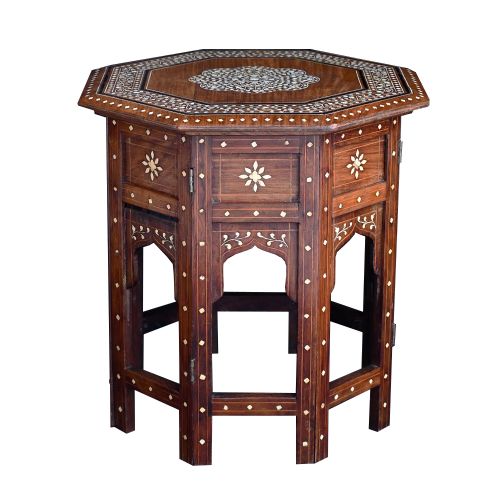
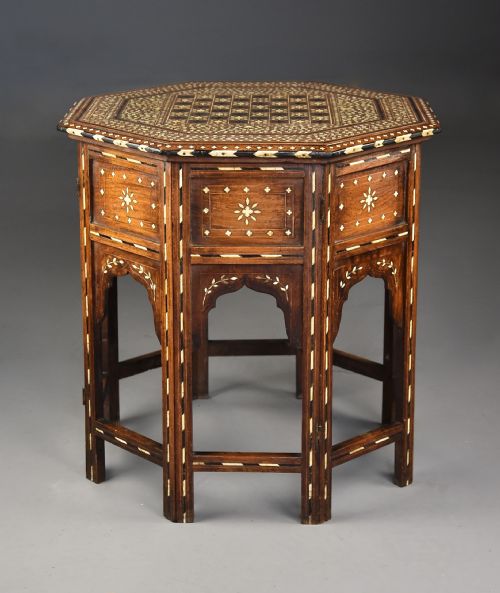
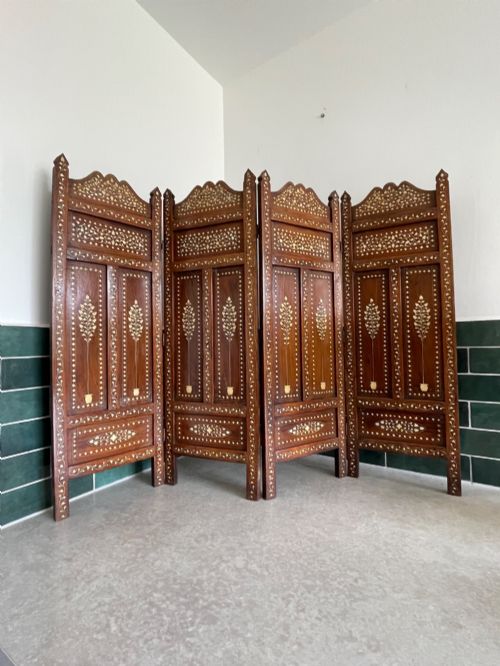
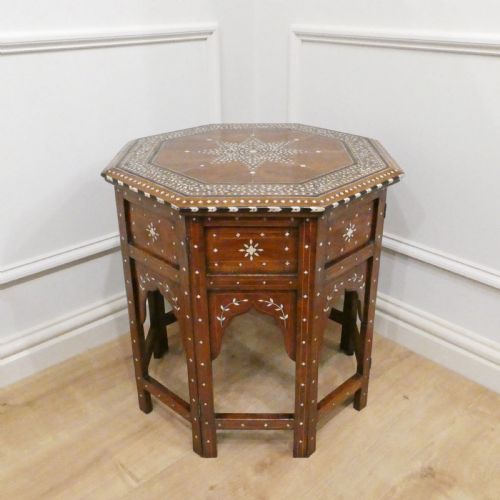





Bone Inlay Folding Table
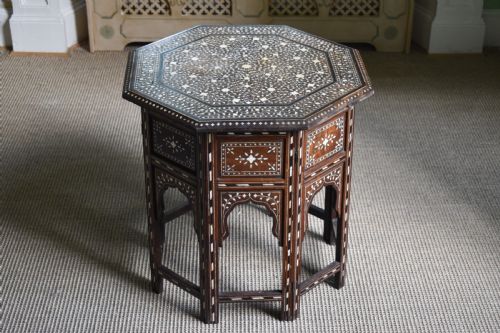
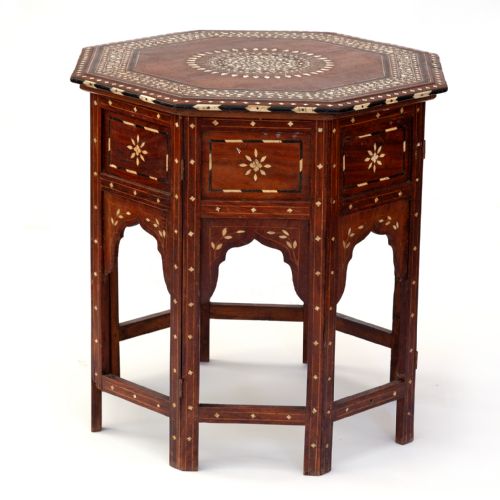
A bone inlay folding table is an intricate piece of regional craftsmanship, prized for its portability and dense geometric surface decoration.
Bone Inlay Folding Table
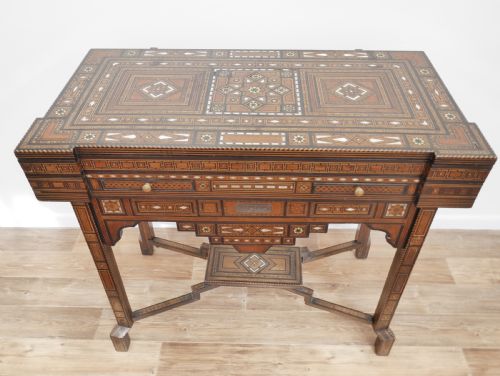
A bone inlay folding table brings together complex woodworking and detailed decorative insertion, appearing across various regional traditions. When exploring a bone inlay folding table, you encounter items predominantly shaped by Anglo-Indian makers in Hoshiarpur, alongside Syrian, Ottoman, and Moorish Revival examples.
The forms span octagonal occasional tables, star tables, and compact collapsible designs meant for easy storage or transport. These pieces serve as versatile functional items that double as decorative focal points within a room.
Most examples originate from the nineteenth and early twentieth centuries, reflecting a period of intense global trade and stylistic exchange. You will frequently meet octagonal tops resting on collapsible bases, showcasing the clever engineering typical of these items.
How they were made
Makers set small pieces of bone and mother of pearl meticulously into carved recesses within dense timbers like teak, rosewood, walnut, sandalwood, padauk, sheesham wood, and fruitwood. This method required precise hand-cutting so that each organic segment locked tightly into the surrounding wood grain.
The supporting structures often utilise ingenious folding mechanisms carved directly from the timber, allowing the frame to collapse flat without modern metal hinges. Artisans then finished the surfaces with elaborate chip-carving, floral motifs, and geometric lattices surrounding the inlaid elements.
Some nineteenth-century tables hide secret collapsible star bases that fold down flat like a deck of cards, ready to vanish into a closet.
What varies in quality
The standard of a bone inlay folding table rests on the precision of the chip-carving and the density of the individual bone segments. Superior examples display tight, uniform inlay work where the bone sits flush with the polished hardwood ground without excessive filler.
The Bone Inlay Folding Table Glossary
- Hoshiarpur
- A town in Punjab renowned for its distinct school of wood carving and intricate bone inlay work. Items originating from this centre often feature dense geometric and floral patterns.
- Anglo-Indian
- A descriptive term for objects made in India during the British period, blending local craftsmanship with European forms. These pieces often merge traditional Indian carving techniques with Western furniture shapes.
- Metamorphic
- A term for furniture that transforms from one form or function into another, such as a writing table with hidden compartments. Such pieces demonstrate clever nineteenth-century mechanical ingenuity.
- Padauk
- A heavy, durable tropical hardwood with a distinctive reddish hue, utilised for high-end occasional tables. Its natural stability made it an ideal substrate for detailed carving.
- Mother of pearl
- The iridescent internal layer of certain mollusc shells, embedded alongside bone to create shimmering contrast on tabletop surfaces. This material reflects light differently depending on the viewing angle.
Bone Inlay Folding Table: Frequently Asked Questions
How do I fold these tables?
The folding mechanism relies on interlocking wooden slats that pivot on central wooden pins or hinges cut directly into the frame. Lifting the octagonal top allows the slatted base to collapse inward flat.
Take care to support the hinges evenly while operating the mechanism to avoid putting undue stress on the carved joints.
Were these tables made for travel?
Many examples were designed with collapsible bases specifically to facilitate movement and transport within colonial administrative households or trade networks. Their portable nature made them practical for temporary residences.
Despite their practical origins, the fine detail on the surfaces suggests they were intended for display in formal reception spaces.
How should I clean bone inlay?
Dust the surface regularly with a soft, dry brush to prevent dirt from settling into the microscopic recesses around the bone segments. Avoid using liquid cleaners or harsh chemicals that can discolour the bone or loosen the adhesive.
Applying a microcrystalline wax occasionally helps protect the exposed wood and maintains the subtle sheen of the inlaid elements.
How do I date a Hoshiarpur table?
Dating relies on examining the timber species, the style of the brass pins, and the complexity of the chip-carving relative to documented nineteenth and early twentieth-century examples. Earlier nineteenth-century pieces often display denser sandalwood or shesham foundations with hand-forged fastenings.
Later twentieth-century productions tend to feature more standardised machinery cuts and simpler floral layouts.