
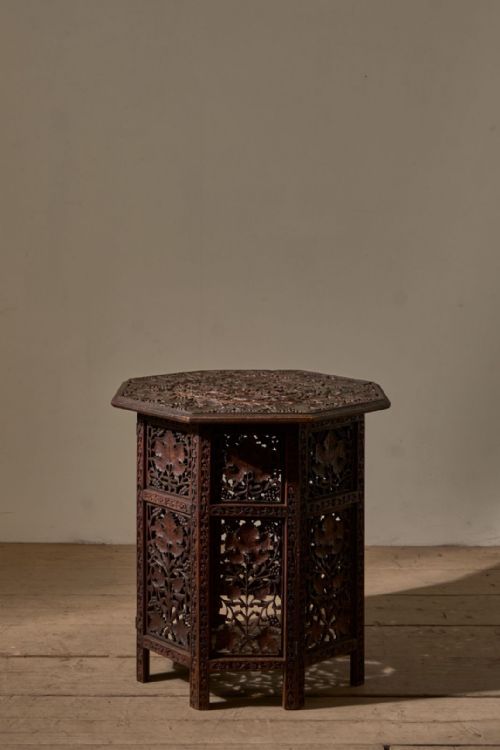


Colonial Wooden Tea Table
A colonial wooden tea table brings dense tropical hardwoods and intricate regional carving straight into a modern room.
Colonial Wooden Tea Table
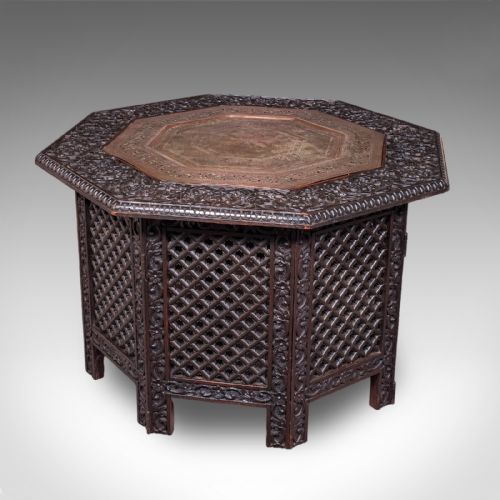
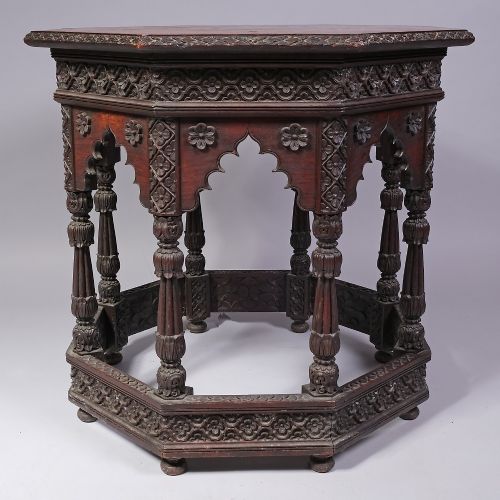
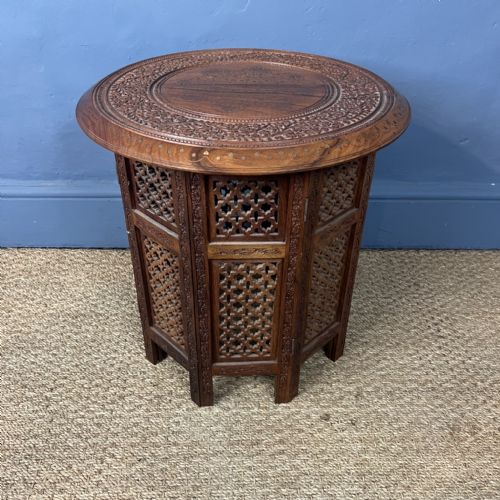
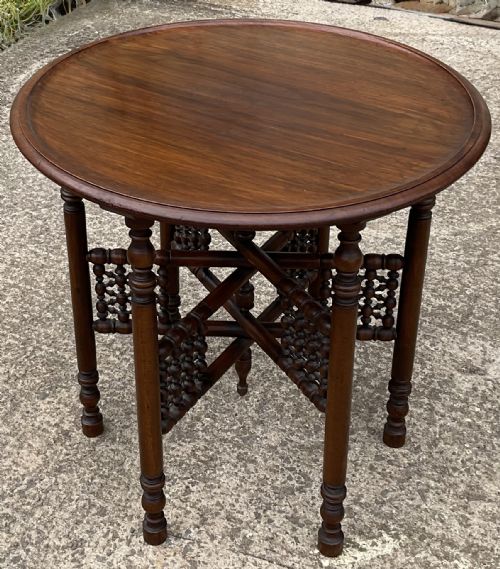
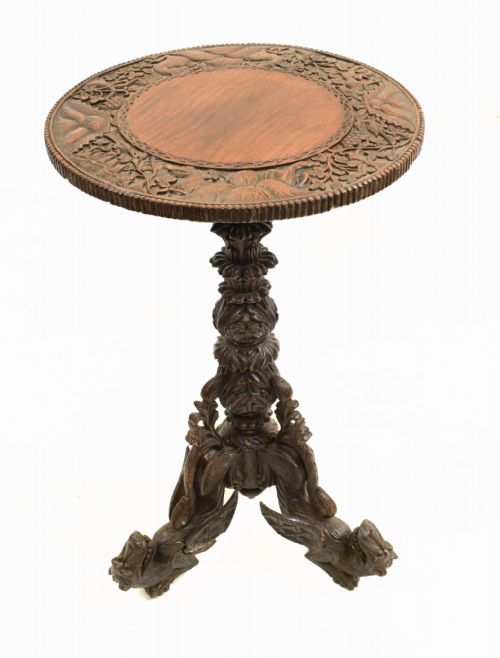
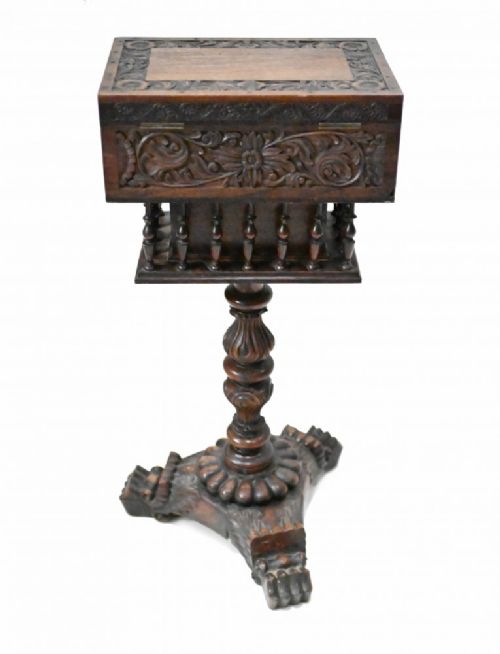
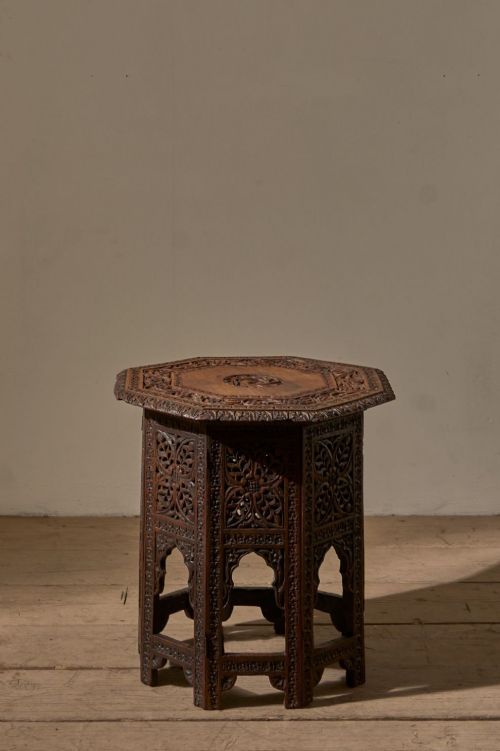
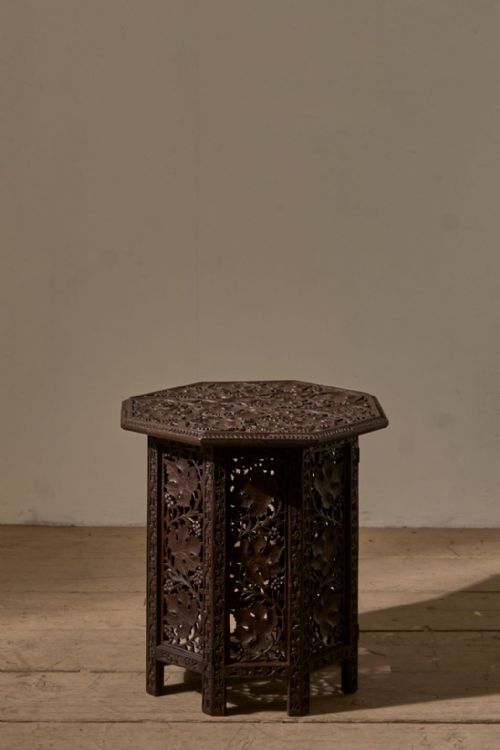
A colonial wooden tea table is typically encountered as a side table, coffee table, or occasional table originating from nineteenth and early twentieth century workshops across India and Burma. These pieces merge traditional South Asian woodworking techniques with European domestic forms requested by British residents during the colonial period. The version most commonly met on this page is the Anglo-Indian side table, often fashioned with an octagonal or circular top.
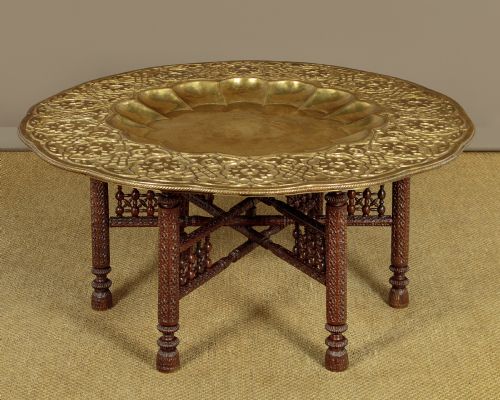
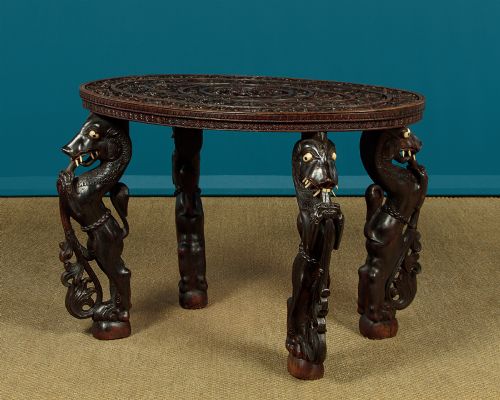
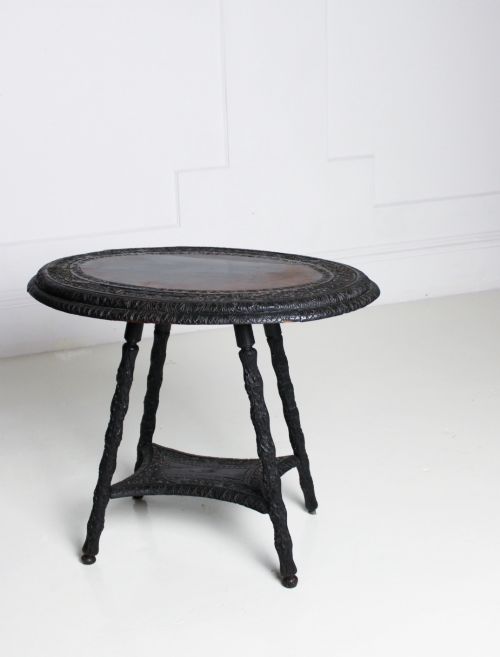
Makers in regions such as Hoshiarpur and Bombay produced varied forms, including folding tables and low tables intended for tea service or display. The timber used reflects the local flora of the British Empire, spanning dense teak and padouk alongside richly grained rosewood and general hardwoods. Many examples incorporate intricate relief carving depicting foliage, dragon motifs, or animal heads alongside contrasting metal inlays.
The stylistic lineage embraces Anglo-Burmese and broader colonial Indian traditions alongside specific Anglo-Indian idioms. Buyers encounter pieces spanning the Victorian era through the early twentieth century, with dates reaching from the mid-nineteenth century to the nineteen-thirties. These tables serve equally well today as low coffee tables or accent pieces in a hall or living room.
Materials and construction
Construction relies heavily on dense tropical timbers, predominantly teak, padouk, and rosewood, which provide a stable base for deep chisel work. Artisans selected these durable hardwoods to withstand regional climates while permitting microscopic detail in relief carving. General hardwood and softer utility woods also appear in specific regional variants.
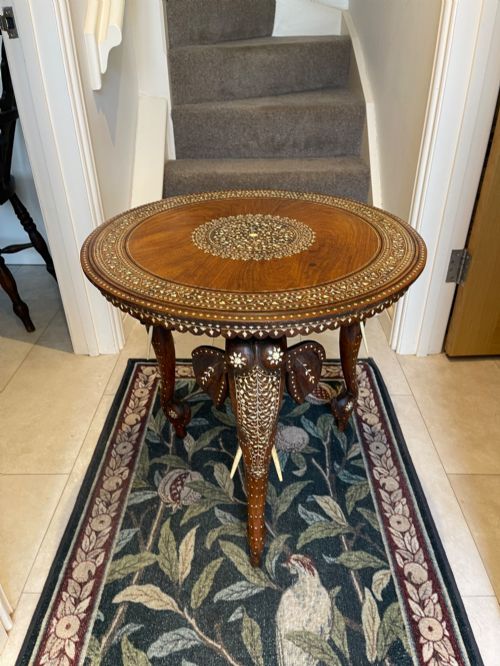
Surface ornamentation frequently combines elaborate hand carving with contrasting inlays of brass, copper, or bone. Tables from Hoshiarpur are particularly noted for intricate bone or brass inlay work set flush into the wooden ground. Folding mechanisms and tilt-top designs demonstrate practical ingenuity designed for transport and compact storage within campaign and domestic settings.
Several elephants labour silently beneath their tabletops, steadfastly holding up afternoon tea across the decades without ever asking for a peanut.
Assessing quality and execution
Quality in a colonial wooden tea table rests upon the crispness and depth of the hand carving rather than mere volume of decoration. Finer examples display clean undercutting in leaf motifs and animal carvings, whereas lesser pieces show shallower, more mechanical scoring. The integration of inlaid brass or bone components also separates superior workshops from standard production items.
Structural integrity of the timber and the precision of folding or tilt-top mechanisms distinguish better survivals. Heavy hardwoods demand expert joinery to accommodate seasonal timber movement without splitting or destabilising the top. The visual harmony between the carved decoration and the underlying grain dictates the overall presence of the piece.
The Colonial Wooden Tea Table Glossary
- Anglo-Indian
- Pertaining to furniture made in India during the British colonial period, combining local craftsmanship with European forms. These pieces often feature dense surface carving and exotic timbers.
- Padouk
- A heavy, durable reddish-brown tropical timber frequently utilised in colonial cabinetmaking. It takes a fine finish and resists warping.
- Hoshiarpur
- A northern Indian city renowned for its skilled woodcarving and intricate micro-mosaic inlay. Tables from this centre typically display dense geometric or floral patterns in brass and bone.
- Tilt-top
- A table construction featuring a mechanism that allows the surface to pivot to a vertical position when not in use. This design originated to save space in compact rooms.
- Teak
- A premier tropical hardwood valued for its natural oils, stability, and resistance to decay. It forms the structural foundation for many colonial tables.
Colonial Wooden Tea Table: Frequently Asked Questions
How do I use a colonial tea table today?
These tables function naturally as low coffee tables, lamp tables, or bedside surfaces in contemporary interiors. Their rich timber tones and intricate carving provide a strong focal point against neutral modern furnishings.
Because many sit lower than standard modern tables, they work particularly well beside low seating or as independent display pieces for ceramics and lamps.
How do I care for antique tropical hardwoods?
Maintain these surfaces by dusting regularly with a dry cloth and avoiding silicone-based polishes that build up over time. Natural beeswax applied sparingly helps nourish dry tropical timbers.
Keep the timber away from direct heat sources and sudden humidity swings to prevent the intricate joints and inlays from shifting or loosening.
How do I distinguish regional styles?
Distinctions rest on the choice of motifs and secondary materials unique to specific areas of production. Hoshiarpur pieces are identified by overall geometric brass and bone inlay, while Burmese and Bombay pieces lean towards deep figural relief carving and tilt-top mechanisms.
Examining the primary timber, such as padouk versus teak, also offers clues regarding the likely workshop origin.