


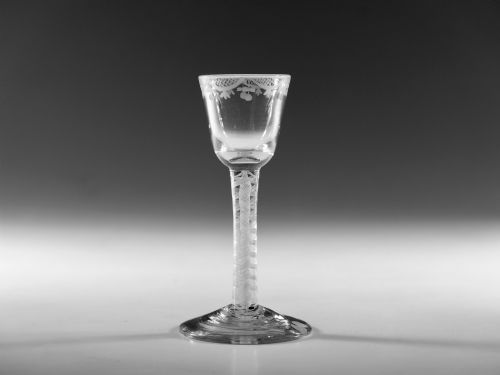


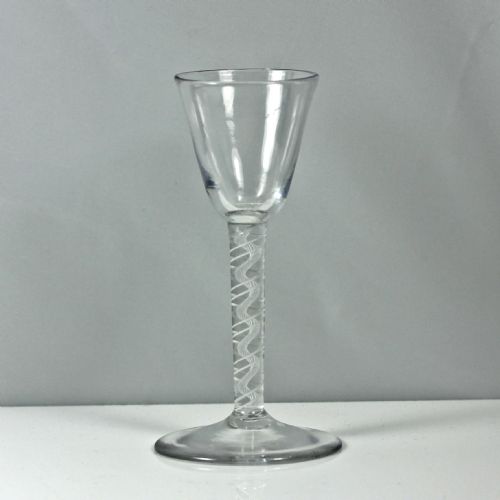
Opaque Twist Wine Glass
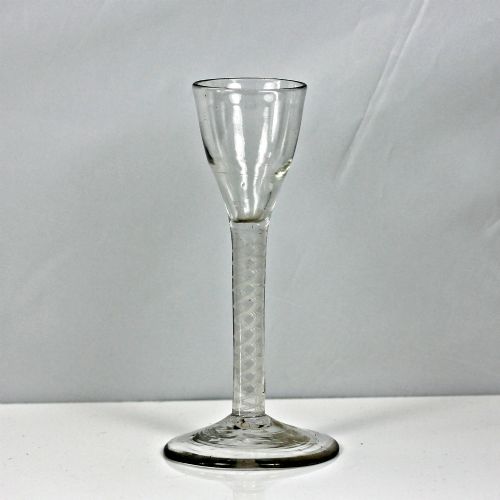
When you handle an opaque twist wine glass, you hold an eighteenth-century English drinking vessel defined by white enamel threads spun inside the stem.
Opaque Twist Wine Glass
An opaque twist wine glass is a drinking vessel primarily originating from the Georgian period, typically dated between 1750 and 1770. Collectors search for these pieces to acquire authentic examples of eighteenth-century English lead glass featuring distinctive white enamel filaments enclosed within the stem.
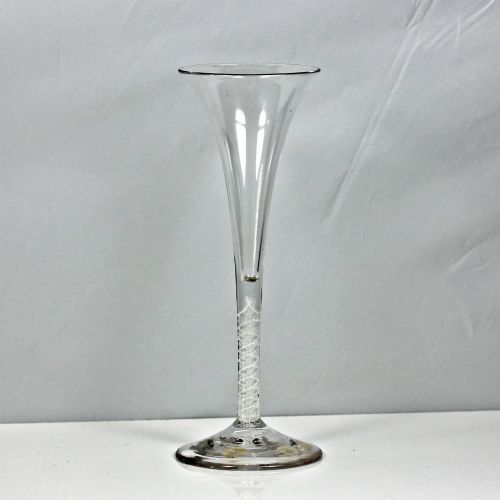
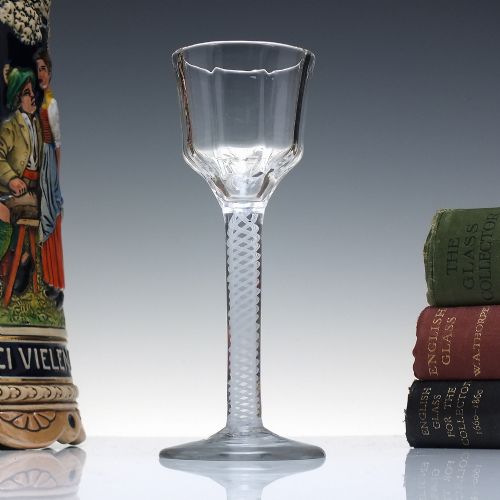
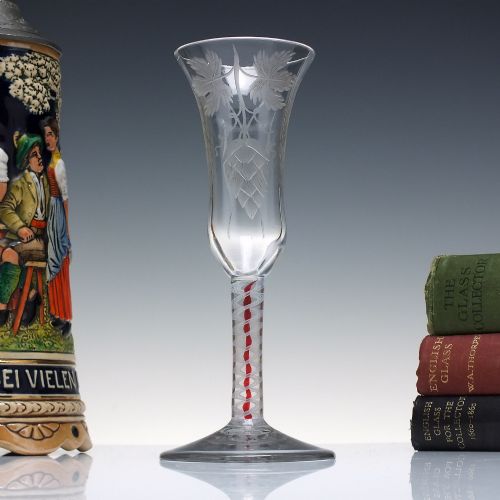
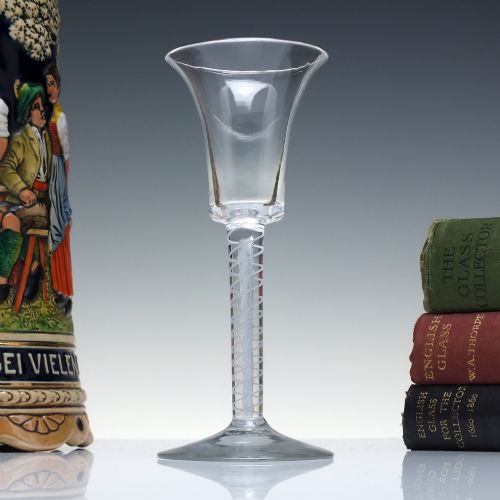
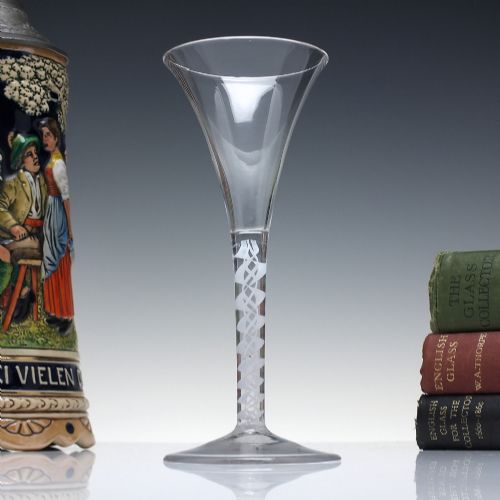
The version you are most likely to meet on this page is the Georgian double series opaque twist wine glass, often shaped with a trumpet, ogee, or bell bowl and supported by a conical foot. While eighteenth-century English examples dominate the listings, Victorian interpretations also appear.
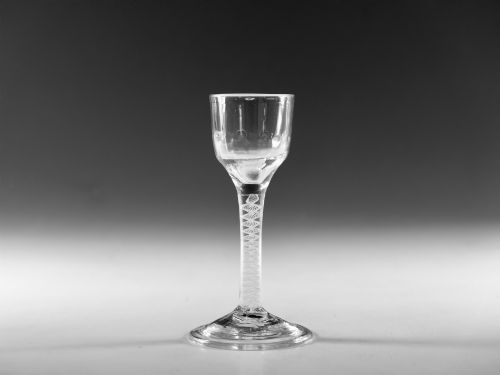
Beyond standard wine glasses, related forms in the same style include cordial glasses, champagne flutes, sweetmeat glasses, and heavy ships glasses designed for stability at sea.
How they were made
These glasses were produced using lead glass and lead crystal, which provided the clarity and weight necessary for eighteenth-century tablewares. Flint glass and enamel glass were also utilised by glasshouses to form the body and the internal threads.
The characteristic stem was created by drawing out rods of clear glass containing opaque white enamel canes, then twisting them together before the metal cooled. Makers combined single series, double series, mixed twists, and multi-spiral arrangements to produce varying optical effects inside the stem.
Opaque Twist Wine Glass Retail Price Guide 2026
Typical asking prices for opaque twist wine glass among the pieces listed under this phrase on Sellingantiques today, from the lower quarter to the upper quarter. They describe what is for sale here now, not the wider market.
Listings demonstrate that eighteenth-century lead glass forms span from trumpet and ogee bowls down to heavy ships glasses.
What varies in quality
Quality in these drinking vessels rests upon the complexity of the internal stem construction and the precision of the twist. Denser thread configurations and balanced multi-spiral formations distinguish finer items from simpler single-series stems.
The visual appeal is further elevated by the proportion between the bowl, stem, and foot, alongside any surface decoration. Engraved bowls featuring floral, Jacobite, or vine motifs place certain examples higher in desirability compared to plain counterparts.
Beilby·Josphinenhutte
The Opaque Twist Wine Glass Glossary
- Opaque twist
- A stem containing white enamel glass threads twisted into spiral patterns during manufacture. This technique succeeded the earlier mercury bubble air twist glasses.
- Double series
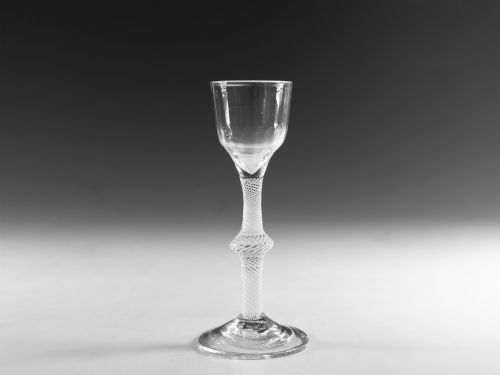
- A stem construction combining two distinct sets of opaque white twists, such as a central gauze surrounded by a spiral tape. This method creates a denser optical pattern than a single series.
- Ogee bowl
- An asymmetrical bell-shaped bowl with a flowing S-curve profile that tapers outward at the rim. It is one of the most common bowl forms found on eighteenth-century drinking glasses.
- Knop
- A decorative swelling or projection formed on the stem of a glass. Multiple knops often add complexity to the profile of Georgian stemware.
Opaque Twist Wine Glass: Frequently Asked Questions
How do I date an opaque twist wine glass?
Dating relies primarily on the form of the bowl, the metal characteristics of the lead glass, and the specific configuration of the stem twist. Most authentic examples date from the mid-eighteenth century during the Georgian era.
Secondary indicators include the pontil mark on the underside of the conical foot, which should show signs of hand-finishing and wear consistent with the period.
What is the difference between single and double series twists?
A single series twist contains only one set of opaque white enamel threads within the clear glass stem. A double series incorporates an inner core, such as a spiral gauze, surrounded by an outer pair of enamel tapes.
Double series stems generally require more intricate glassmaking skill and create a visually richer pattern when viewed through the transparent metal.
Were these glasses used for wine only?
Although termed wine glasses, eighteenth-century table glass served multiple functions for strong liquors, cordials, and sweetmeats. Smaller bowl capacities accommodated potent dessert wines and liqueurs of the period.
Specialised variants like flutes and cordial glasses were shaped specifically for sparkling beverages or concentrated spirits.
How should I care for an eighteenth century glass?
Wash antique stemware by hand in warm water using mild soap, avoiding sudden temperature changes that can stress old lead glass. Dry them gently with a soft cloth to preserve the surface finish.
Store the pieces securely on a stable shelf where the delicate conical feet and thin bowl rims remain safe from impact.