



Ochre Watercolour Landscape
An ochre watercolour landscape captures earth tones and expansive views, offering a warm palette that brings historical charm to any interior.
Ochre Watercolour Landscape
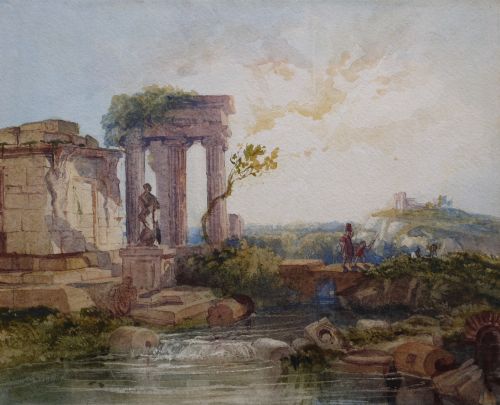
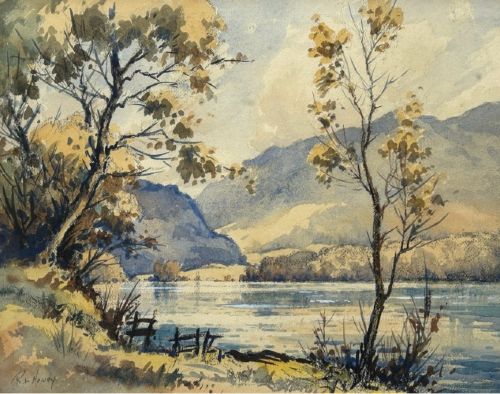
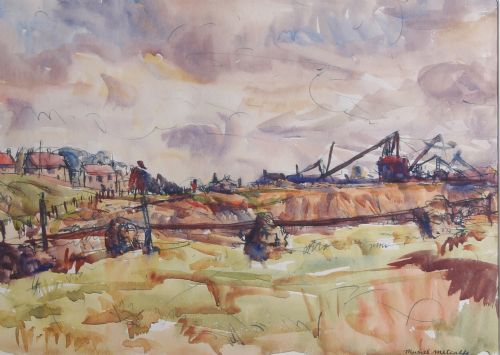
An ochre watercolour landscape presents scenery rendered in earthy yellow and brown pigments upon paper supports. These works range from rural agricultural views to townscapes and coastal scenes.
The selections available here span from the nineteenth century through the mid-twentieth century. Pieces frequently emerge from British, French, and American schools of painting.
Buyers encounter traditional topographical studies alongside impressionistic visions of rivers, mountains, and architectural landmarks. Many examples preserve specific locations across Britain, Europe, and beyond.
How They Were Made
Artists applied watercolour paint and pigment onto paper surfaces, occasionally combining gouache for opaque highlights. Washes built up transparent tones to define skies, earth, and foliage.
Finished works found protection beneath glass within wooden frames, frequently enhanced by gilded wood moulding. These framing assemblies preserved the delicate paper works from atmospheric moisture and handling damage.
The inventory spans Victorian, Edwardian, and mid-century British and French impressionist movements.
What Varies in Quality
The skill of the draughtsman dictates the strength of composition, depth of perspective, and accuracy of tonal graduation within the wash. Superior examples demonstrate confident brushwork that captures light and atmosphere with minimal pigment.
Condition plays a significant role in retention of pigment vibrancy, particularly regarding exposure to sunlight and dampness over decades. Original framing and undisturbed backing papers contribute to the enduring integrity of an artwork.
Richard Principal Leitch·Thomas Ellison·Robert Leslie Howey·Muriel Metcalfe·Gaston Cornil·Edwin Lord Weeks·George Graham·Arthur Tucker·Charles James Lauder·Rowland Henry Hill·Sidney James Beer·Clara Montalba·Benedetto Salviati·Joseph W. Milliken·Frederick Mayor·Alfred Robert Quinton·Fred Stead·William Lucas·Madeline Hughes·Frederick Tully Lott·Arthur Claude Strachan·George Hamilton Constantine·George Sykes·John J. Hamer·Fred Lawson
The Ochre Watercolour Landscape Glossary
- Watercolour pigment
- Finely ground colour particles suspended in a water-soluble binder, applied to paper in translucent washes.
- Gouache
- An opaque water-based paint containing pigment and a binding agent, often utilised alongside watercolour for dense highlights.
- Topographical
- Depicting accurate views of specific real-world locations, towns, buildings, or natural landscapes.
- Support
- The physical base material, typically paper, upon which the artist applies the pigment.
- Mount
- A cardboard border placed inside the frame to separate the paper painting from the glass.
Ochre Watercolour Landscape: Frequently Asked Questions
How should I hang an old watercolour?
Keep these paper works away from direct sunlight to prevent the warm pigments from fading over time. Utilising UV-protective glass during framing further safeguards the delicate washes against environmental degradation.
Ensure placement occurs in rooms with stable humidity levels to avoid warping the paper support or encouraging mould growth beneath the glass.
Are these paintings signed by the artists?
Many examples bear the artist's signature or monogram, often located discreetly in one of the lower corners of the sheet. Attribution may also rely on period framing labels, exhibition tags, or established provenance records.
Unsigned works are frequently attributed through stylistic comparison, handling of pigment, and subject matter characteristic of a known school or region.
What periods do these landscapes represent?
The works span the nineteenth century through the mid-twentieth century, capturing aesthetic shifts from Victorian classicism to mid-century British and French impressionism. Victorian and Edwardian pieces often emphasise detailed topographical accuracy.
Later twentieth-century works frequently embrace looser brushwork and a more expressive interpretation of light and terrain.
What is an ochre palette?
An ochre palette utilises natural earth pigments ranging from golden yellow to deep brownish-orange tones. Artists employed these warm hues to depict sunlit fields, autumnal foliage, and dusty tracks across rural landscapes.
This earthy spectrum imparts a cohesive, grounding atmosphere to historical watercolours, uniting sky and terrain within a harmonious tonal range.