
Oak Table with Stretchers
An oak table with stretchers brings honest timber and robust framing into a room, offering enduring utility across centuries of domestic life.

What they are
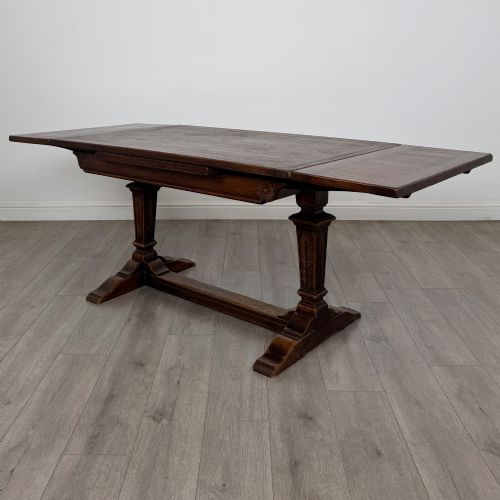
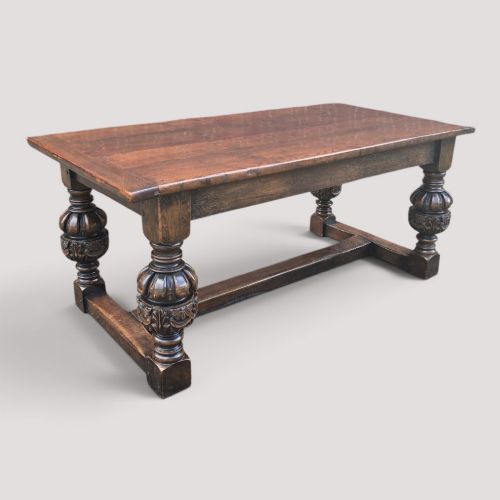
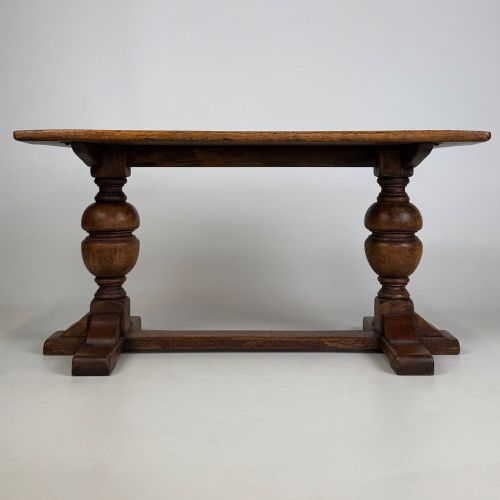
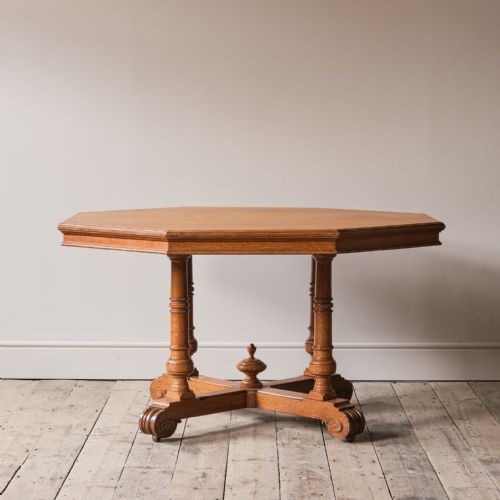
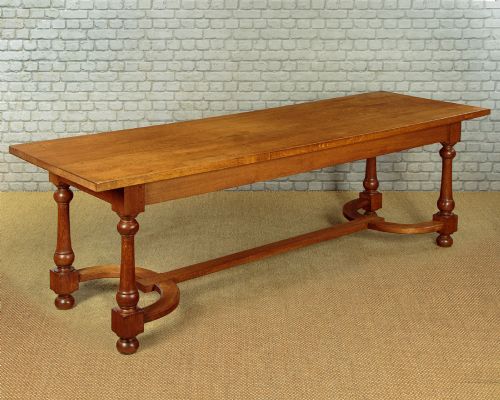
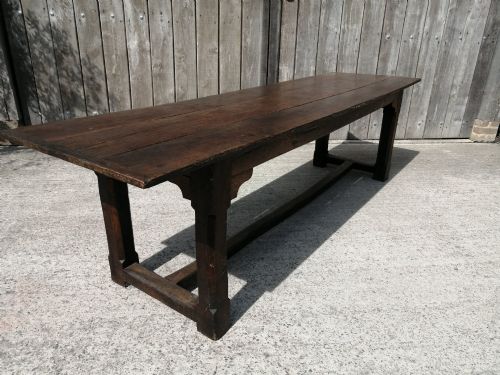
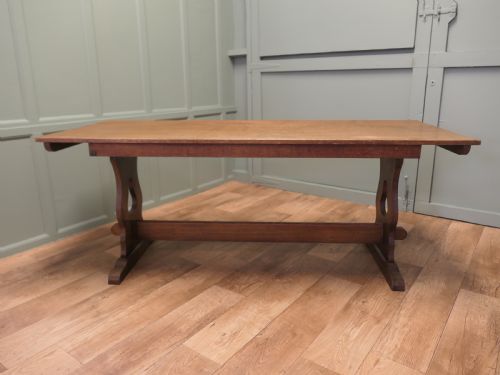
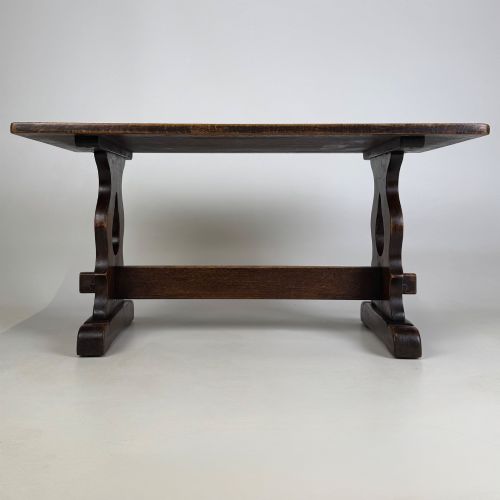
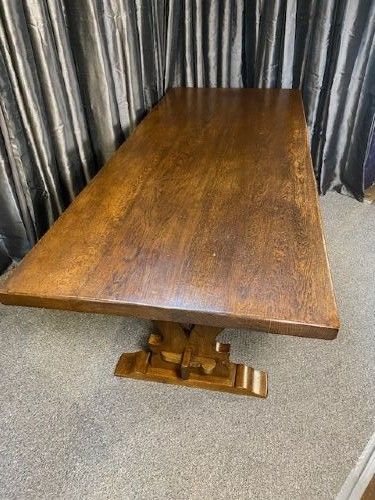
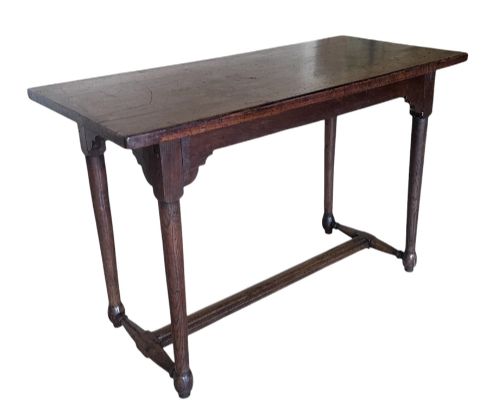
An oak table with stretchers encompasses sturdy side tables, console tables, serving tables, and refectory dining tables designed for everyday service. These pieces emerge from the eighteenth century, the nineteenth century, and the Edwardian era, bearing the practical hallmarks of their respective periods.
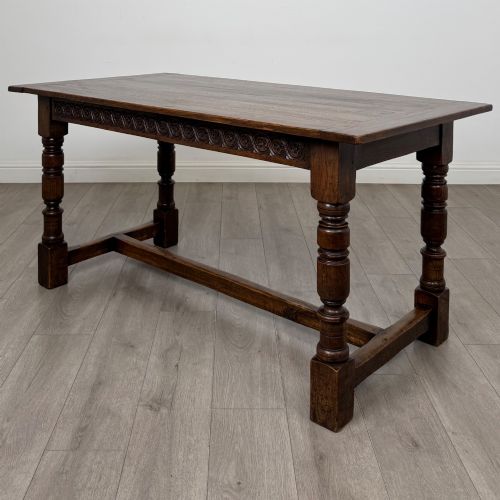
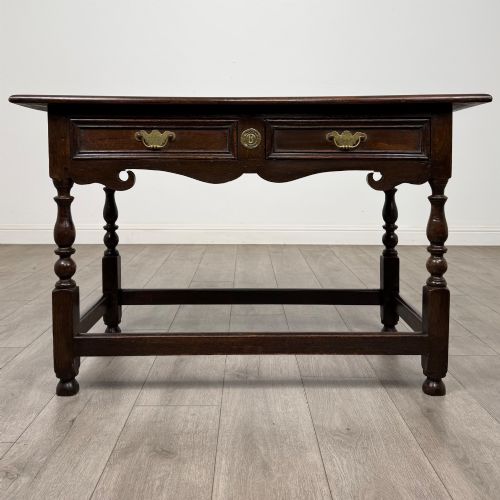
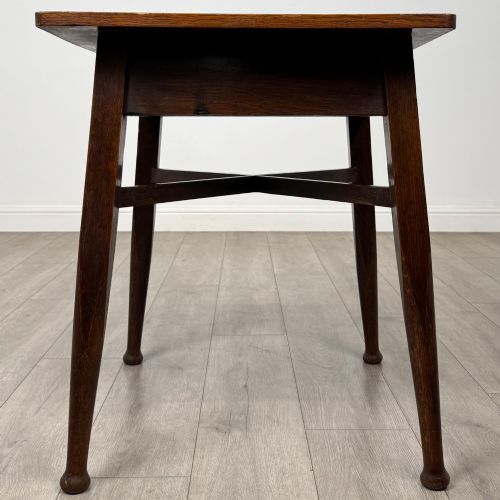
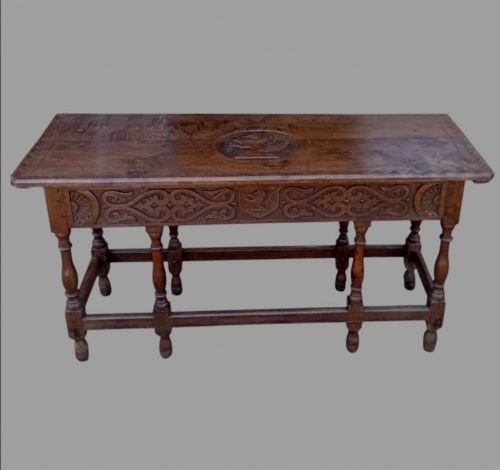
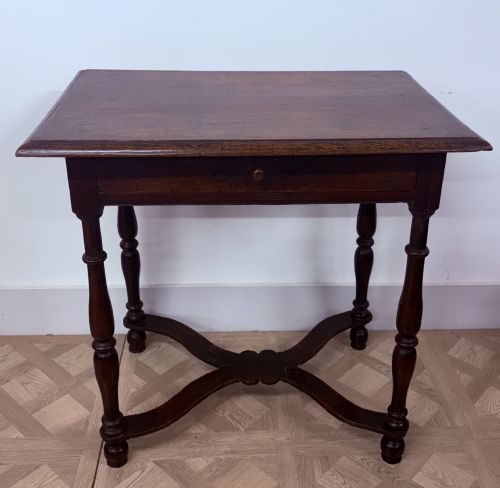
Side tables and occasional tables predominate on this page, often standing on turned legs linked by horizontal timber braces for extra rigidity. Buyers frequently encounter vernacular forms and revival pieces, including Jacobean style and Jacobean revival designs that echo older craftsmanship.
Originating as utilitarian furniture for halls, dining rooms, and farmhouses, these tables rely on solid oak construction. Their structural frames incorporate stretchers precisely placed between the legs to prevent lateral movement during daily use.
How they were made
Joiners built these tables from solid oak, utilising traditional framing methods where legs and rails lock together securely. Timber preparation involved sawing and planing local wood before assembling the main carcass.
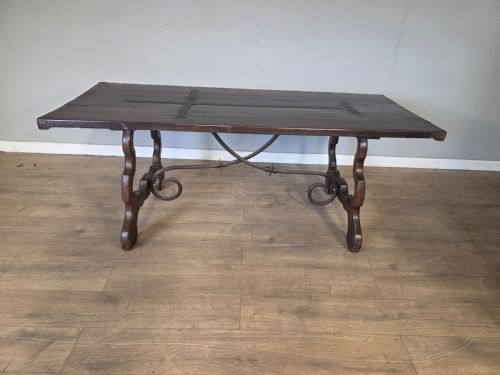
Stretchers were tenoned into the legs at floor level or mid-height to stabilise the entire structure. Metal components appear occasionally, such as iron stretchers on specific Spanish refectory tables.
Surface ornamentation ranges from plain panelled boards to carved friezes and turned components. Bobbin turned legs and turned stretchers reveal the lathe work employed by period artisans.
Retail Price Guide 2026
Typical UK retail prices for oak table with stretchers, calculated from the Sellingantiques database of over a million retail prices indexed since 2003. This retail price guide relies exclusively on Sellingantiques data; no external sources or auction records are used, so the figures do not describe the wider market.
Some tables require iron stretchers, proving that even stubborn oak occasionally needs a little metal backbone to stand straight.
What varies in quality
The distinction between ordinary and exceptional pieces lies in the selection of the timber and the crispness of the joinery. Dense oak boards with rich medullary rays command attention, whereas lesser examples use plain, unfigured wood.
Structural integrity separates fine examples from simple utilitarian items, particularly in the snugness of the stretcher joints. Hand-carved details and well-turned legs demonstrate a higher degree of workshop skill than mechanical or crude shaping.
The Oak Table with Stretchers Glossary
- Stretcher
- A horizontal timber or metal rail connecting the legs of a table to provide structural stability. These braces strengthen the lower frame against wobbling.
- Refectory table
- A long, narrow dining table traditionally used in monasteries and large halls. Examples in oak feature robust stretchers running near the floor.
- Bobbin turning
- A type of lathe work producing a series of rounded, spool-like shapes along the length of a leg or stretcher. This decorative turning is typical of seventeenth and eighteenth century joinery.
- Jacobean style
- A heavy, geometric furniture style dating from the early seventeenth century and later revived in the nineteenth century. Pieces often display dark oak surfaces and architectural mouldings.
Frequently Asked Questions
How do I date an oak table?
Dating relies on examining construction methods, tool marks, and timber shrinkage patterns. Earlier pieces from the eighteenth century often display hand-sawn boards and pegged joints.
Later Edwardian and nineteenth century examples reveal more uniform machining and revival stylistic cues like Jacobean carving.
Where were these tables used?
Historically, these sturdy tables served in dining rooms, farmhouse kitchens, and grand halls. Their solid construction handled heavy daily demands.
Today, side tables and serving tables fit easily into hallways and living spaces as display surfaces or practical storage stands.
Why use stretchers on a table?
Stretchers brace the vertical legs to prevent the frame from racking or loosening over time. They distribute weight and absorb lateral pressure.
On heavy oak furniture, these connecting rails ensure the table remains rigid during everyday use.