


Oak Side Table with Drawers
When you want an oak side table with drawers, you are looking at practical timber furniture built to hold small everyday items.
Oak Side Table with Drawers
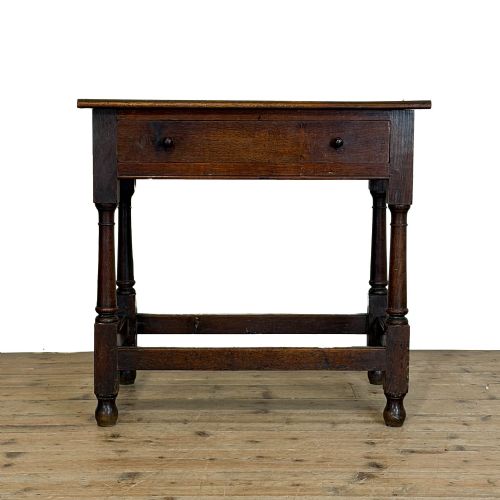
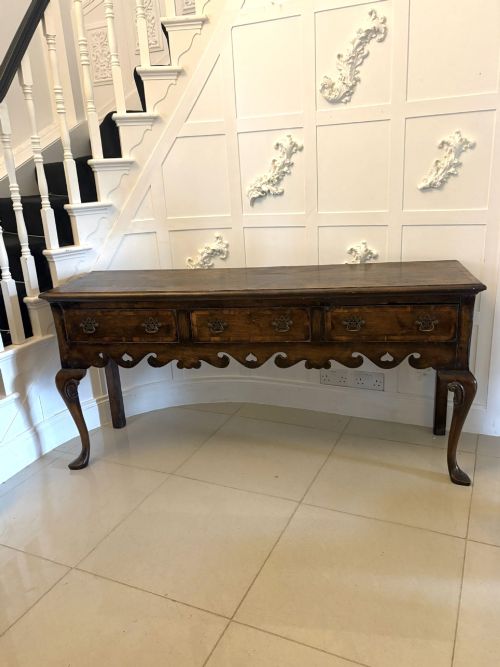
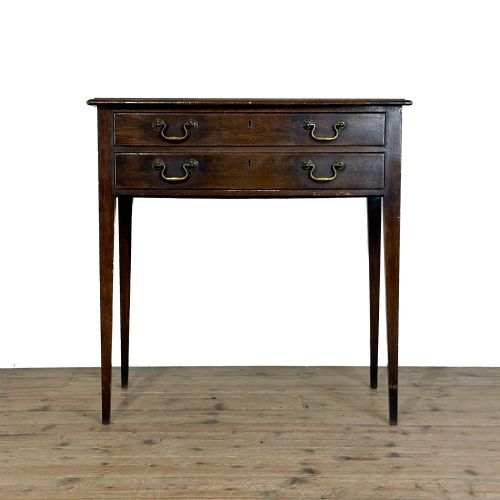
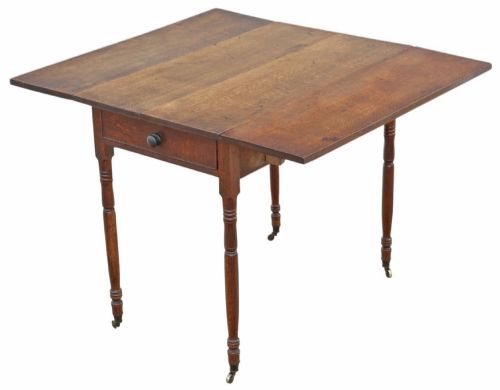
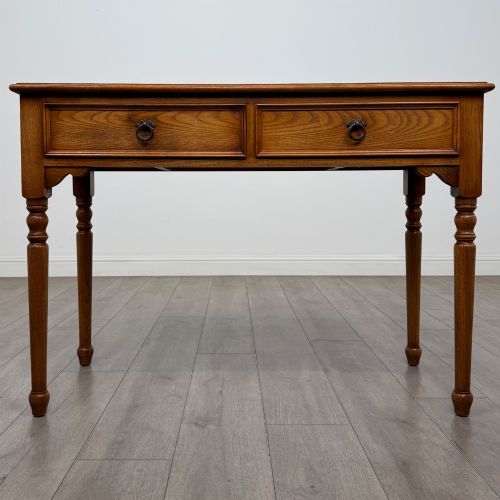
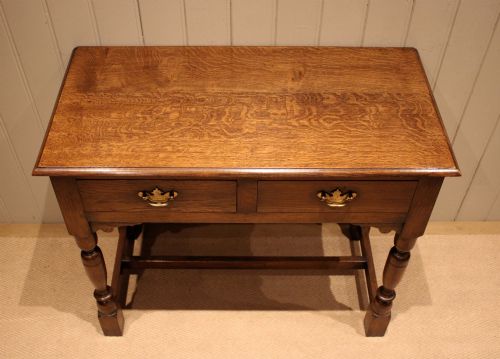
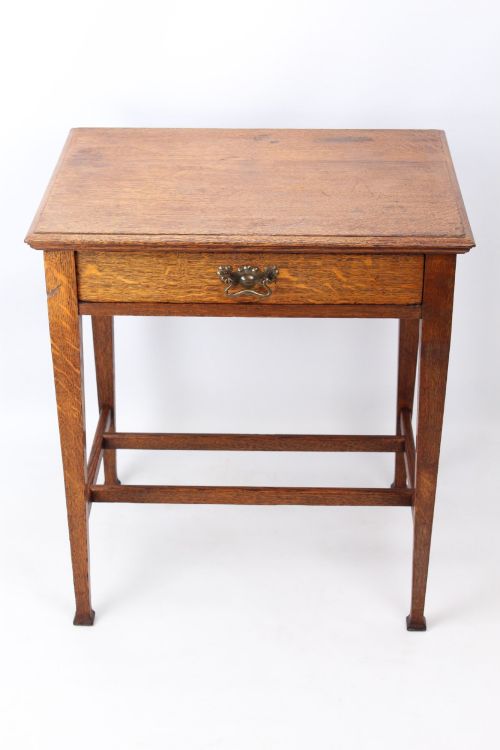
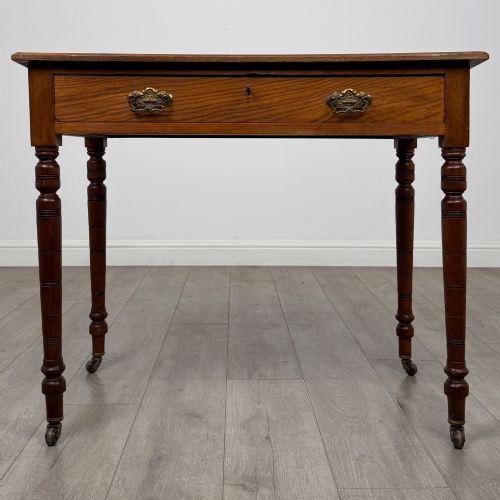
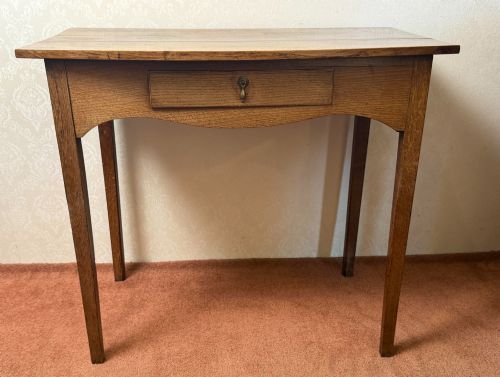
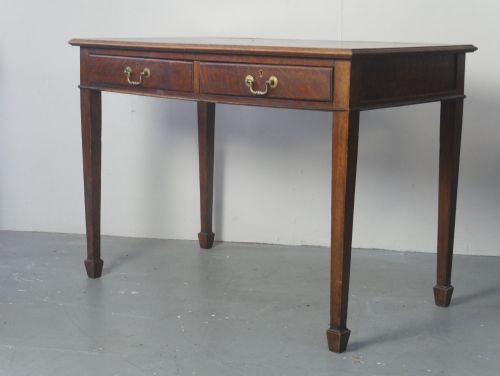
An oak side table with drawers combines a sturdy timber surface with one or more fitted compartments beneath the top. The form spans several centuries, taking shape as provincial lowboys, Victorian desks, and 1920s writing tables.
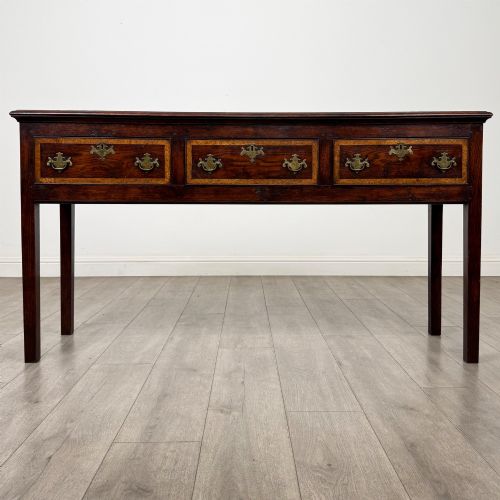
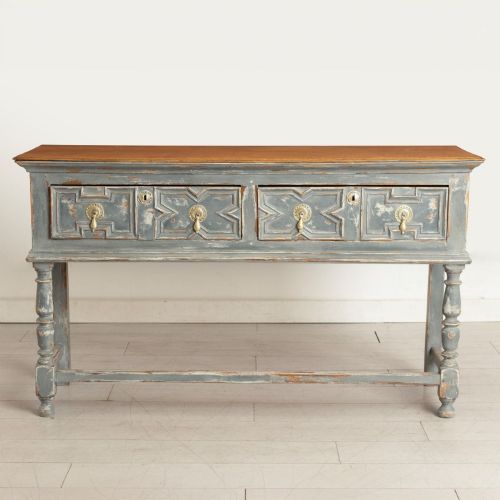
The pieces on this page appear in various formats, from late seventeenth-century servers with geometrically moulded drawer fronts to compact Edwardian examples and carved Victorian hall tables.
How they were made
Construction relies primarily on oak, often complemented by secondary timbers and fitted with brass, iron, or metal handles. Some examples incorporate pollard oak or walnut veneers, while others feature detailed hand-carved motifs like Green Man masks or Jacobean revival patterns.
Makers utilised traditional jointing methods to build solid frames capable of supporting everyday use. Drawer construction frequently includes oak linings and geometric mouldings applied to the front panels.
Oak Side Table with Drawers Retail Price Guide 2026
Typical asking prices for oak side table with drawers among the pieces listed under this phrase on Sellingantiques today, from the lower quarter to the upper quarter. They describe what is for sale here now, not the wider market.
Several Victorian oak tables secretly guard carved stags' heads on their back galleries and fierce Green Man masks staring from the frieze.
What varies in quality
The distinction between standard examples and finer pieces rests on the crispness of the carving, the selection of figured timber, and the retention of original hardware. Early pieces with geometric drawer fronts or undisturbed surfaces command greater interest from collectors.
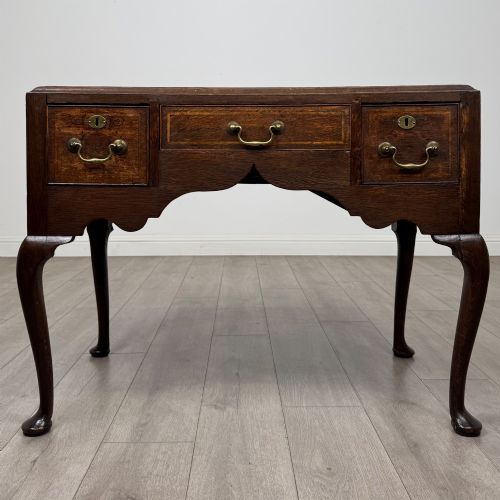
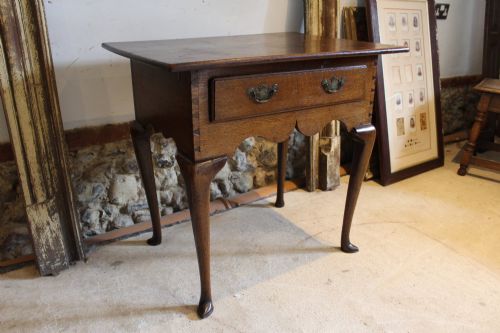
Proportion and execution also define the range, distinguishing simple provincial farmhouse tables from sophisticated Georgian lowboys with cabriole legs or crossbanded drawer details.
Beresford and Hicks London·Gomme
The Oak Side Table with Drawers Glossary
- Lowboy
- A small table with drawers, typically dating from the seventeenth or eighteenth century and standing on relatively tall legs. These pieces often served as dressing or writing tables in period homes.
- Frieze
- The horizontal structural member situated directly beneath the table top, which frequently houses the drawers. Carved decoration or geometric moulding is often applied to this section.
- Box stretcher
- An interconnecting framework of wooden rails near the base of the table that joins the legs together for added stability. It appears on various seventeenth and eighteenth-century provincial forms.
- Cushion front
- A convex or gently rounded drawer front profile popular in seventeenth-century joinery. This technique gives the drawer panel a padded appearance.
- Crossbanded
- A border technique where thin strips of veneer are laid across the grain of the primary timber to frame a drawer front or table top. It signals a more refined decorative finish.
Oak Side Table with Drawers: Frequently Asked Questions
How were oak side tables used historically?
These tables served multiple functions in domestic interiors, acting as writing desks, hall furniture, or serving surfaces. Drawers provided secure storage for documents, household accounts, and small daily items.
In grander settings, lowboys functioned as dressing tables or occasional sideboards. Their compact dimensions allowed them to fit easily into parlours, bedrooms, and entrance halls.
How do I identify a 17th-century oak table?
Seventeenth-century examples typically feature pegged frame construction, heavily grained solid oak, and hand-cut mouldings. Drawer fronts may display geometric panelling or cushion mouldings rather than simple flat boards.
Legs on these early pieces are often turned in spiral or bobbin shapes, connected by low wooden stretchers. Surface patination tends to be deep and dark through centuries of handling and wax polishing.
What is the difference between a lowboy and a side table?
A lowboy is a specific form of small table with drawers, originating in the late seventeenth century and remaining popular through the Georgian era. They generally feature longer legs in proportion to the shallow drawer section above.
Standard side tables encompass a broader range of proportions and periods, including Victorian carved hall tables and twentieth-century writing desks. Not all side tables share the distinctive leg-to-body ratio of a traditional lowboy.
Where should I place an antique oak table at home?
An antique oak table with drawers suits hallways, living rooms, or home offices where surface space and discreet storage are useful. Their neutral timber tones blend readily with both traditional and modern interiors.
Keep wooden furniture away from direct heat sources and strong sunlight to prevent the timber from drying out or splitting. Regular polishing with a traditional beeswax maintains the natural lustre of the oak.