

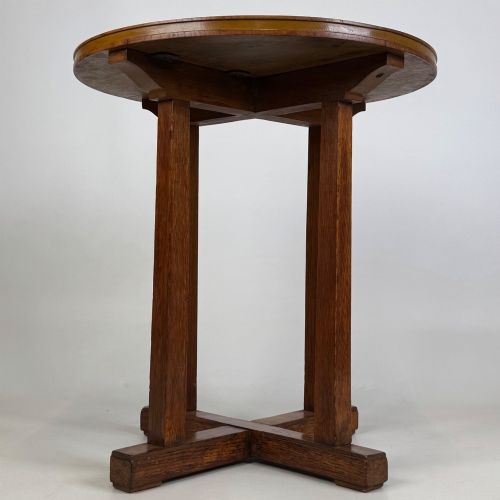
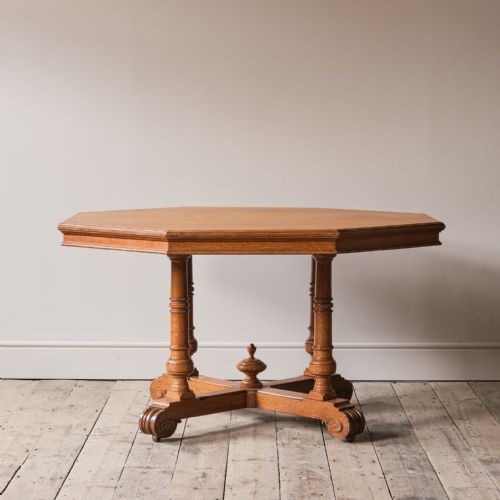
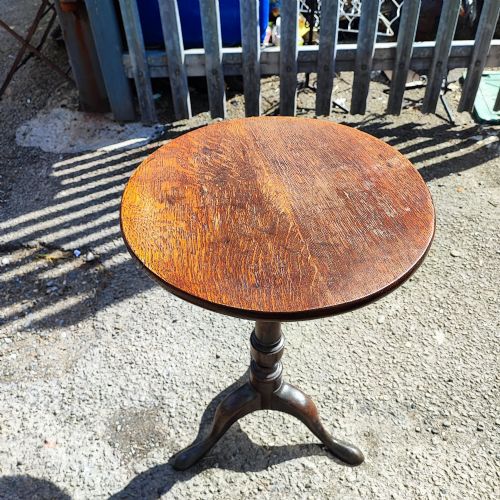
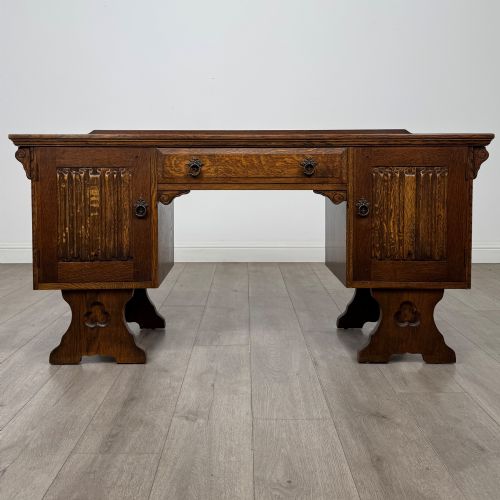
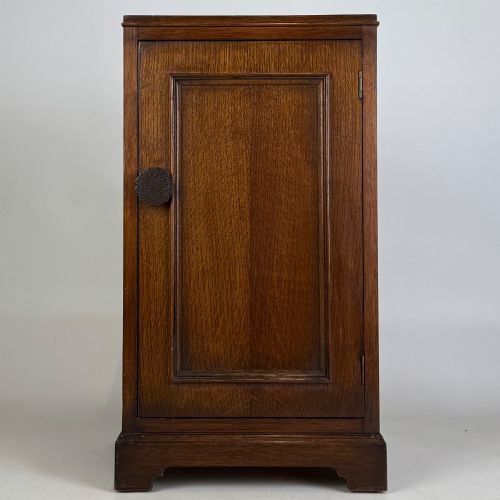
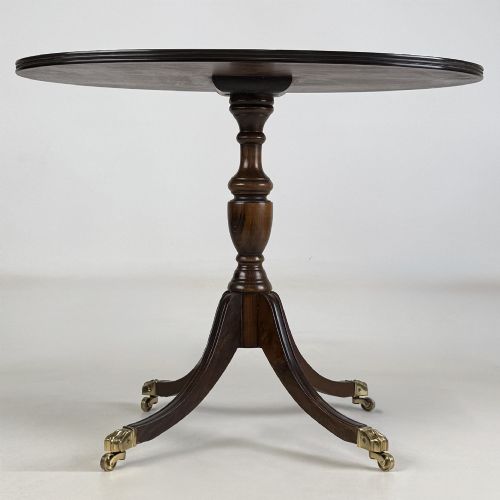
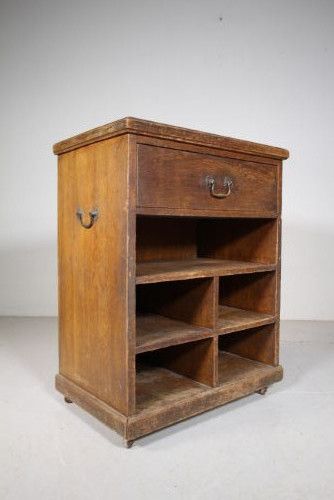
Oak Pedestal Table
An oak pedestal table brings the warmth of solid timber and a central column base to a room, offering both compact wine tables and large dining formats.
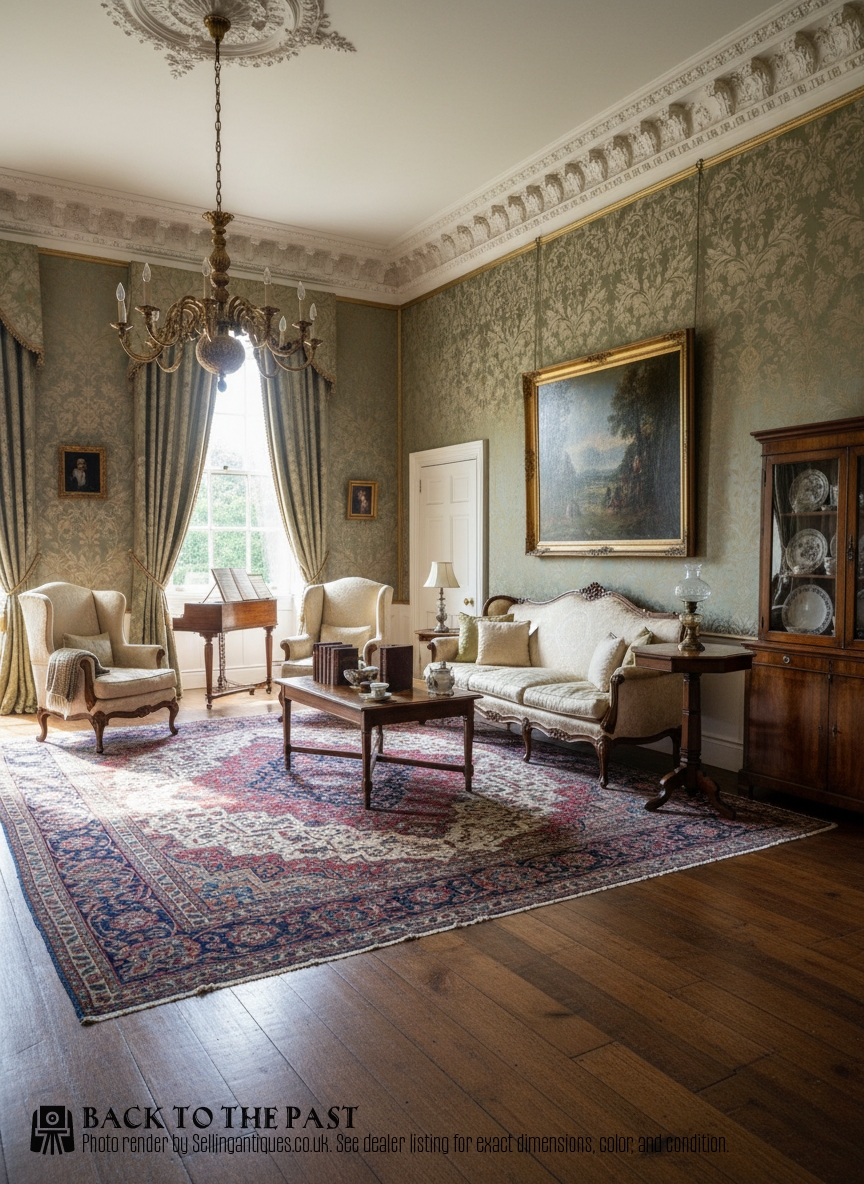
Forms and periods of the oak pedestal table
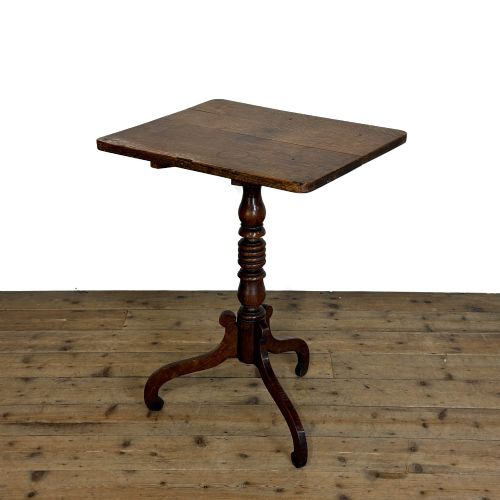
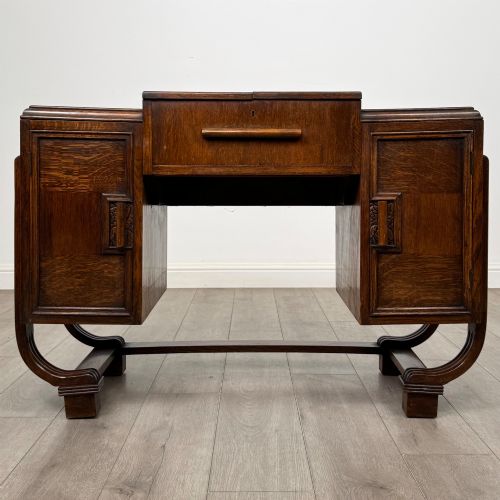
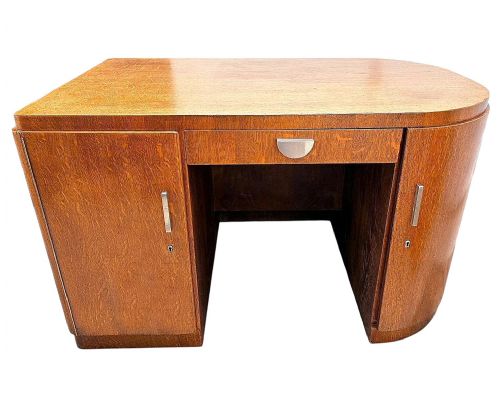
An oak pedestal table typically rests on a central column or tripod base rather than traditional corner legs, maximising legroom for diners and sitters. These pieces appear across several centuries, spanning the Georgian, Regency, William IV, and Victorian eras, alongside later Art Deco examples.
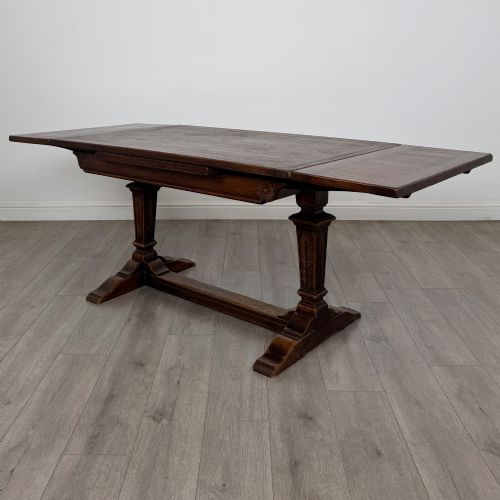
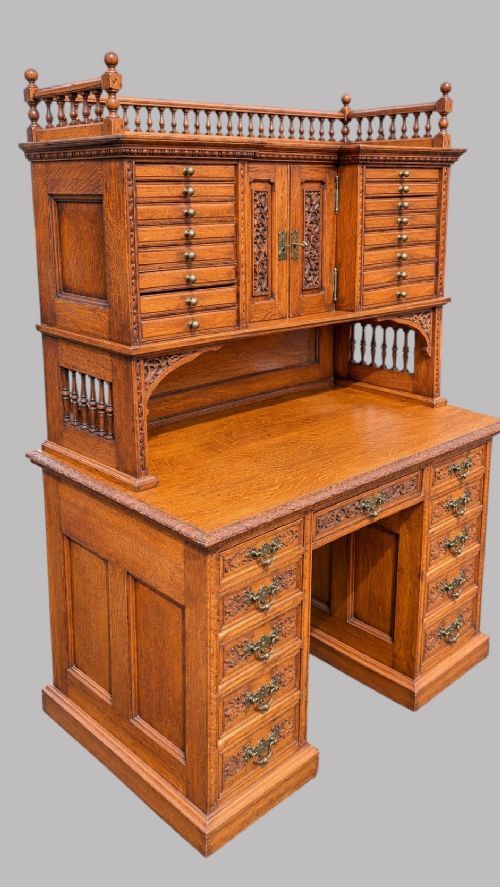
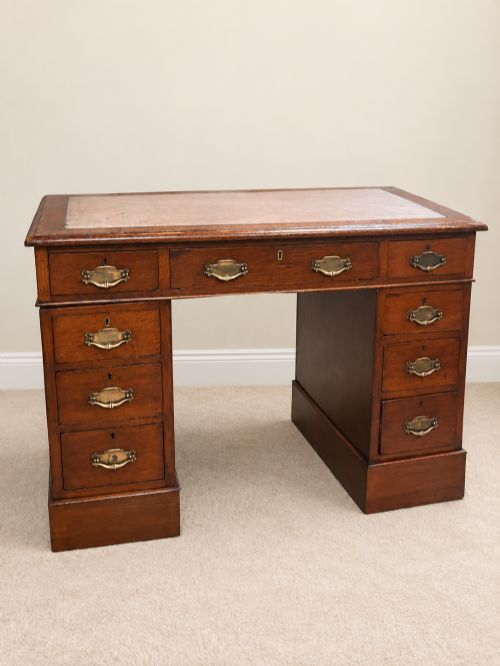
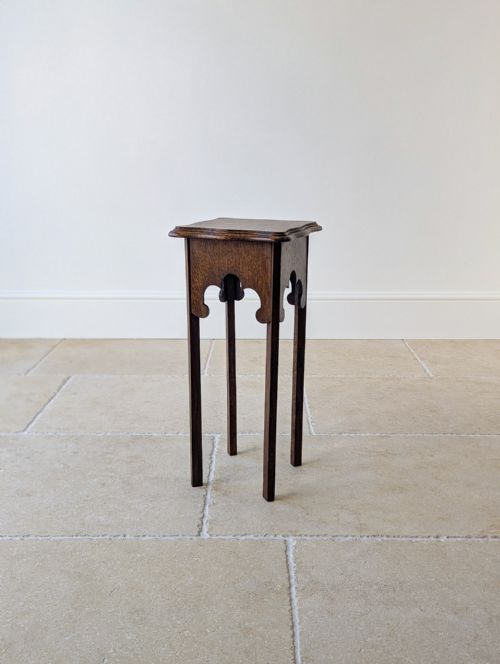
The format ranges from small occasional wine tables and tilt-top designs to substantial dining tables and extending variants. Occasional pieces often feature circular or rectangular tops, whilst larger formats include drop-leaf breakfast tables and twin pedestal desks.

Judging quality and craftsmanship
Quality rests in the selection of the timber, where figured grains, burr surfaces, and rich patinas elevate the piece visually. The stability of the central column and the precision of the tilt mechanism or extension system also separate standard examples from finer items.
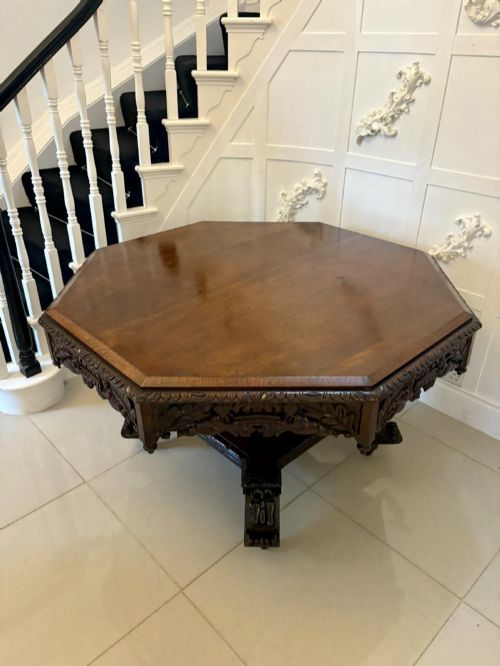
Carved ornament ranges from simple turned posts to elaborate Gothic motifs and detailed panel work, demonstrating the skill applied by the original maker.
Retail Price Guide 2026
Typical UK retail prices for oak pedestal table, calculated from the Sellingantiques database of over a million retail prices indexed since 2003. This retail price guide relies exclusively on Sellingantiques data; no external sources or auction records are used, so the figures do not describe the wider market.
Tilt-top tables were originally built to hug the parlour wall like a screen when the room was cleared for evening dancing.
Shoolbred
The Oak Pedestal Table Glossary
- Pedestal table
- A table supported by a central pillar or column rather than four corner legs. This construction allows unrestricted seating around the perimeter.
- Tilt-top
- A table mechanism where the top surface pivots on a hinge to rest vertically against the pedestal when stored. This clever design saved valuable floor space in historic interiors.
- Tripod base
- A pedestal support consisting of three spreading legs radiating from the base of the central column. It provides a stable stance on uneven floors.
- Burr oak
- A knotted tree growth that produces highly figured, swirling wood grain patterns when sliced into veneer. Cabinet makers prized this material for decorative table tops.
- Drop-leaf
- A table configuration featuring hinged flaps that fold down at the sides. Brackets or swing legs support the leaves when raised to extend the surface area.
Frequently Asked Questions
How do I use a tilt-top oak pedestal table?
The top pivots on a catch mechanism, allowing the surface to fold flat against the central column when not in use. This historical space-saving design makes it simple to tuck the piece against a wall.
Ensure the brass catch or wooden wedge is fully engaged when returning the top to the horizontal position for daily use.
Where should I place an oak pedestal table?
These pieces suit central positions in rooms where the pedestal can be admired from all angles. Smaller wine and occasional formats fit neatly beside seating.
Avoid placing solid timber directly beside modern heat sources to prevent the wood from drying out.
How do I tell an 18th-century pedestal table from a Victorian one?
Earlier pieces from the Georgian period frequently employ simpler tripod bases and tilt-top mechanisms designed for domestic parlours. Victorian examples often display heavier proportions, darker patinas, and more prominent turned columns.
Examine the underside for signs of historic hand-cut fixings and timber shrinkage that indicate greater age.
Are oak pedestal tables suitable for dining?
Larger circular and extending formats provide ample surface area while the central pedestal eliminates corner legs, making it easier to seat guests comfortably. Drop-leaf variants also offer flexibility for smaller dining spaces.
Use heat mats and coasters to protect the polished oak surface during meals.