



Oak Dining Room Chairs
Oak dining room chairs bring substantial timber frames and period character to the table, ranging from Arts and Crafts sets to heavy Victorian carvings.
Oak Dining Room Chairs
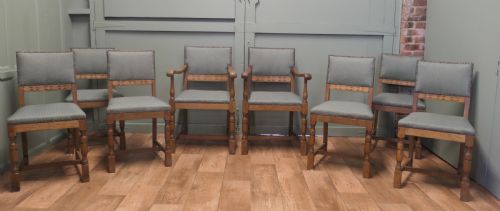
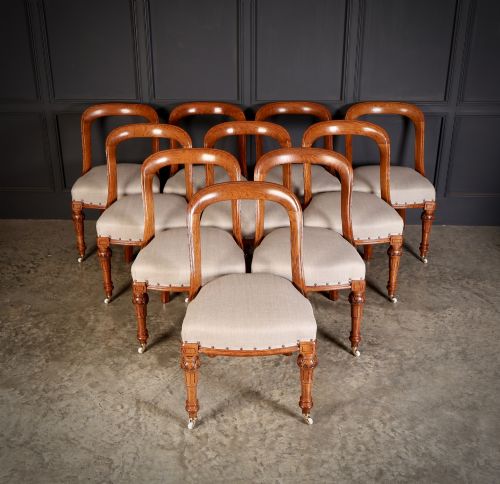
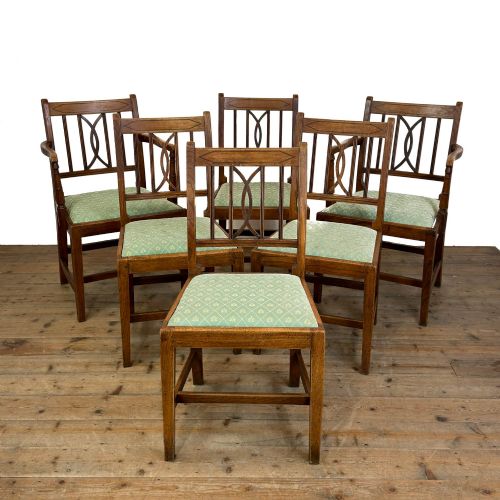
These pieces are seating designed for communal dining, encountered here primarily in matched sets spanning the nineteenth and early twentieth centuries. Buyers seeking oak dining room chairs examine configurations ranging from four-piece groupings to large sets of ten, twelve, or fourteen items.
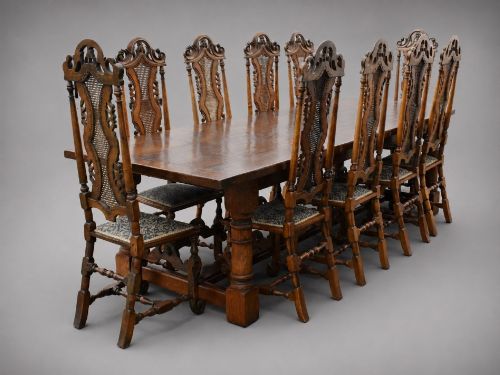
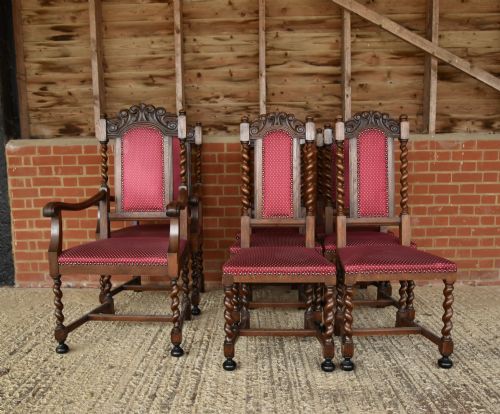
The selections reflect revival aesthetics alongside utilitarian country house forms. Common expressions include Jacobean Revival high-backs, Gothic Revival framing, Arts and Crafts simplicity, and Edwardian interpretations of Queen Anne styles.
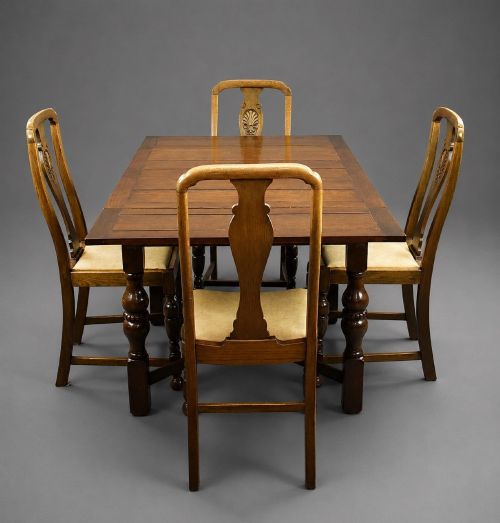
Individual listings often pair seating with extending tables, sideboards, or complete dining suites. Armchairs and carvers frequently anchor the ends of larger sets alongside standard dining chairs.
How they were made
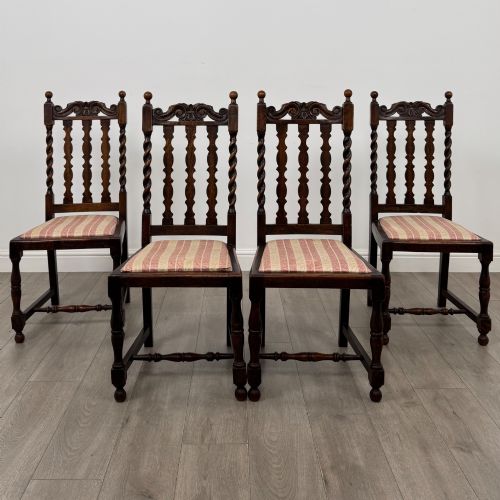
Makers utilised solid oak timbers, occasionally selecting pollard oak or golden oak varieties for distinct grain patterns and colour. Structural elements often rely on turned components such as barley twists or mortise and tenon joinery.
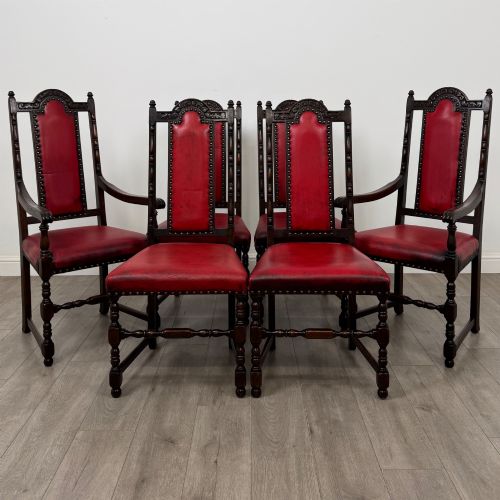
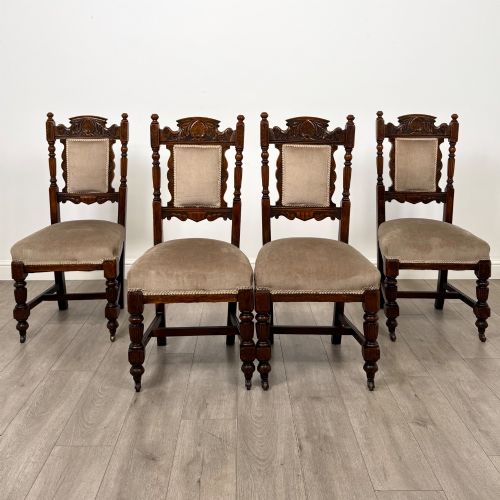
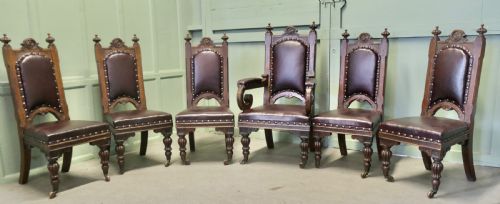
Upholstered inserts and drop-in pads introduce secondary materials including leather, velvet, fabric, and cane. Brass studs and hardware frequently secure the leather or fabric coverings to the wooden frames.
Oak Dining Room Chairs Retail Price Guide 2026
Typical asking prices for oak dining room chairs among the pieces listed under this phrase on Sellingantiques today, from the lower quarter to the upper quarter. They describe what is for sale here now, not the wider market.
One notable set carries a provenance link to Winston Churchill at Harry Warren House.
What varies in quality
Depth of carving and sharpness of detail separate standard production from superior examples. Skilled hands shape high-back profiles, strapwork, and linenfold motifs with distinct relief rather than shallow impressions.
The integrity of the timber frame and the scale of the set determine enduring worth. Matched sets spanning ten or twelve chairs hold greater consistency when the grain and turning align across every piece.
Heals
The Oak Dining Room Chairs Glossary
- Barley twist
- A turned wooden furniture leg or stretcher carved in a spiral resembling a twisted rope. This technique appears frequently on Edwardian and twentieth-century oak frames.
- Carver
- An armchair designed with elbow rests, traditionally placed at the head and foot of a dining table. Sets often include two carvers alongside several standard chairs.
- Draw leaf
- A dining table construction featuring sliding leaves hidden beneath the main top that pull out to extend the surface. These tables frequently accompany matching sets of chairs.
- Pollard oak
- Timber taken from trees that have been pollarded, resulting in a dense, highly figured grain pattern. This material appears on select nineteenth-century revival suites.
- Jacobean Revival
- A nineteenth- and twentieth-century style imitating seventeenth-century English furniture. Pieces display rectangular panel backs, heavy turnings, and geometric carvings.
Oak Dining Room Chairs: Frequently Asked Questions
How many chairs come in a typical set?
Sets commonly comprise four to eight chairs, though larger groupings of ten, twelve, or fourteen pieces appear alongside matching tables.
Buyers seeking complete dining room suites often find sideboards and carver chairs included within the same offering.
What periods do these chairs represent?
The pieces span the nineteenth and early twentieth centuries, encompassing Victorian, Edwardian, and William IV eras.
Revival styles such as Elizabethan, Jacobean, and Gothic draw inspiration from earlier centuries while maintaining later manufacturing dates.
Are leather seats original to the chairs?
Many Victorian and Arts and Crafts examples retain original burgundy or dark leather upholstery secured with brass studs. Some pieces incorporate cane panels or replacement fabric coverings.
Working with period materials requires noting whether the hide shows age-appropriate patina or modern re-covering.