
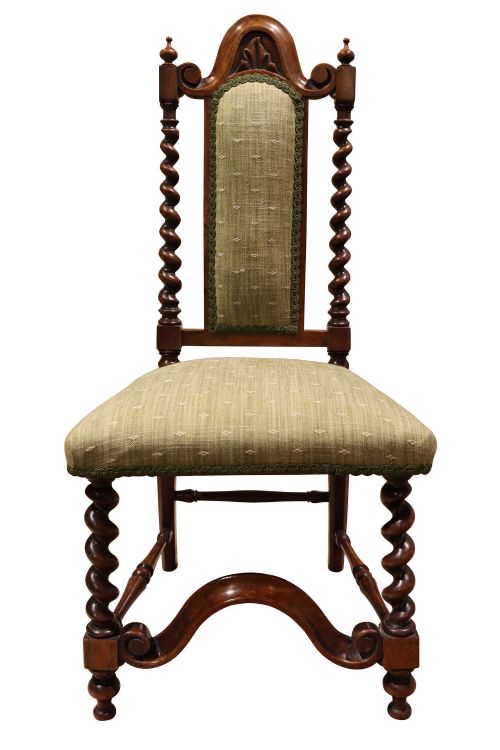


Green Fabric Dining Chairs
Green fabric dining chairs bring rich tone and practical comfort to the table, uniting period timber frames with soft textile seats.
Defining green fabric dining chairs
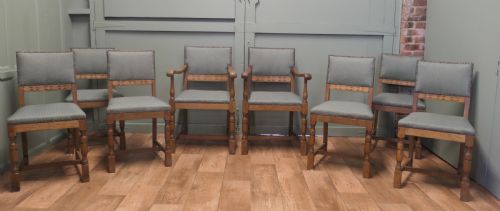
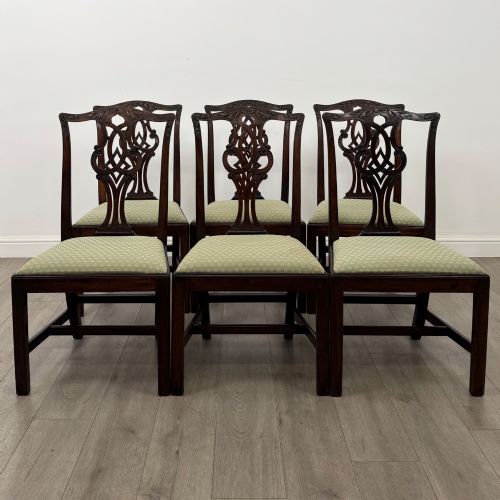
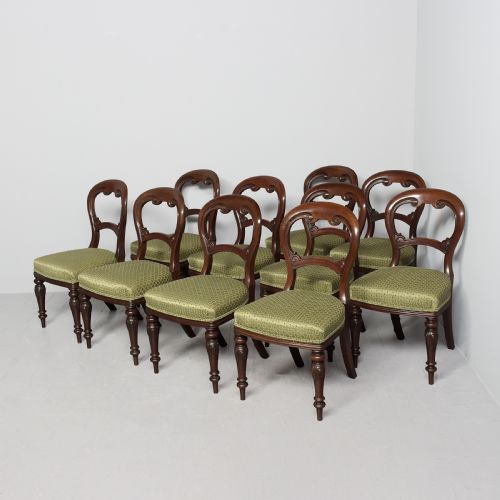
Green fabric dining chairs cover a span of historical periods, ranging from 18th century Georgian examples to 1910 designs. These seating groups appear in sets, often numbering four, six, eight or ten pieces to suit dining tables.
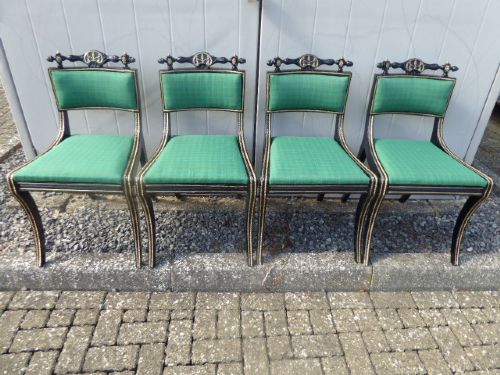
The objects seen here comprise regional variations, including Scottish Victorian mahogany forms alongside English oak and ebonised Regency frames. Buyers find styles that embrace Arts and Crafts, Edwardian, and Jacobean Revival aesthetics.
While historical frames use mahogany, oak, and ebonised timber, the upholstery brings textile softness to the hard structures. This combination offers formal dining utility while retaining distinct period character.
Materials and construction
Makers shaped these dining chairs from solid timbers such as mahogany, oak, and ebonised wood, sometimes incorporating parcel gilt details. Structural frames rely on traditional joinery methods suited to each specific era.
Upholstery materials include textile and fabric, applied over padding to create functional seats. Metal elements also appear in certain construction contexts, supporting the primary wooden frameworks.
Retail Price Guide 2026
Typical UK retail prices for green fabric dining chairs, calculated from the Sellingantiques database of over a million retail prices indexed since 2003. This retail price guide relies exclusively on Sellingantiques data; no external sources or auction records are used, so the figures do not describe the wider market.
Listings span periods from the 18th-century Georgian era through Regency, Victorian, and Edwardian up to 1910, utilising mahogany, oak, and ebonised timber.
Assessing quality and craftsmanship
Quality rests in the integrity of the timber frame and the precision of the period joinery. Superior sets demonstrate cohesive design across multiple chairs, maintaining uniform proportions and stable construction.
The refinement of carved details, the choice of primary woods like figured mahogany or golden oak, and the execution of ebonised surfaces distinguish finer examples from simpler utilitarian seating.
The Green Fabric Dining Chairs Glossary
- Mahogany
- A durable, reddish-brown tropical hardwood favoured for fine cabinet making across Georgian and Victorian periods. Its dense grain allows for sharp carving.
- Ebonised timber
- Wood treated with a dark stain or chemical process to imitate ebony. This technique gained particular popularity during the Regency era for striking visual contrast.
- Parcel gilt
- A decorative finish where selected carved details or mouldings are partially covered in gold leaf. It highlights specific design motifs against a dark wooden ground.
- Jacobean Revival
- A 19th-century stylistic movement reviving the heavy, rectilinear forms and geometric carving of the 17th century. It frequently employs solid oak.
Frequently Asked Questions
How many green fabric dining chairs usually come in a set?
Sets typically range from four to ten chairs, reflecting the original requirements of formal dining rooms. Larger groups of eight or ten pieces are less common and usually date from the Victorian and Edwardian periods.
Buyers often look for matched quantities to accommodate specific dining tables without mixing differing frame styles or timber tones.
Which woods were used for these dining chairs?
Makers utilised mahogany and oak as the primary structural timbers across the Georgian, Victorian, and Edwardian eras. Ebonised timber and parcel gilt finishes also appear on specific Regency and revival pieces.
The choice of wood directly influences the visual weight and period character of each seating group.
What styles can I expect to find?
The selection encompasses Georgian, Regency, Victorian, Edwardian, Arts and Crafts, and Jacobean Revival styles. Each period brings distinct silhouettes, from curved Regency lines to sturdy oak Arts and Crafts forms.
Recognising these stylistic traits helps place the chairs within the correct historical context of interior design.
How do I care for antique wooden dining chairs?
Maintain wooden frames by dusting regularly with a dry cloth and avoiding direct sunlight or excessive heat sources that dry out timber. Gentle cleaning preserves the historic finish and structural integrity of the joints.
Upholstered textile sections require careful vacuuming with a low suction attachment to protect the fabric surface from wear.