


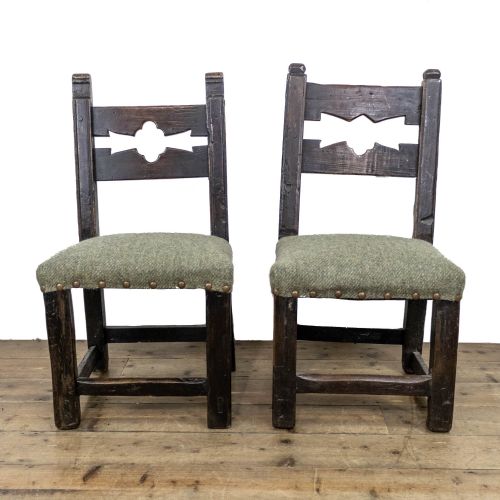


Green Oak Dining Chairs
These green oak dining chairs bring immediate character and solid construction to a room, valued for their rich timber tones and enduring build.
Green Oak Dining Chairs
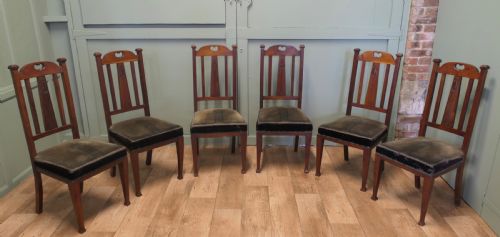
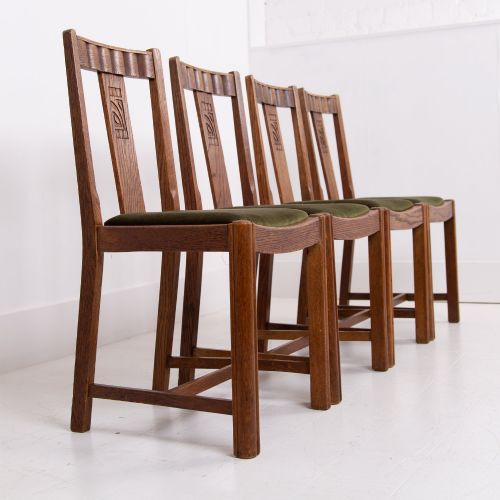
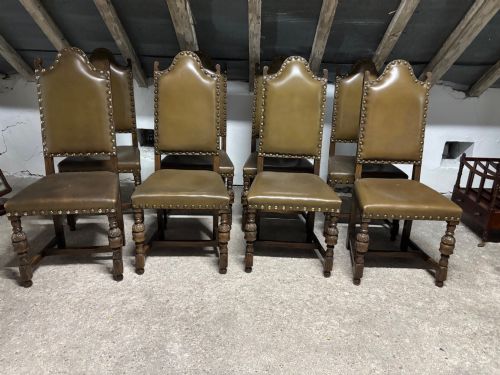
When you search for green oak dining chairs, you encounter a robust selection of seating spanning from the seventeenth century style through to the 1930s. The common thread is sturdy oak timber, often enriched with specific decorative motifs or period upholstery.
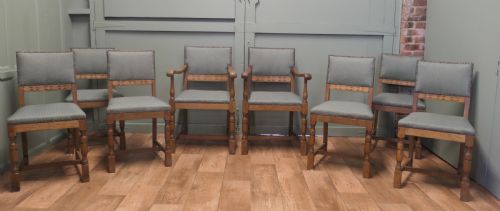
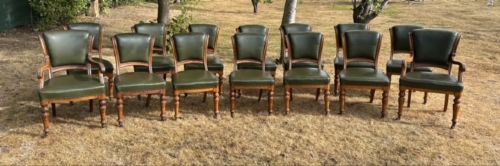
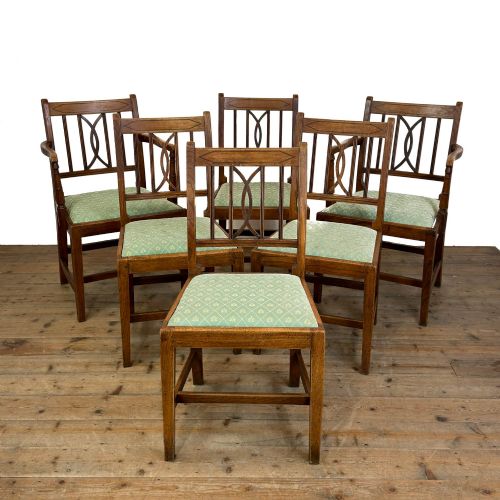
Sets frequently appear alongside individual carver armchairs and side chairs, reflecting domestic dining arrangements across Georgian, Victorian, and Arts and Crafts periods. Buyers most commonly find Victorian, Arts and Crafts, and twentieth century pieces featuring substantial timber frames.
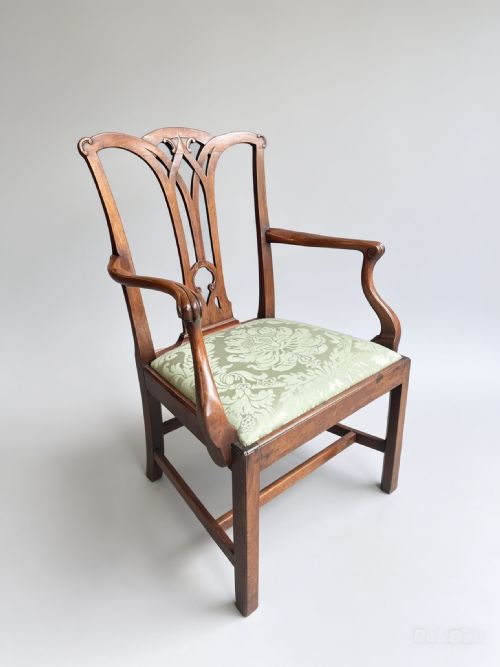
The term green oak dining chairs encompasses both antique iterations and pieces styled after earlier centuries, such as Jacobean Revival and Chippendale designs. These seats suit interiors requiring genuine period substance and robust daily utility.
What varies in quality
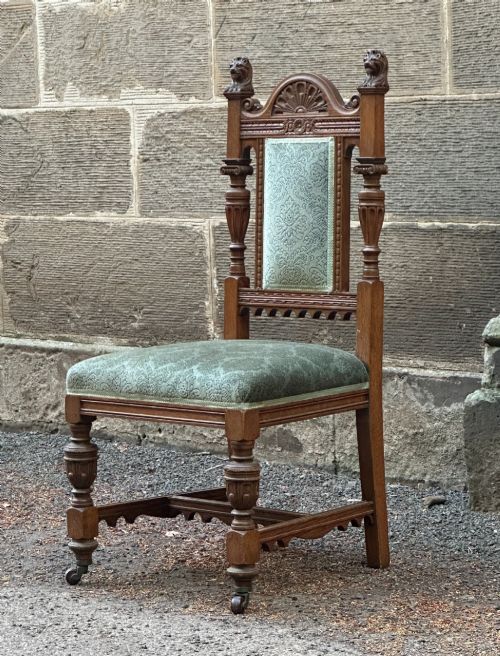
The distinction between standard examples and superior pieces rests in the crispness of the hand carving and the integrity of the timber. Finely executed relief work, such as detailed Green Man motifs or deep linenfold panels, elevates the standing of a set.
Consistency across a large set also dictates value, as matching groups of eight or fourteen require uniform timber selection and ageing. The grade of original upholstery materials and the tightness of the frame joinery further separate ordinary chairs from exceptional ones.
Some nineteenth century dining chairs feature a carved Green Man peering out from the foliage, keeping a watchful eye over the dinner conversation.
Bruce Talbert·Gillows
The Green Oak Dining Chairs Glossary
- Carver armchair
- A sturdy wooden armchair designed for the head of a dining table, featuring supportive armrests integral to the frame. These pieces often match a larger set of side chairs.
- Green Man
- A decorative architectural and furniture motif depicting a human face carved from or entwined with leaves and vines. This element appears prominently on nineteenth century carved oak dining chairs.
- Arts and Crafts
- A design movement emphasising handcraftsmanship, simple forms, and traditional materials rather than mass production. Chairs from this style often display honest construction and golden oak finishes.
- Jacobean Revival
- A nineteenth and early twentieth century architectural and furniture style emulating the heavy, ornate forms of the early seventeenth century. Pieces typically feature turned legs and geometric panel carving.
- Side chair
- A dining chair without armrests, designed to maximise seating capacity around a table. These form the numerical majority in most antique dining sets.
Green Oak Dining Chairs: Frequently Asked Questions
How do I date an oak dining chair?
Dating relies on observing construction techniques, tool marks, and stylistic clues inherent to the period of manufacture. Hand-sawn timber and peg joinery often point toward earlier eras, while machine milling suggests nineteenth or twentieth century production.
Examining the style of the carving and the type of upholstery foundation helps narrow the decade. Comparing the piece against documented examples from eras like the Victorian period or the Arts and Crafts movement confirms its place in history.
Are these chairs suitable for daily use?
Most antique oak chairs were built to withstand heavy daily domestic activity using dense hardwood and sturdy joinery. Their robust frames make them well-suited for modern dining rooms.
Periodic checking of the joints ensures the structural stability remains sound over decades of use. Leather and fabric seats can also be maintained or reupholstered to preserve comfort without altering the antique frame.
Can I mix carvers with side chairs?
Pairing armchairs with matching side chairs is a traditional approach to furnishing a dining table. Carver chairs traditionally occupy the head positions, while side chairs line the sides.
When mixing pieces from similar periods or styles, keeping a consistent timber like oak ensures visual harmony. Matching the finish and decorative motifs creates a cohesive arrangement across the entire set.