
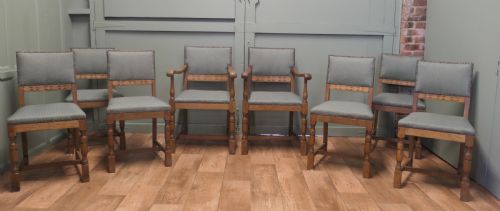
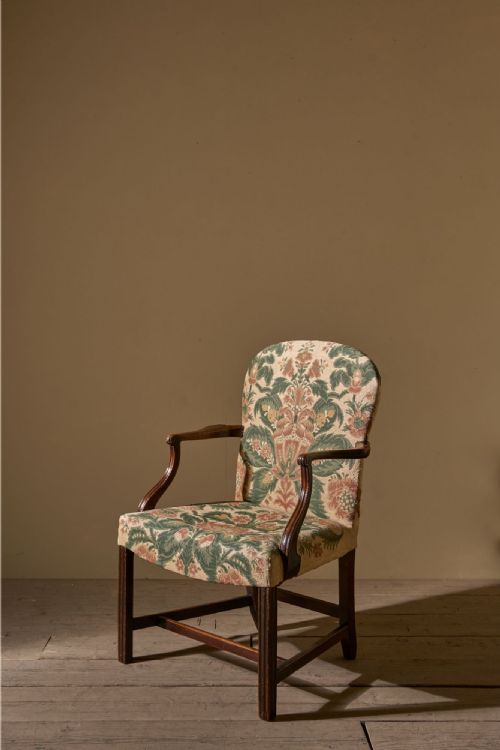
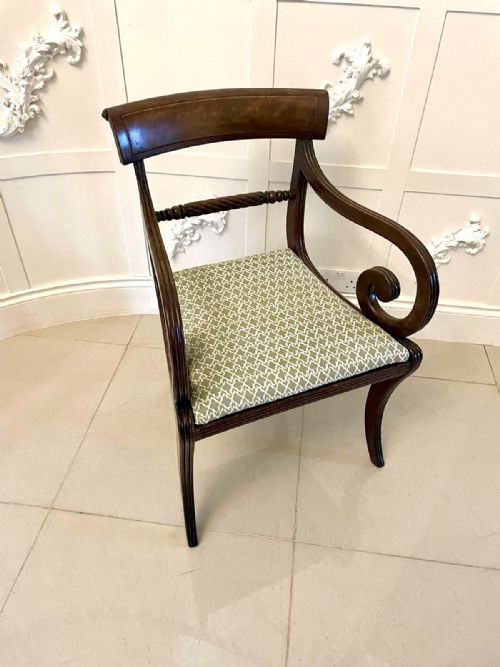
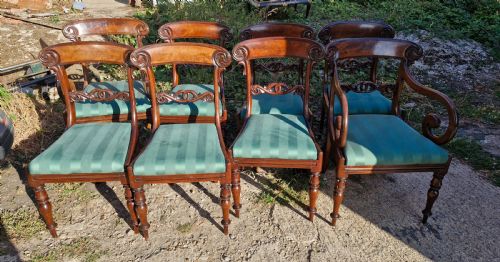
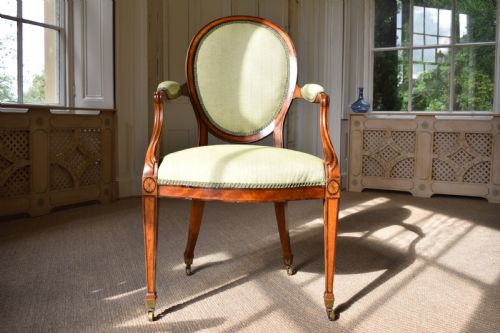
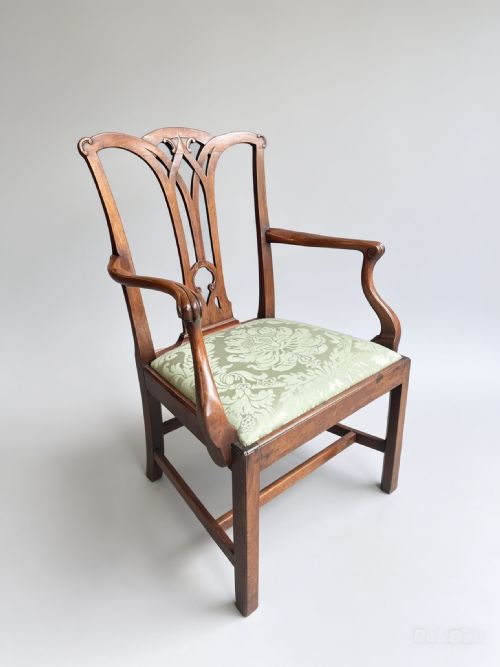
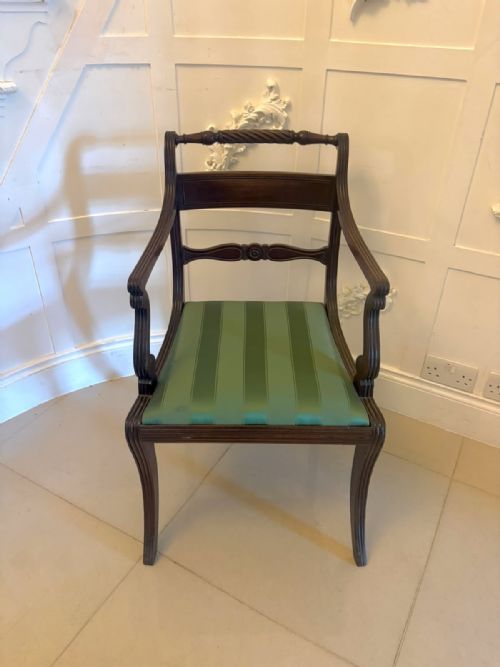
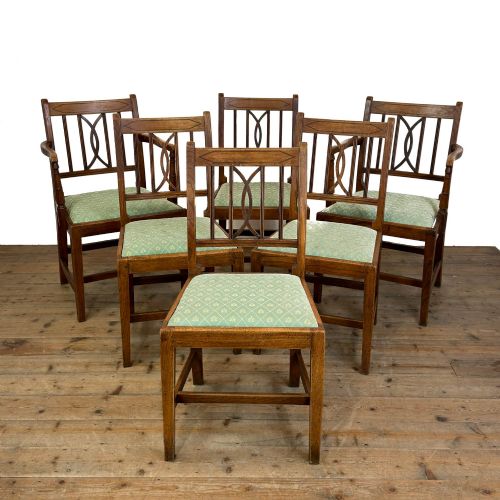
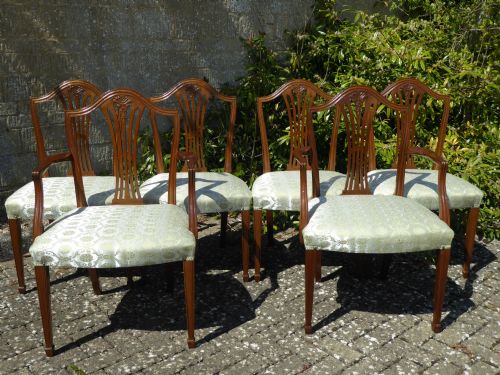


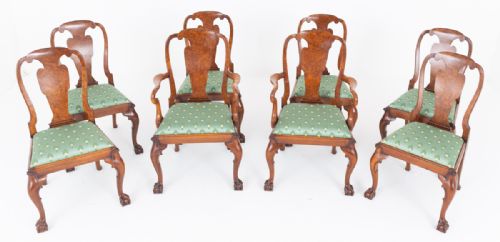


Green Upholstered Carver Chair
A green upholstered carver chair brings enduring character to a desk or dining table through traditional timber framing and tactile fabric.
Green Upholstered Carver Chair
A green upholstered carver chair typically manifests as an armchair or desk chair originating from periods ranging from the eighteenth century through to the early twentieth century. These seating options emerge within diverse aesthetic frameworks, including Regency, Georgian, Victorian, and Arts and Crafts designs.
The pieces meeting this description combine wooden armframes with textile coverings in various shades of green. Buyers frequently encounter forms designated as dining chairs, desk chairs, and open armchairs within this selection.
Materials and construction methods
Makers constructed these frames predominantly using hardwoods such as mahogany, oak, walnut, and rosewood, occasionally incorporating satinwood, birch, or pine. Structural integrity relied on traditional joinery techniques suited to the period of manufacture.
Upholstery involved textiles like fabric, velvet, and tapestry, secured to seat bases and backrests. Metal and brass accents appeared on specific desk chairs and castors where mobility or functional reinforcement was required.
Some nineteenth-century desk chairs feature hidden brass castors so fiercely stubborn they practically demand a personal wrestling match every time you sit down.
Distinctions in construction and finish
Quality differentiates itself through the selection of timber and the precision of the carved details on the arms and legs. Superior examples display refined proportions and robust joinery that withstands centuries of use.
The grade of the upholstery textile and the execution of the padding contribute significantly to the overall integrity of the piece. Finer items exhibit careful alignment of fabric patterns and durable underlying support.
J. & T. Scott·Robert Strahan·Louis Majorelle
The Green Upholstered Carver Chair Glossary
- Carver chair
- An armchair, traditionally placed at the head of a dining table or utilised at a desk, featuring integrated armrests. These seats often accompanied sets of single dining chairs.
- Mahogany
- A durable, reddish-brown tropical hardwood favoured by cabinetmakers during the eighteenth and nineteenth centuries for its stability and fine grain. It allowed for crisp carving on chair arms and cabriole legs.
- Regency style
- A British design aesthetic spanning the early nineteenth century, characterised by classical revival motifs and clean lines. Chairs from this period frequently draw inspiration from ancient Roman and Greek forms.
- Jacobean Revival
- A nineteenth-century style replicating seventeenth-century English furniture characteristics. Pieces in this manner typically feature sturdy oak construction and geometric turning.
- Tapestry fabric
- A thick, woven textile featuring pictorial or patterned designs. It provides a durable and decorative surface for traditional upholstery.
Green Upholstered Carver Chair: Frequently Asked Questions
What is a carver chair?
A carver chair is an armchair traditionally designed with integrated armrests for the head of a dining table. These seats also served functional roles as desk or study chairs in period homes.
Today, they function equally well as standalone occasional seating in bedrooms or drawing rooms while retaining their historical utility.
How do I date a wooden armchair?
Dating an armchair involves examining the timber species, joinery methods, and stylistic cues characteristic of specific periods such as the Georgian or Victorian eras. Secondary woods used in the internal framing often provide further chronological clues.
Comparing the carved motifs and leg profiles against documented historical examples helps narrow down the decade of manufacture.
Where should I place a desk chair?
A desk chair with upholstered armrests suits a traditional study, home office, or library setting. Its supportive back and arms offer comfort during prolonged periods of sitting.
These chairs also integrate smoothly into living rooms or bedrooms as accent seating beside a bookcase or fireplace.
How do I care for antique upholstery?
Antique upholstery requires gentle vacuuming with a soft brush attachment to remove dust without damaging the textile fibres. Keeping velvet and fabric covers away from direct sunlight prevents fading of the green hues.
Professional cleaning is recommended for delicate textiles to preserve the structural integrity of the internal padding and fabric.