


Green Striped Armchair
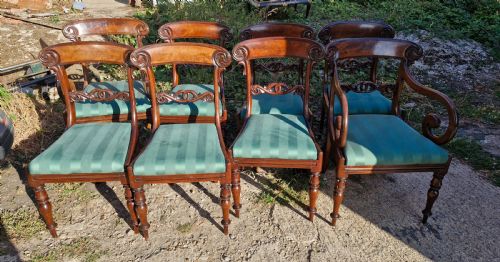
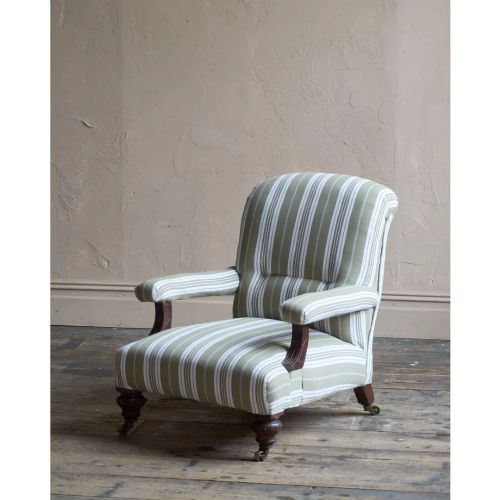
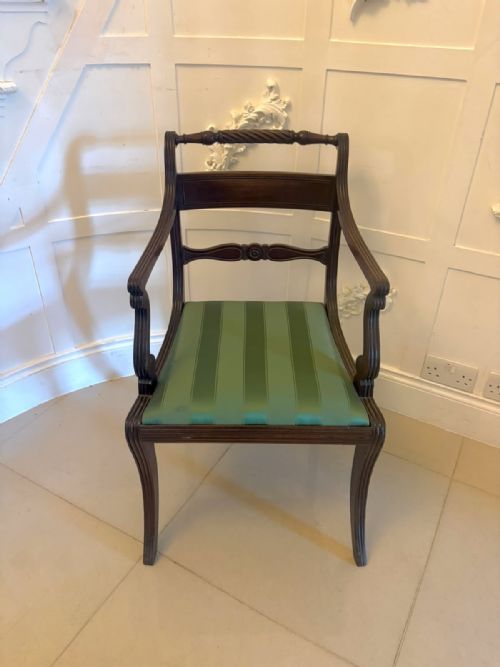
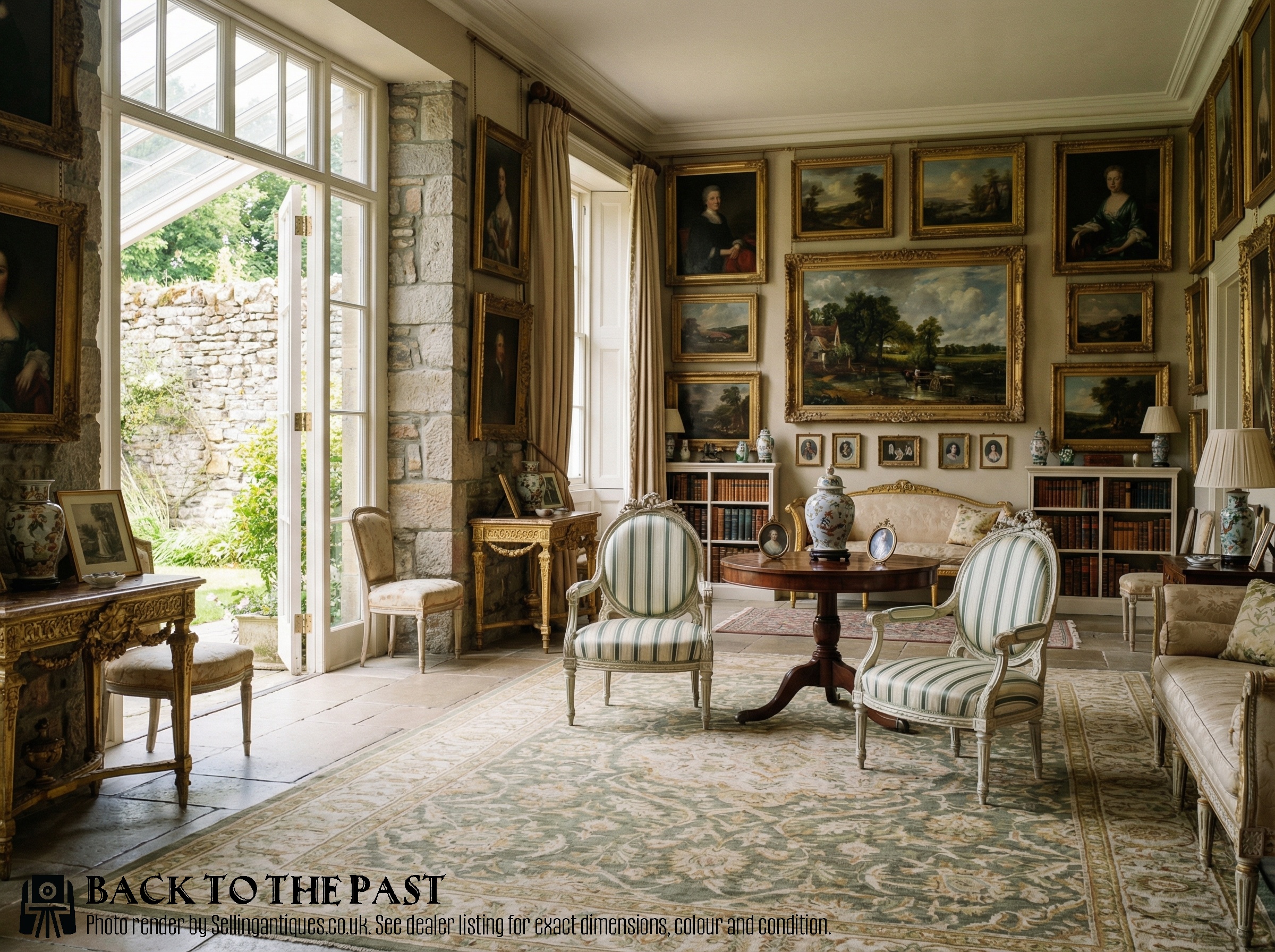
These green striped armchairs bring period comfort and upholstery history into the room, spanning Victorian, Regency and French revival styles.
Green Striped Armchair
A green striped armchair encompasses various nineteenth-century and early twentieth-century seating forms, including library chairs, wingbacks and open armchairs. The listings here frequently feature Victorian and Regency pieces alongside French Louis styles.
Buyers encounter solid timber frames in mahogany, birch, hardwood and painted wood, often paired with textile and cotton upholstery. Many examples show distinct historical influences such as Karl Johan and George IV designs.
The selection ranges from single oversized chairs to pairs and sets, some retaining original ticking fabric or presented ready for re-upholstery. These seats serve functional roles in studies, drawing rooms and libraries.
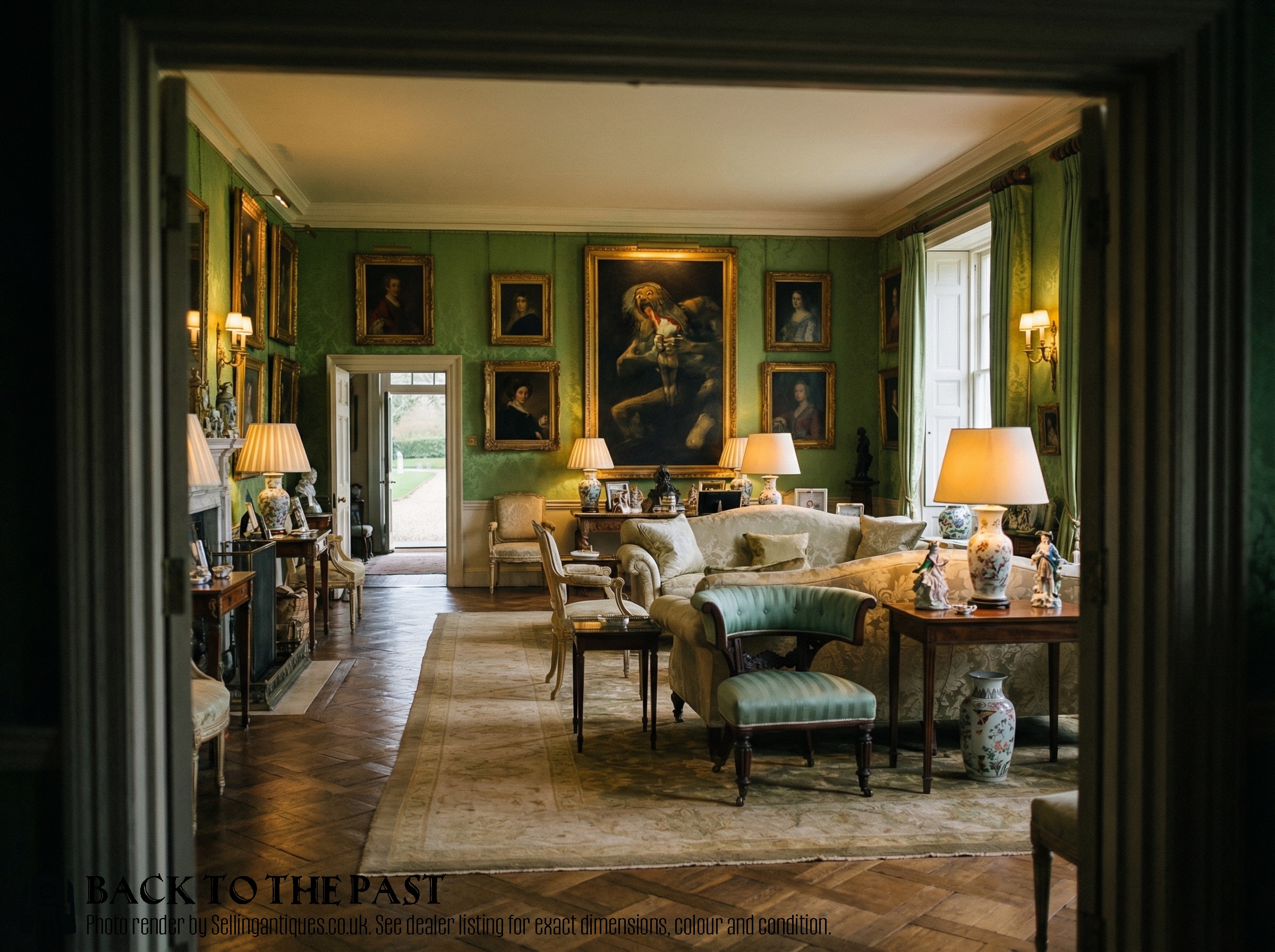
How they were made
Frames are constructed from dense timbers like mahogany, birch and hardwood, shaped with carved details and turned supports. Painted wood and black lacquered finishes appear alongside polished grain.
Upholstery relies on traditional textile and cotton applications, secured over sprung or padded foundations. Brass elements often accent the joinery and castors of nineteenth-century examples.
Green Striped Armchair Retail Price Guide 2026
Typical asking prices for green striped armchair among the pieces listed under this phrase on Sellingantiques today, from the lower quarter to the upper quarter. They describe what is for sale here now, not the wider market.
At least one nineteenth-century armchair here comes equipped with wheels, proving that Victorians took indoor mobility quite seriously.
What varies in quality
The refinement of the timber frame carving and the integrity of the underlying joinery set apart the superior examples. Original surface treatments, whether polished mahogany or period paintwork, hold greater weight than later alterations.
Upholstery execution and fabric retention dictate visual presence, distinguishing structurally sound period seating from pieces requiring extensive frame restoration.
The Green Striped Armchair Glossary
- Regency
- A British design period spanning the early nineteenth century, known for classical restraint and classical revival motifs. Pieces from this era often utilise mahogany and clean structural lines.
- Curule
- An ancient Roman X-shaped chair form revived in nineteenth-century library seating. This design provides structural cross-bracing beneath the armrests.
- Wingback
- An armchair featuring protective side panels designed to shield the sitter from draughts. These pieces typically display deep upholstery and generous proportions.
Green Striped Armchair: Frequently Asked Questions
Are these armchairs comfortable to use daily?
Most period armchairs offer generous proportions and supportive sprung or padded seats suited for regular sitting. Their ergonomics reflect nineteenth-century standards of domestic comfort.
Buyers planning daily use should assess the internal webbing and padding condition, as older foundations may require professional re-tensioning over time.
How do I identify a Regency armchair?
Regency pieces typically display dark mahogany timbers, classical proportions and restrained carved ornamentation. They often reflect archaeological influences from Greek and Roman design.
Look for sabre legs, reeded framing and bronze or brass mounts which characterise the period's output between the late eighteenth and early nineteenth centuries.
What does a chair ready for re-upholstery involve?
A chair sold for re-upholstery retains its structural timber frame while lacking finished outer fabric or requiring interior padding renewal. This allows owners to select specific textiles matching their interior scheme.
Evaluating these pieces requires checking the stability of the joints and webbing rather than the current surface fabric.
How do French styles differ from British ones?
French revival pieces, including Louis XV and Louis XVI styles, generally feature lighter painted or carved wooden frames with curved cabriole legs or fluted supports. They prioritise decorative grace over heavy mass.
British equivalents from the Victorian and Regency eras tend toward denser mahogany construction, deeper buttoning and more robust structural profiles.