
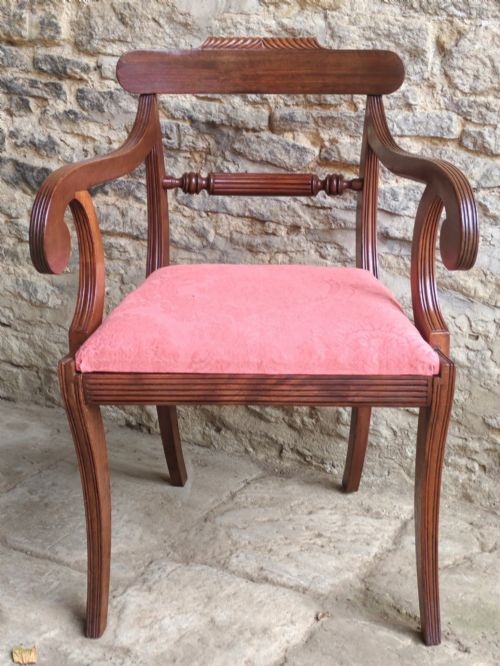
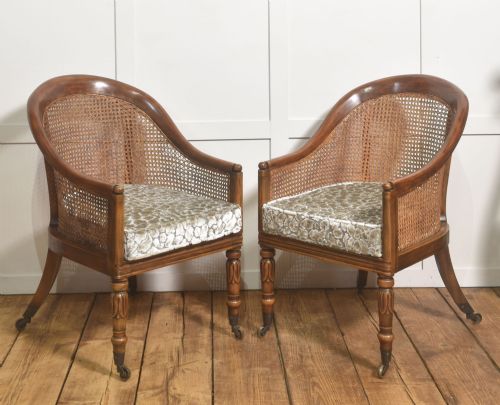
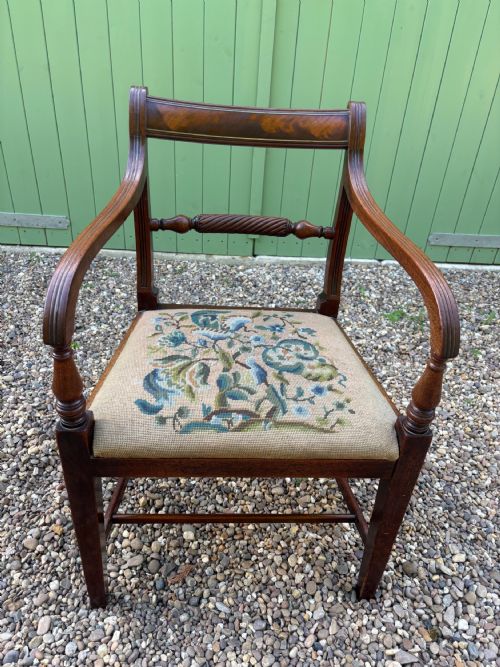
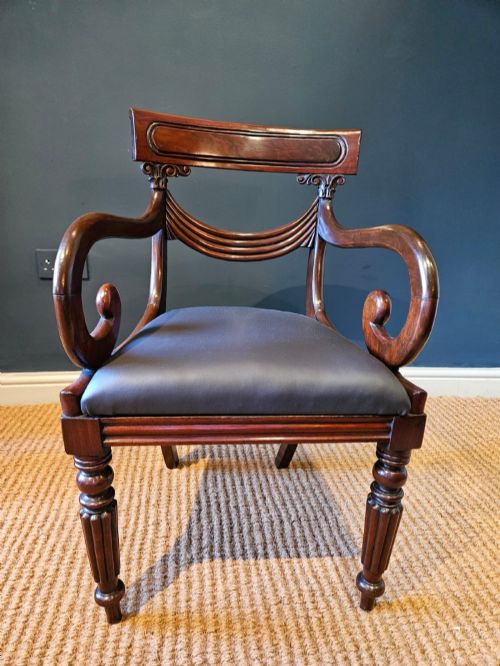
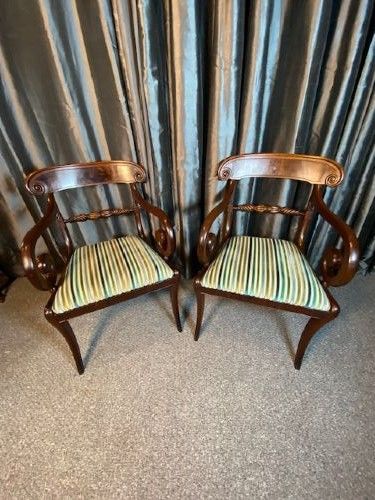
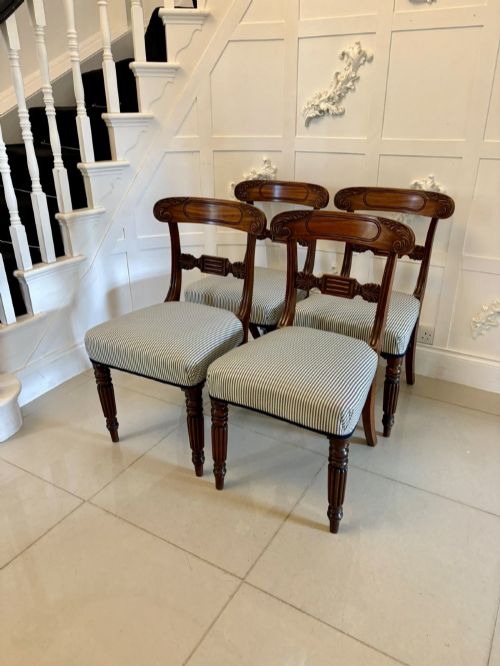
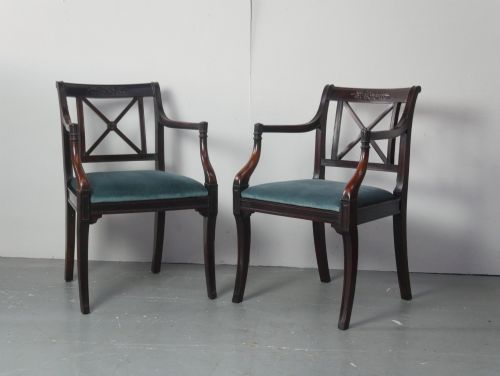
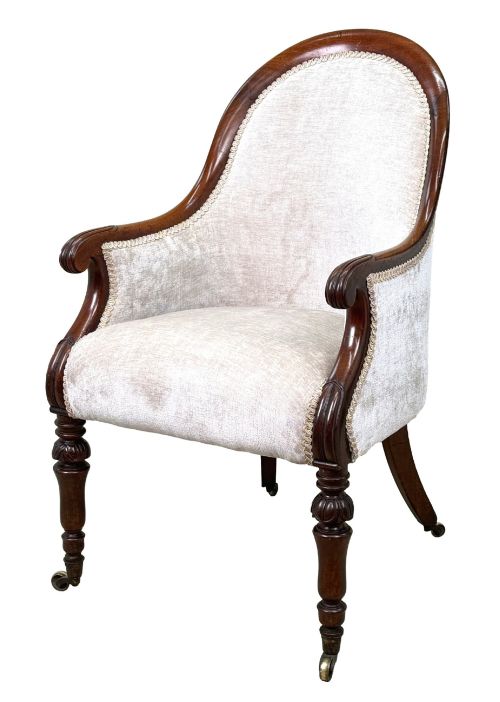
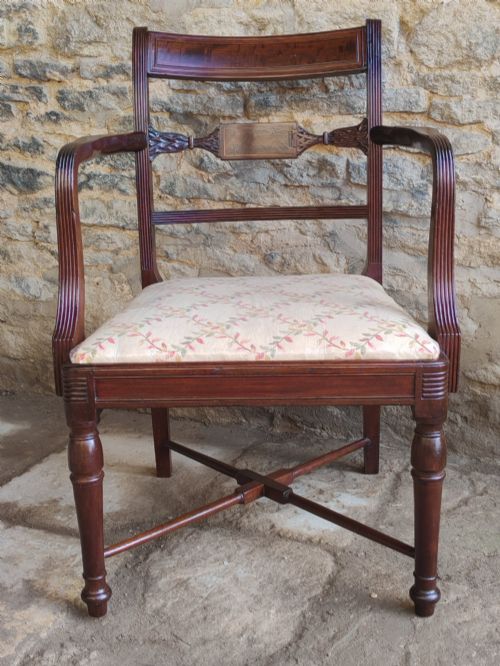
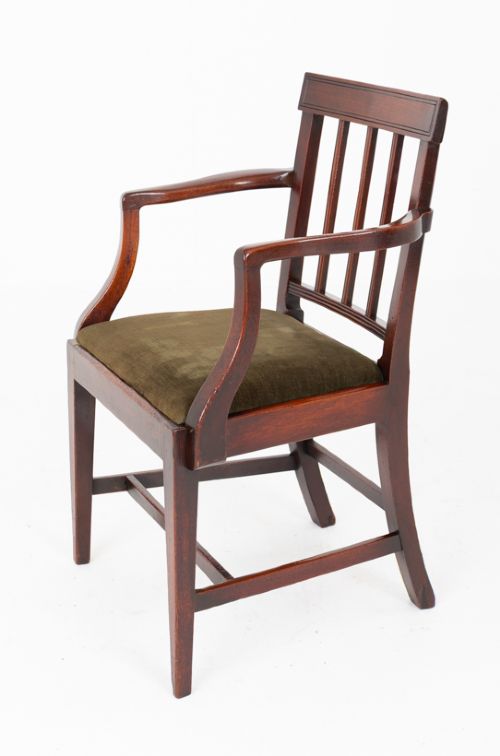
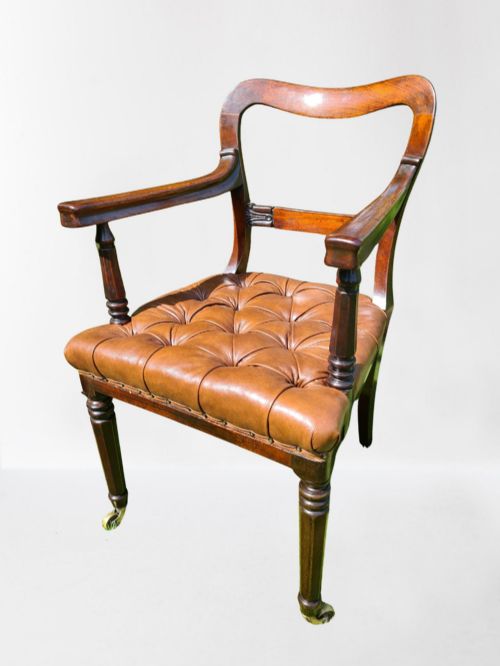
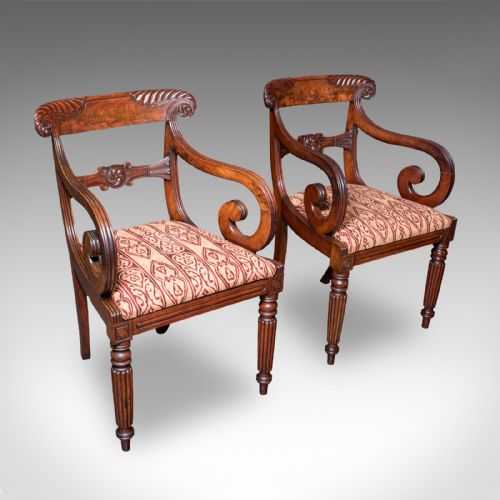
Regency Mahogany Desk Chair
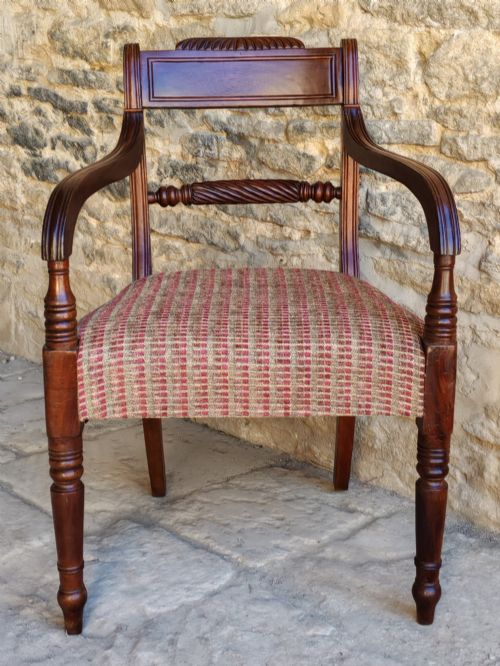
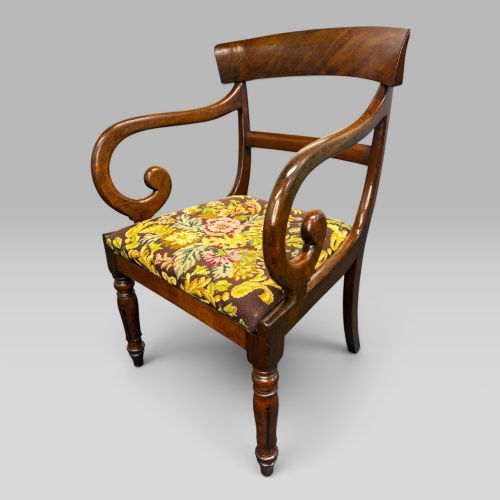
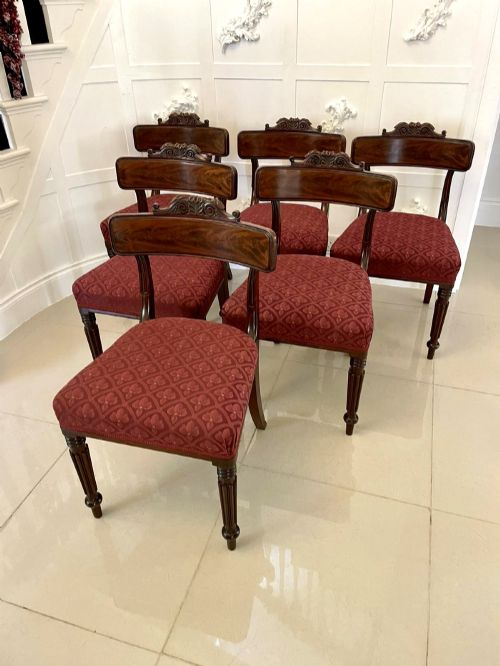
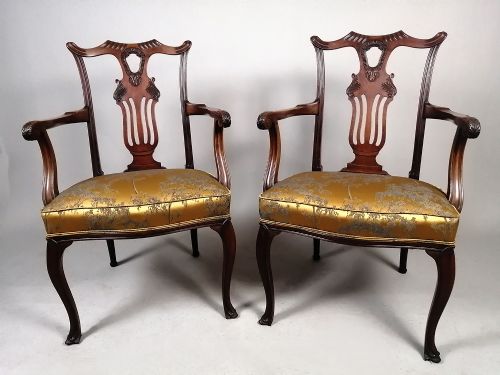
A regency mahogany desk chair brings architectural line and figured timber to a study, offering the solid construction of the early nineteenth century.
Regency Mahogany Desk Chair
A regency mahogany desk chair brings together the architectural forms of the early nineteenth century and the practical needs of writing and reading at a table. These seating pieces appear in various iterations across the listings, spanning authentic Regency pieces, Georgian antecedents, William IV examples, and later revivals from the twentieth century.
Buyers will encounter library armchairs, tub shapes, and scroll arm variants alongside standard elbow and carver chairs. The most typical specimens utilise solid mahogany frames, frequently featuring shaped top rails, carved splats, and occasional brass inlay or caned seats.
Many of these chairs incorporate revolving mechanisms or adjustable heights designed specifically for the library and office spaces of the period. While some originate from Scottish or English workshops, others follow the distinct stylistic language associated with makers like Gillows.
What varies in quality
The degree of refinement in the carved details and the selection of figured mahogany distinguish standard production from superior examples. Crisp execution in architectural motifs like ropebacks or lyre supports indicates a higher level of workshop competence.
Original elements, such as intact brass inlay, leather inserts, and structurally sound joinery, elevate a piece above those altered or heavily restored in later revival periods.
A surprising number of these library chairs survived centuries of vigorous studying while keeping their original cane intact.
Gillows
The Regency Mahogany Desk Chair Glossary
- Regency
- A style period spanning the early nineteenth century defined by classical restraint, Grecian influences, and architectural forms. It draws inspiration from ancient Roman, Greek, and Egyptian design.
- Mahogany
- A durable tropical hardwood valued for its rich dark colour, stability, and smooth grain. Cabinetmakers utilised it extensively for fine seating throughout the Georgian and Regency eras.
- Carver
- An armchair designed to match a set of dining or desk chairs, typically featuring open arms. These pieces provided comfortable seating at the head of a table or beside a desk.
- Bergère
- An enclosed upholstered armchair with a wooden frame and cane sides or back panels. They frequently accommodated loose cushions for added comfort in libraries and drawing rooms.
- Reeded
- A decorative moulding formed of parallel convex strips carved directly into the wood. This technique added linear texture to chair legs and arm supports.
Regency Mahogany Desk Chair: Frequently Asked Questions
How do I identify a genuine period chair?
Examine the timber construction, joinery methods, and wear patterns beneath the seat frame. Genuine period pieces exhibit hand-cut joints and timber characteristics consistent with nineteenth-century workshop practices.
Compare the proportions and carved details against documented examples from the Regency and Georgian eras to confirm stylistic alignment.
Were these chairs originally meant for desks?
Many examples served multiple functions in libraries, studies, and formal reception rooms as reading or writing chairs. Their proportions often accommodated the height of period writing tables and pedestal desks.
Library armchairs and tub shapes offered the necessary support for extended periods of reading and administrative work.
Can I use one daily at a modern desk?
These chairs function well in modern offices provided the seat height matches your desk clearance. Consider adding a subtle, non-permanent pad if the original timber or leather requires protection from daily wear.
Ensure the frame joints remain solid and stable before placing the chair into regular service.
What is the difference between Regency and William IV?
Regency designs lean towards slender classical lines, delicate brass inlay, and refined Grecian motifs. William IV pieces tend to be heavier and more robust, featuring bolder scrolling and architectural presence.
Both styles utilise solid mahogany, but the later period displays a distinct shift towards sturdier proportions.