



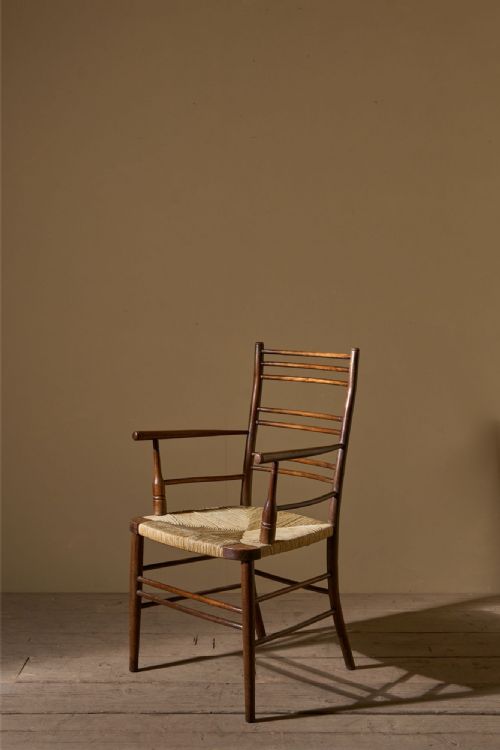
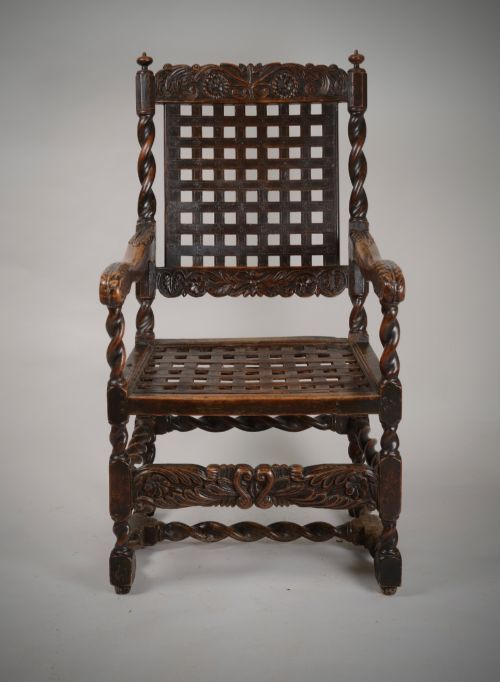
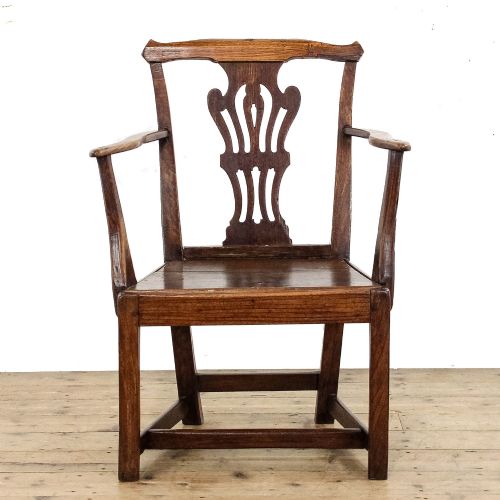
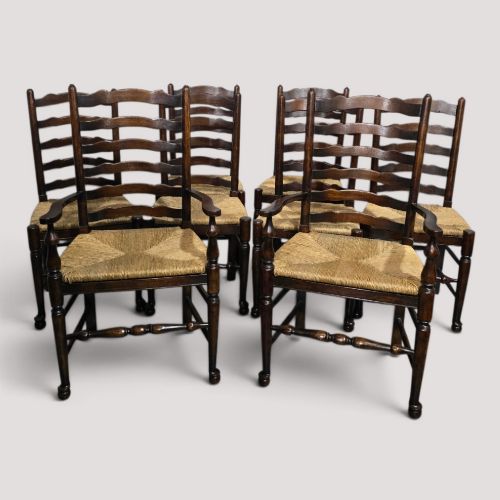
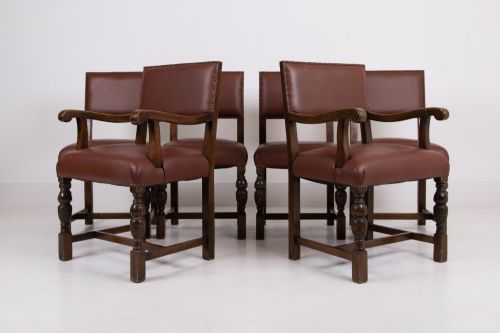
Oak Carver Armchairs
Oak carver armchairs bring substantial timber and solid presence to a room, offering sturdy seating with integrated armrests for daily use.
Oak Carver Armchairs
Oak carver armchairs span several centuries of British craftsmanship, ranging from sturdy country farmhouse seating to formal revival styles. When searching this phrase, buyers encounter substantial dining carvers alongside heavier occasional armchairs designed with open wooden supports.
The pieces on this page lean heavily towards nineteenth-century interpretations of earlier styles, alongside Edwardian and later twentieth-century iterations. Regional variations appear frequently, showing distinct regional turning patterns and local vernacular traditions in the construction of the arms and backrests.
Materials and construction
The primary timber is oak, often supplemented by elm, ash, and beech for specific structural components like spindles and bentwood parts. Traditional joinery relies on pegged mortise and tenon joints to secure the heavy framework.
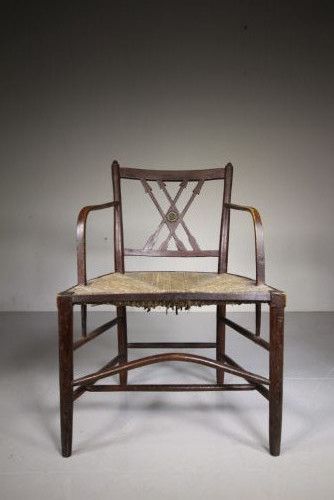
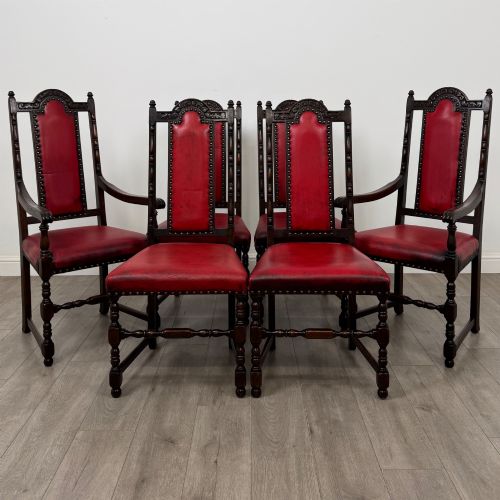
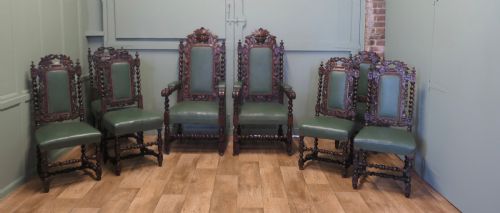
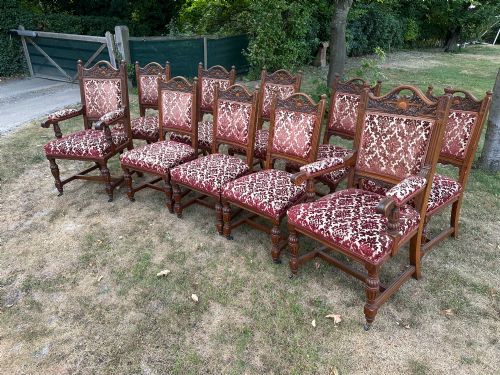
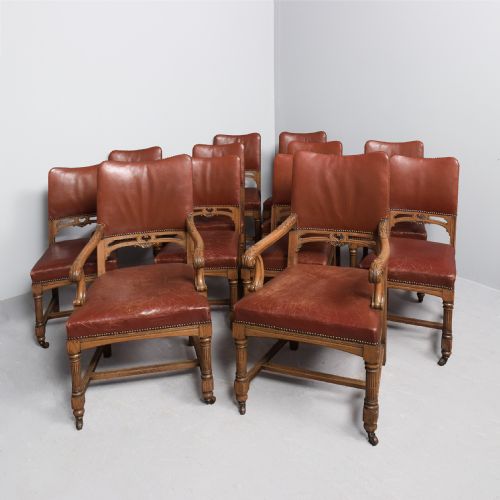
Seating areas utilise woven rush, split cane, or upholstered pads finished in leather and heavy fabric, secured with traditional brass studs.
Materials recorded across current and archive listings include oak, elm, ash, beech, rush, leather, and brass.
Quality variations
The standard of carving and the crispness of turned members dictate the visual success of revival pieces, separating plain utility items from ambitious workshop commissions. Timber selection matters greatly, with quartersawn oak displaying prominent medullary rays that signal superior log conversion.
Structural integrity depends on the original tightness of the joinery and the survival of natural finishes rather than modern replacement timber. Matching sets command attention due to the difficulty of assembling uniform groups of large seating over long periods.
Edward Barnsley·Morris and Co·Mouseman·William Morris
The Oak Carver Armchairs Glossary
- Carver
- An armchair designed with armrests, traditionally used at the head of a dining table or as a singular desk chair.
- Spindleback
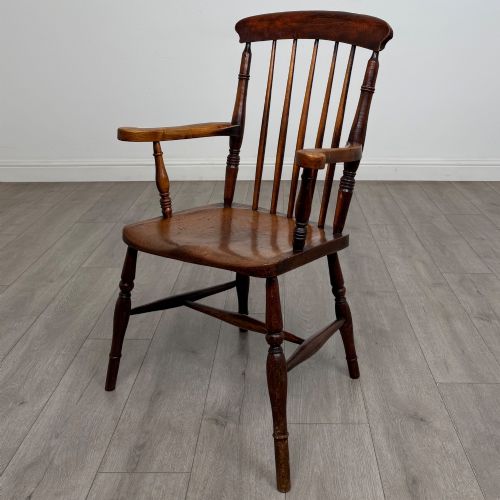
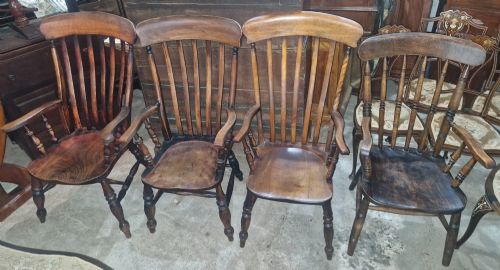
- A chair back constructed from multiple slender vertical turned wooden rods.
- Rush seat
- A traditional woven seat made from dried marsh grasses twisted into cords.
- Quartersawn
- Timber cut radially from the log to expose decorative grain patterns and provide greater dimensional stability.
- Ladderback
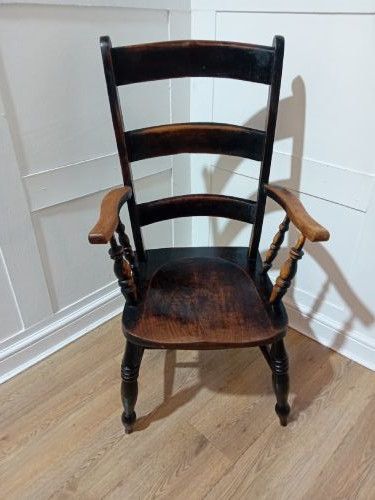
- A chair back formed from a series of horizontal arched slats resembling the rungs of a ladder.
Oak Carver Armchairs: Frequently Asked Questions
How do I care for oak carver armchairs?
Keep wooden surfaces nourished with traditional wax polishes and avoid placing chairs near direct heat sources that dry out the timber.
Protect rush or leather seating materials from excessive moisture by using breathable cloths for routine dusting.
Were these chairs meant for dining tables?
Many oak carver armchairs served as designated seating for the head of a household at the dining table, while others functioned as occasional library or hall chairs.
Heavier framed examples were often positioned in parlours rather than around standard dining settings.
How can I tell the period of an oak chair?
Examine the tool marks, timber selection, and joint construction methods to determine the likely era of manufacture.
Revival pieces often mimic seventeenth-century styles with machine-cut components or characteristic turning styles specific to the nineteenth century.
Are replacement seats common on antique chairs?
Rush and leather seats frequently undergo professional re-weaving or re-upholstering over decades of domestic use.
Original oak frames often survive long after organic seating materials have been renewed by later craftspeople.