



Bobbin Turned Dining Chairs
Bobbin turned dining chairs are seating built with spool-shaped spindles, offering rustic seventeenth-century character and sturdy construction.
Bobbin Turned Dining Chairs
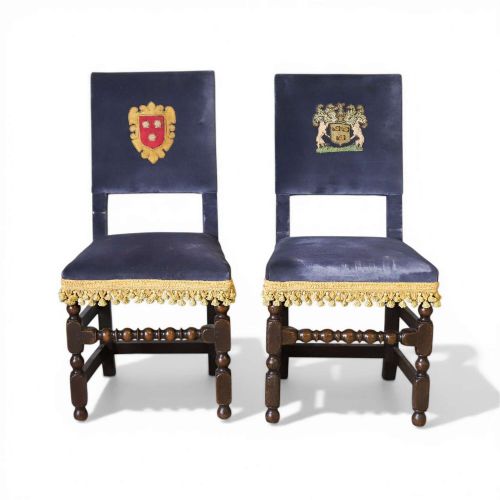
When buyers search for bobbin turned dining chairs, they encounter seventeenth century joined oak examples alongside later Jacobean revival styles and twentieth century sets. These seats appear as side chairs, armchairs, and back stools, showing the enduring appeal of turned spindle work.
The pieces on this page span several centuries, featuring regional British pieces such as South Yorkshire back stools and Lancashire chairs alongside later interpretations. Oak forms the primary material foundation, supplemented by walnut, mahogany, and rosewood in nineteenth and twentieth century iterations.
Buyers frequently find pairs and larger sets, ranging from early oak armorial clan chairs to twentieth century ladder backs on bobbin turned supports. Upholstery varies from plain leather and velvet to cane panels and fabric seats.
What varies in quality
Quality in these chairs rests upon the crispness of the lathe work and the integrity of the timber frame. Early seventeenth century joined oak examples demonstrate dense grain and traditional construction that differs markedly from later revival pieces.
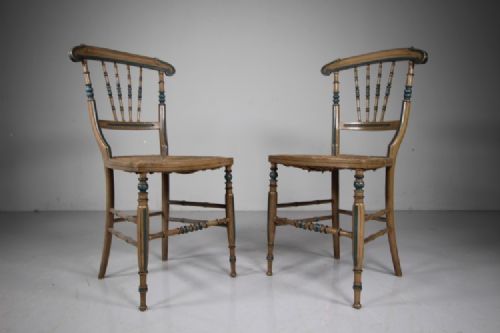
The survival of original surfaces, whether painted and decorated finishes, early leather, or period upholstery, distinguishes superior examples. Matched sets and pairs maintain greater cohesion in their turnings and timber selection than assembled groups.
Listings feature oak, mahogany, rosewood, and cane materials across periods ranging from the seventeenth century to the twentieth century.
Liberty and Co
The Bobbin Turned Dining Chairs Glossary
- Bobbin turning
- A form of woodturning on a lathe that produces a series of rounded, spool-like shapes resembling bobbins of thread. This technique defines the structural supports and stretchers of seventeenth century and revival seating.
- Back stool
- An early form of chair without arms, featuring an upright upholstered or wooden back attached to a joined seat. These pieces frequently appear in seventeenth century oak configurations.
- Farthingale chair
- A wide, un-armed chair designed to accommodate the voluminous hooped skirts worn by women in the seventeenth century. They typically feature low backs and upholstered seats.
- Armorial chair
- Seating decorated with heraldic crests, coats of arms, or carved armorial bearings. These items often denote specific clan or familial commission.
- Joined oak
- Furniture construction utilising closely fitted mortise and tenon joints secured with pegs rather than metal nails or screws. This method provides the sturdy skeleton for early oak seating.
Bobbin Turned Dining Chairs: Frequently Asked Questions
Are bobbin turned chairs comfortable for daily use?
Many examples feature upholstered seats in leather or velvet that provide a firm base for sitting during meals. The upright posture encouraged by seventeenth century and revival frames suits dining arrangements.
Adding cushions or selecting upholstered back stools increases comfort for extended sitting periods. Solid wood seats offer durability while retaining their historical aesthetic.
How do I identify seventeenth century oak from revival pieces?
Early seventeenth century pieces display hand-cut joinery, pegged joints, and timber patination acquired through centuries of use. Tool marks and natural wear patterns differ from the more uniform appearance of later nineteenth and twentieth century revivals.
Revival furniture often utilises machine-cut components and standardised timber preparation. Examining the underside and joint construction reveals the manufacturing methods of the period.
What table styles match bobbin turned dining chairs?
Solid oak dining tables with turned legs or refectory bases complement the turned spindle work of early chairs. Matching the timber tone, such as dark oak or polished mahogany, creates a cohesive dining room arrangement.
Contrasting polished wood chairs with simpler modern tables also works in eclectic interiors. The strong silhouette of spool turnings pairs effectively with plain wooden surfaces.
How should I care for antique wooden frames?
Maintain antique wood by applying suitable wax polish sparingly to nourish the dry timber and preserve the surface sheen. Avoid placing chairs in direct sunlight or near heat sources that cause wood to crack.
Leather and velvet upholstery require gentle dusting and specialised cleaning products appropriate to the textile age. Regular inspection of joints ensures structural stability remains intact.