


Oak Decanter Tantalus
An oak decanter tantalus keeps spirits secure behind a locking wooden bar while showing off cut crystal bottles for after-dinner drinks.
Oak Decanter Tantalus
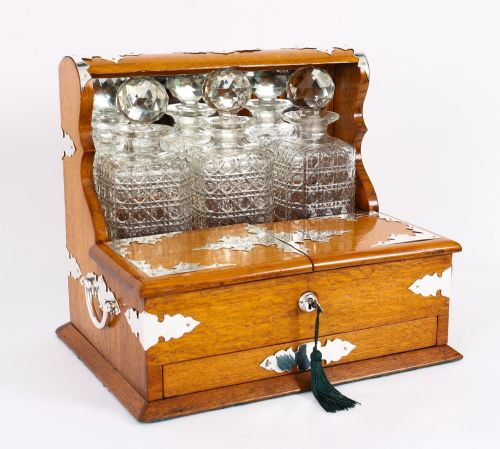
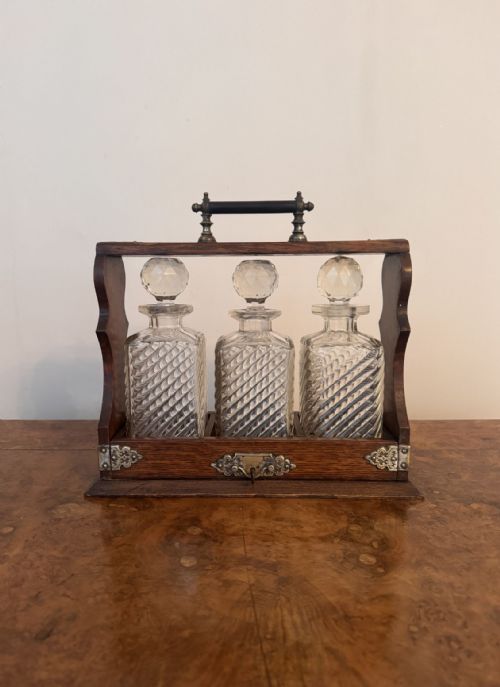
An oak decanter tantalus is a locking barware cabinet designed during the Victorian and Edwardian periods to secure spirits from servants or guests. These pieces house two or three glass decanters within a sturdy wooden frame fitted with a metal locking mechanism.
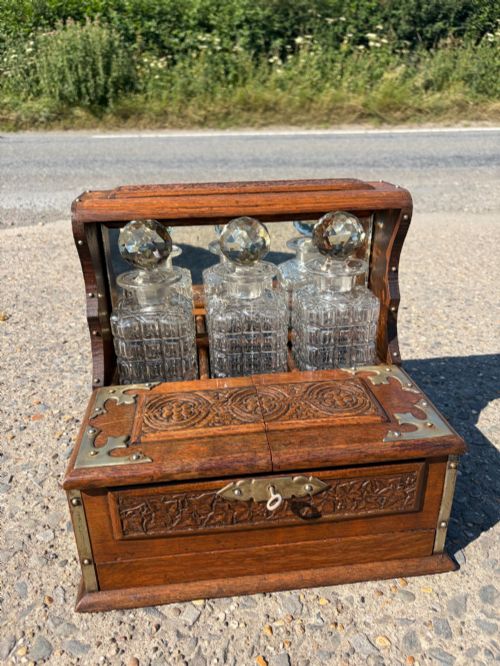
Many examples combine the drinks cabinet with a games compendium, featuring folding boards and compartments for cards or counters beneath the decanters. The most common forms seen here date from the late nineteenth century up through the Edwardian era, constructed primarily in solid oak.
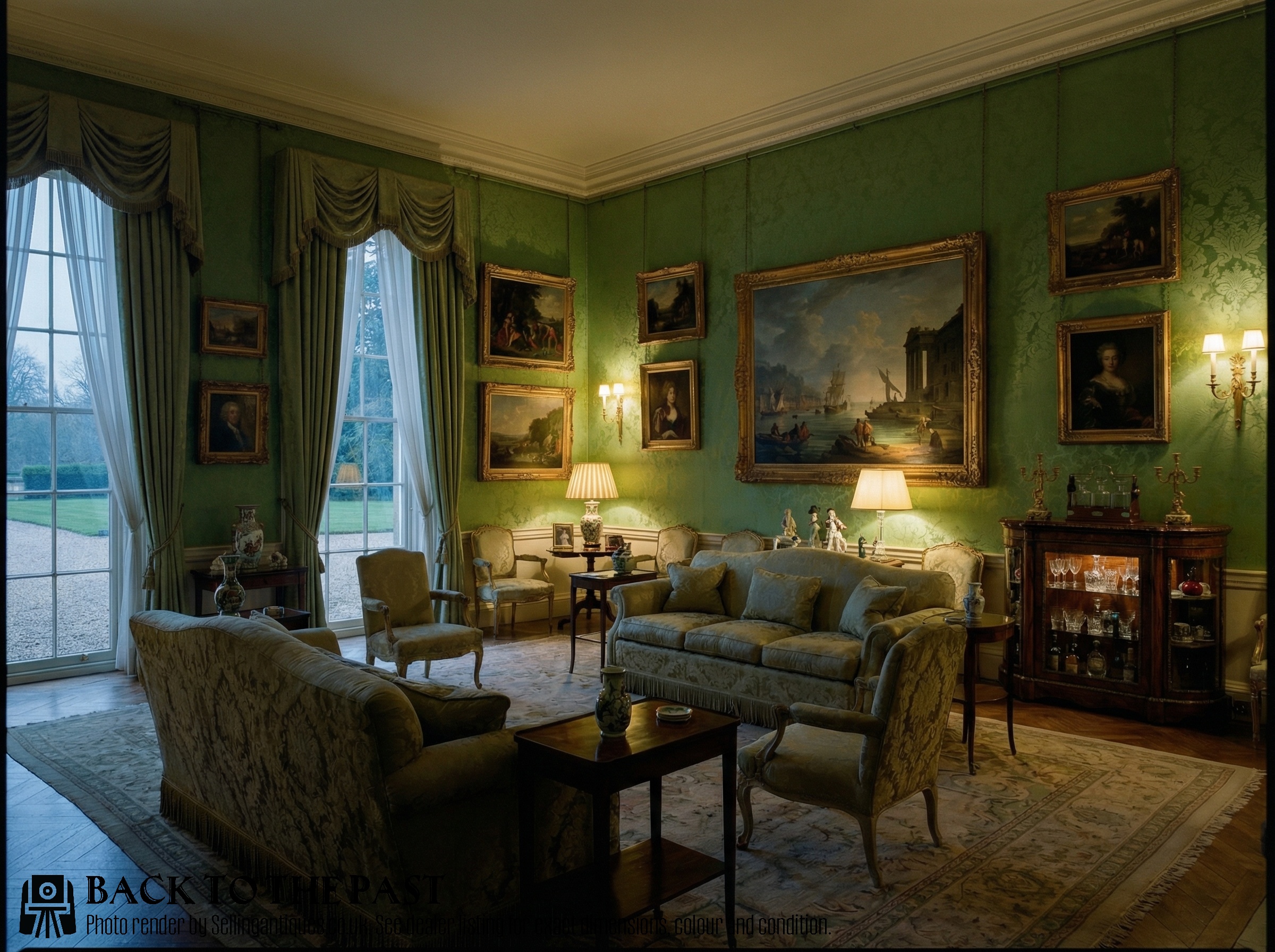
Simpler single bottle or twin bottle variations appear alongside larger triple decanter dry bars and fitted tantalus cabinets. These drinking caddies served as functional parlour furniture intended to display hospitality while guarding the whiskey and gin.
How they were made
Cabinetmakers built these frames from various cuts of oak, including blonde oak, golden oak, pollard oak, and quarter-sawn timber, sometimes adding marquetry stringing or carved details. The woodwork houses fitted interiors designed to hold heavy glass safely during transport or everyday use.
Metalwork played a critical role in the construction, utilising silver plate, brass, and plain metal for handles, locking bars, hinges, and escutcheons. Cut glass and cut crystal decanters accompanied these mountings, frequently paired with matching silver labels denoting the spirits inside.
The listings span from 1880 through the Edwardian era to 1930, uniting simple single bottle caddies and complex games compendiums.
What varies in quality
The distinction between standard production items and finer pieces lies in the integration of the internal mechanisms and auxiliary functions. Dual-purpose items that incorporate fully equipped games boxes alongside the locking bar demand higher levels of cabinetmaking skill than simple bottle holders.
Material selection and decorative enrichment set superior examples apart from basic containers. Marquetry stringing, figured pollard oak veneers, heavy cast brass mounts, and complete sets of matching cut crystal decanters indicate workshop standards at the higher end of the range.
Betjemann·Fenton Bros·Excelsior
The Oak Decanter Tantalus Glossary
- Tantalus
- A locking security device and frame that holds decanters by their necks, preventing the removal of the stoppers or bottles without a key. The name derives from the mythological figure of Tantalus, whose punishment was to be kept just out of reach of food and drink.
- Games Compendium
- A fitted box containing the equipment for multiple table games, such as chess, draughts, backgammon, and cards. In these listings, such boxes frequently form the base or housing for the decanter tantalus.
- Silver Plate
- A thin layer of silver applied to a base metal, commonly used for the locking bars, carrying handles, and bottle labels of these cabinets. This technique provided the appearance of solid silver at a lower manufacturing cost.
- Marquetry
- The art of applying small pieces of veneer to a structure to form decorative patterns or pictures. Examples in these records utilise marquetry stringing to accent the oak surfaces.
- Pollard Oak
- Timber taken from trees that have been pollarded, resulting in a dense, highly figured grain pattern prized by nineteenth-century cabinetmakers for decorative furniture.
Oak Decanter Tantalus: Frequently Asked Questions
How does a tantalus lock work?
A vertical metal bar engages with a locking mechanism housed in the wooden base, passing over the stoppers of the decanters to prevent them from being lifted out. Turning the key retracts the bar and allows the bottles to be removed.
Most mechanisms require the key to be turned in the lock before the hinged side bar can swing open. When the bar is locked back into place, the glass stoppers remain firmly trapped in their collars.
What is a dry bar tantalus?
A dry bar tantalus combines the locking spirit decanters with integrated storage for games, playing cards, or smoking accessories. These versatile pieces functioned as self-contained entertaining units for the drawing room.
The lower sections or pull-out drawers often contain cribbage boards, counters, and dice alongside spaces for glasses. This multi-functional design represents the more elaborate forms produced around the turn of the twentieth century.
How do I tell Victorian from Edwardian pieces?
Victorian examples tend to feature darker woods, heavier brass mounts, and ornate carving or marquetry stringing. They reflect the more opulent aesthetic of the nineteenth century.
Edwardian pieces often display lighter golden oak tones and cleaner lines with less heavy ornamentation. The transition reflects changing interior tastes towards simpler, brighter furnishings during the early 1900s.
Are the decanters usually original?
Many surviving cabinets retain their original cut glass or crystal decanters, which were specifically manufactured to fit the exact spacing of the metal frame. Because decanters were fragile and prone to breakage, replacements do occur.
Matching cut crystal patterns and original silver-plated spirit labels help confirm the authenticity of the set. Collectors look for bottles that sit snugly within the wooden base recesses and match the contours of the locking bar.