


Oak Spirit Tantalus
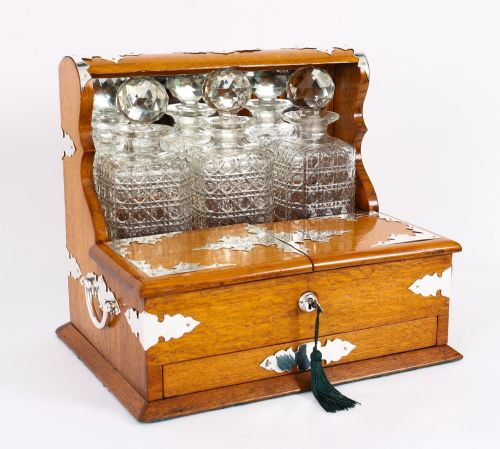
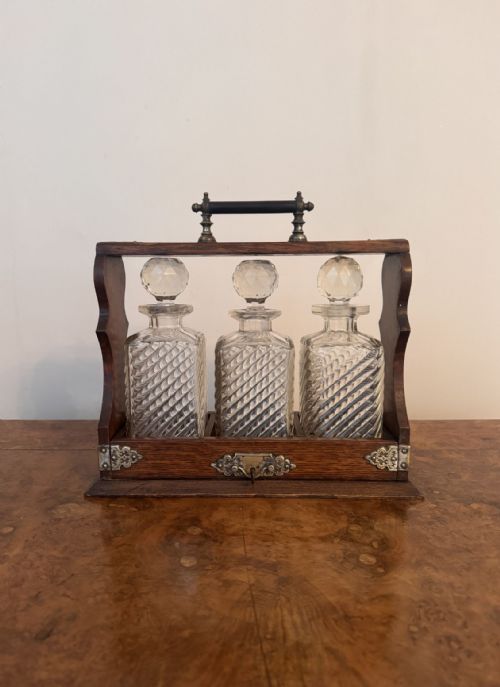
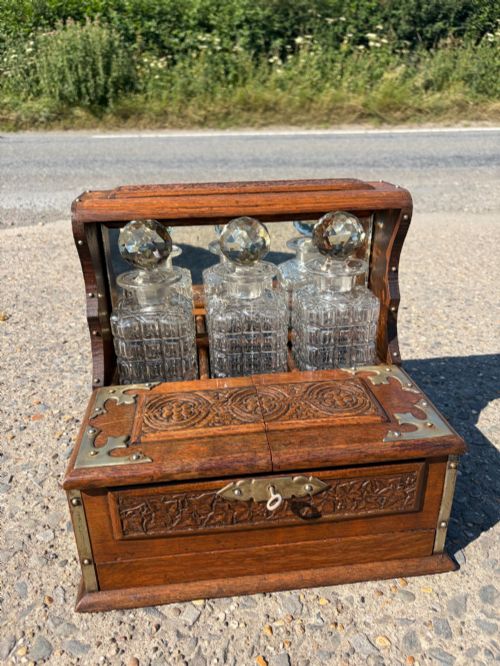
An oak spirit tantalus is a locking barware carrier designed to secure whiskey, gin and brandy away from servants and guests.
Oak Spirit Tantalus
An oak spirit tantalus is a sturdy tabletop barware piece housing two or three decanters behind a locking mechanism. The frame holds the bottles securely while displaying the cut glass or cut crystal contents through a clever metal or brass bar. Examples on this page span the Victorian, Edwardian and nineteen thirties periods.
Most pieces encountered here are three bottle configurations designed for after dinner entertaining. Some variations include integrated games compendiums or dry bar compartments with spaces for cards and counters. Simpler single bottle variants and spirit cask sets also appear amongst the listings.
The form developed as a practical household item where the master of the house retained the key to prevent pilfering. Surviving specimens combine utilitarian security with handsome timber cases suitable for a sideboard or partner's desk. Dating ranges from eighteen eighty through to nineteen thirty.
What varies in quality
Quality rests in the complexity of the housing and the metalwork. A basic single bottle or standard three bottle frame differs significantly from a full games compendium with integrated storage for cards and counters. Marquetry stringing and heavy brass mountings elevate the decorative ambition of the piece.
The refinement of the locking mechanism and the weight of the silver plating on the hardware distinguish finer examples. The clarity and cut of the glass decanters also indicate the standard of production. Robust construction using well seasoned oak ensures the case endures daily handling.
Listings span the Victorian, Edwardian and nineteen thirty periods, utilising oak, cut glass, brass, silver plate and mirror glass.
The Oak Spirit Tantalus Glossary
- Tantalus
- A locking drink container that displays whiskey or brandy while keeping the contents physically inaccessible without a key. The name derives from the mythological figure of Tantalus who suffered eternal thirst.
- Games Compendium
- A fitted box containing equipment for various indoor pastimes such as cards and dice. These are frequently integrated into the base or sides of the tantalus.
- Marquetry
- Decorative woodwork where thin pieces of material are applied to the oak surface to form patterns. Stringing uses very narrow lines of contrasting timber.
- Silver Plated
- A thin layer of silver applied over a base metal mount or handle. This finish provides the appearance of solid silver on hardware components.
Oak Spirit Tantalus: Frequently Asked Questions
How does the locking mechanism work?
Turning the key in the lock lowers or releases a vertical metal bar that traps the stoppers of the decanters. When engaged, the bar prevents anyone from lifting the bottles out of their fitted recesses.
Opening the lock allows the retaining bar to swing or lift clear so the bottles can be removed for pouring.
Were these used in homes or offices?
These pieces served primarily in domestic dining rooms, smoking rooms and libraries during the Victorian and Edwardian eras. Gentlemen kept them on sideboards or partner's desks for after dinner entertaining.
The lock prevented domestic staff or visiting guests from helping themselves to the spirits without permission.
How do I date an oak tantalus?
Dating relies on the style of the oak case, the presence of specific hardware and registration marks where available. Victorian pieces often feature heavy brass mounts and rich dark timber, while nineteen thirties examples show simpler lines.
Companions with games compendiums and specific hinge designs also help place the piece within the eighteen eighty to nineteen thirty timeframe.
How do I care for the oak and metal?
Maintain the oak case by applying appropriate beeswax occasionally to nourish the timber and preserve the finish. Avoid placing the box in direct sunlight or near heat sources that might dry out the wood.
Polish the brass and silver plated mounts gently with a soft cloth while avoiding any abrasive cleaners that could damage the plating.