


Victorian Oak Tantalus
A victorian oak tantalus locks away spirits behind timber and metalwork, designed to keep household staff and thirsty guests at bay.
Victorian Oak Tantalus
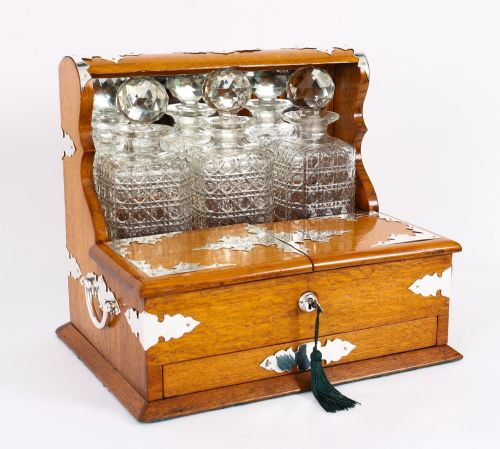
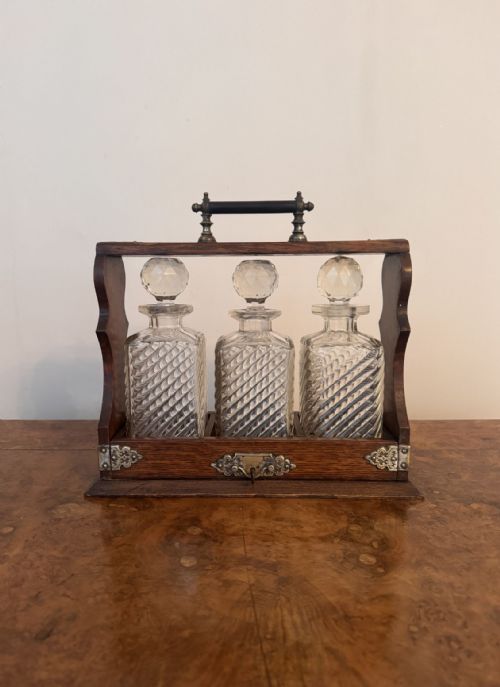
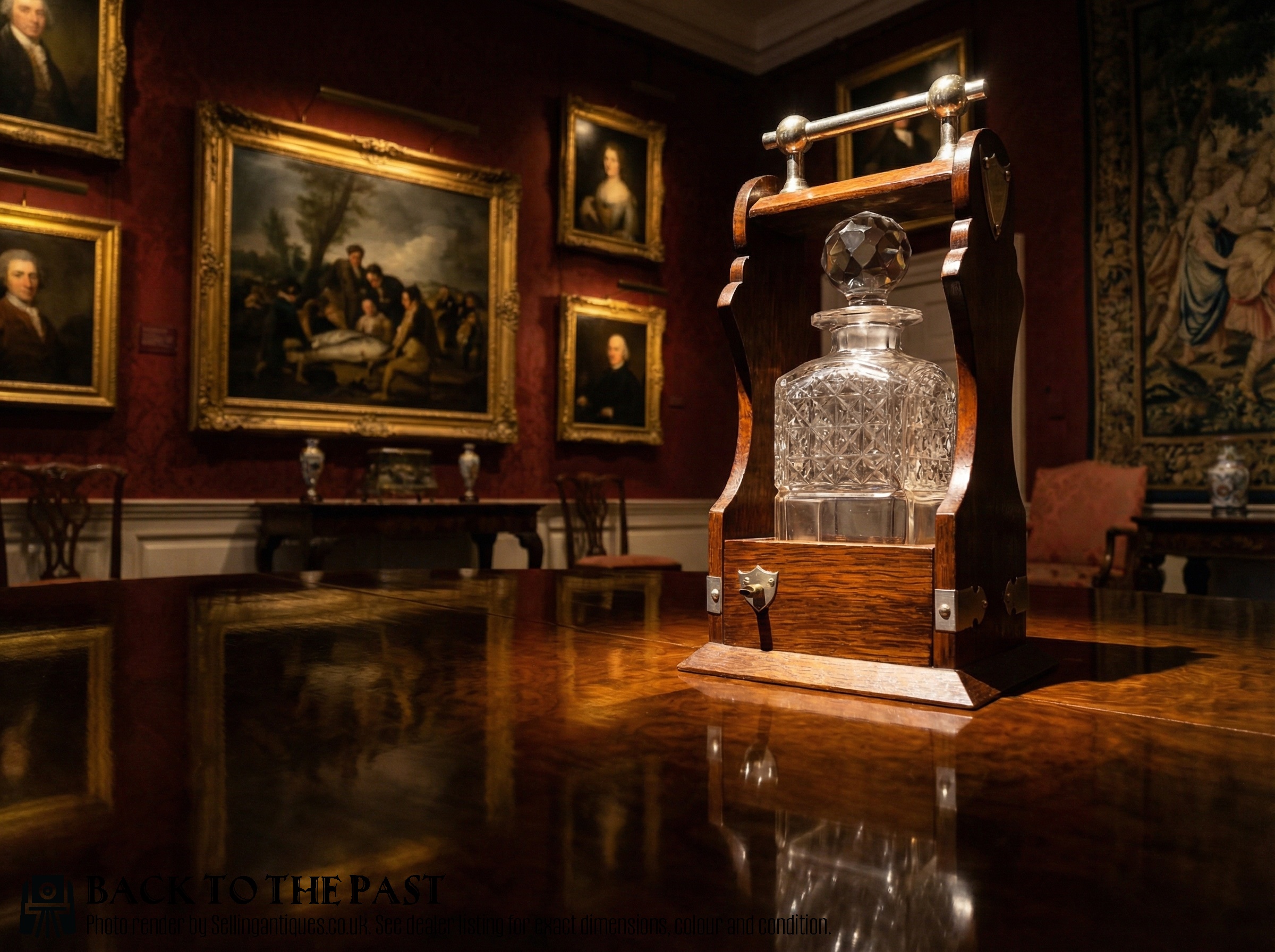
A victorian oak tantalus is a locking spirit cabinet that houses crystal decanters securely within a timber frame. The pieces seen here span the Victorian and Edwardian periods, dating primarily from eighteen eighty to nineteen hundred.
Most examples hold two or three glass decanters, often accompanied by games compendiums, dry bars, or humidor compartments. Formats range from simple single bottle cased pieces to elaborate partner's boxes and after dinner setups.
Materials and construction
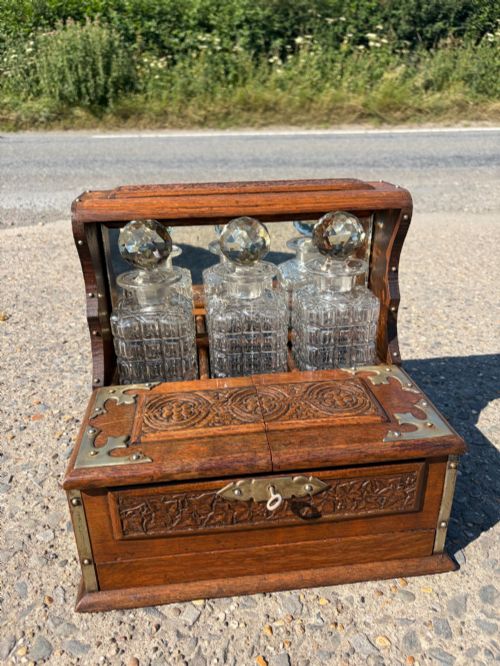
Makers built these cabinets using solid oak, blonde oak, golden oak, pollard oak, and carved oak, fitted with brass mountings and silver plate. Glasswork takes the form of cut glass and cut crystal decanters, occasionally paired with glass mirrors.
The mechanism relies on a locking metal bar that drops over the decanter stoppers to prevent removal when the key is turned. Marquetry stringing and decorative carving frequently finish the exterior wooden housings.
Victorian Oak Tantalus Retail Price Guide 2026
Typical asking prices for victorian oak tantalus among the pieces listed under this phrase on Sellingantiques today, from the lower quarter to the upper quarter. They describe what is for sale here now, not the wider market.
Listings feature oak construction spanning the Victorian and Edwardian eras, pairing timber cases with cut glass, brass, and silver plate.
Distinguishing quality
Quality rests upon the crispness of the oak carving, the weight and complexity of the brass or silver plate mountings, and the clarity of the cut crystal decanters. Superior examples integrate games compendiums or humidor sections cleanly into the timber case.
The presence of Pollard oak or intricate marquetry stringing separates standard containers from more ambitious workshop productions. The smoothness of the locking mechanism and the match between the decanters and the frame complete the evaluation.
Daniel and Arter·Mappin & Webb
The Victorian Oak Tantalus Glossary
- Tantalus
- A locking spirit cabinet designed so that decanters remain visible yet inaccessible without a key. This mechanism frustrates would-be drinkers, hence the name derived from Greek mythology.
- Games compendium
- A fitted box housing multiple tabletop games alongside the drinking decanters. These multi-purpose containers served after dinner gatherings.
- Cut crystal
- Heavy glass decorated with deep geometric facets that catch the light. It forms the standard material for decanters housed within these cabinets.
- Silver plate
- A thin layer of silver fused to a base metal such as copper or brass. It covers the locking bars, handles, and mounts found on the oak frames.
- Marquetry stringing
- Inlaid thin lines of contrasting wood used to decorate the surface of the cabinet. This technique frames panels and highlights the grain of the oak.
Victorian Oak Tantalus: Frequently Asked Questions
How does a tantalus lock work?
A metal bar drops across the glass stoppers of the decanters, held in place by a keyed lock mounted to the timber base. Turning the key releases the bar upward so the bottles can be lifted free.
When the bar is locked down, the stoppers cannot be removed, which stops anyone from pouring the contents without authorization.
Were these made for homes?
These cabinets served in nineteenth century middle and upper class dining rooms, studies, and smoking rooms. They provided after dinner hospitality while restricting access to expensive spirits.
Larger versions combined the spirit decanters with playing cards and board games for evening entertainment.
How do I date an oak tantalus?
Dating relies on stylistic clues, mounting types, and material variations across the Victorian and Edwardian eras. Pieces from eighteen eighty tend to feature heavy brass mounts and cut crystal, while nineteen hundred examples often include expanded dry bar compartments.
Oak varieties also shift across decades, moving from standard dark timber to blonde and golden oak options.
What fits inside a games compendium?
These combination pieces house decanters alongside dedicated storage for playing cards, dominoes, and board game pieces. The interior utilises fitted wooden compartments beneath or beside the spirit bottles.
Such layouts maximised table utility during Victorian after dinner gatherings.