
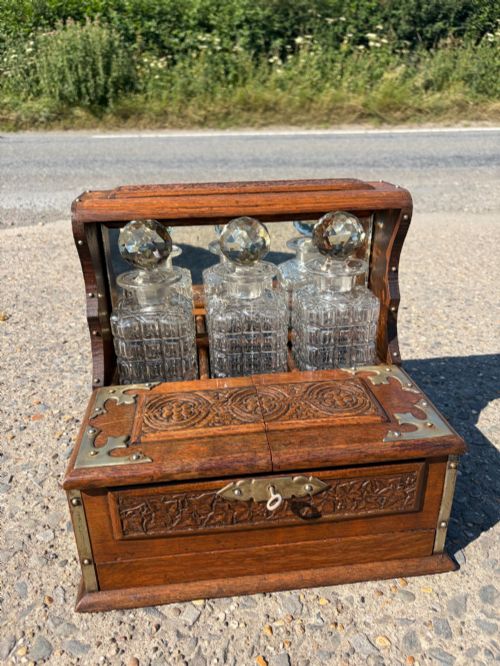


Victorian Drink Caddy
These Victorian drink caddy pieces are secure cabinet containers and stands designed to hold decanters and bottles under lock and key.
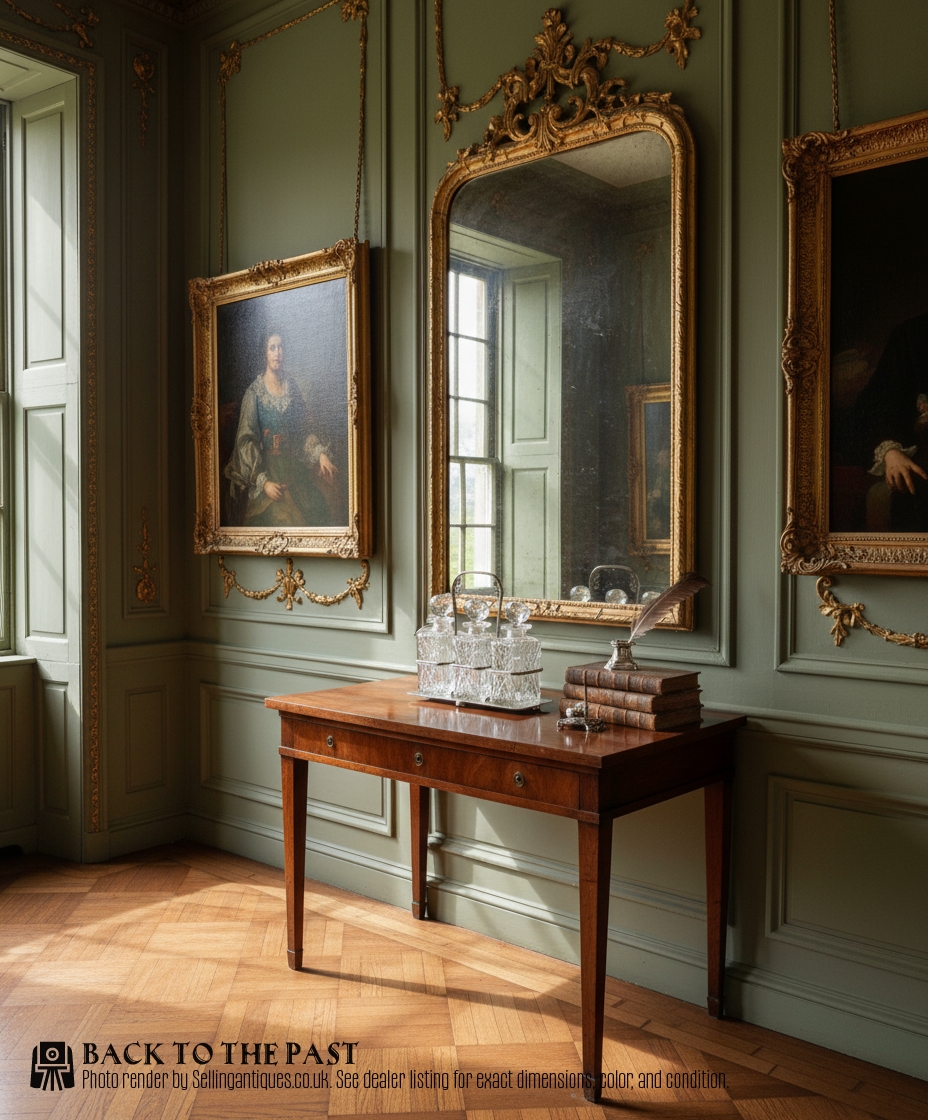
Victorian Drink Caddy
When you search for a Victorian drink caddy, you encounter a specialised form of antique barware designed to secure spirits in domestic settings. The pieces listed on this page encompass tantalus frames, decanter stands, cellarettes, and liqueur stands originating primarily from the Victorian period.
The most common version you meet here is the oak tantalus, frequently fitted with brass mounts and holding two or three cut glass decanters. These frames use a mechanical locking bar that drops over the stoppers to prevent guests or servants from pouring drinks without permission.
Beyond oak frameworks, the selection includes silver plated stands, inlaid walnut cases, and mahogany cellarettes dating from the nineteenth century. Each form reflects the Victorian penchant for sociable entertaining paired with household security.
Materials and construction methods
Makers built these caddies using sturdy hardwoods including oak, walnut, and mahogany, often enhanced with brass handles, lockplates, and corner mounts. The wooden frames require precise joinery to support the weight of heavy glass bottles and metal locking mechanisms.
Silver plating on base metals provides the reflective finish seen on many stands and tot pails, applied through nineteenth-century plating techniques. Cut glass and frosted crystal form the decanters and barrel dispensers, shaped by glassblowers and cutters of the era.
Victorian hosts locked their whiskey away not from thieves, but to stop enterprising housemaids from sampling the decanters.
Assessing quality in drink caddies
Quality reveals itself in the weight and thickness of the glass bottles matched to the frame, alongside the crispness of the cutting on crystal decanters. Superior examples feature well-fitted wooden carcases and fully functioning locks with original keys that secure the metal bar smoothly.
The degree of hand-finishing on brass mounts and the complexity of the cabinetwork separate standard production items from finer specimens. Timber selection also matters, with dense quarter-sawn oak and figured walnut marking out the better pieces in this category.
The Victorian Drink Caddy Glossary
- Tantalus
- A locking drink stand that holds decanters in place with a metal bar over their stoppers. The name derives from the mythological figure Tantalus, as the drinks are visible yet out of reach.
- Cellarette
- A lockable cabinet or box designed to hold wine bottles and decanters. These pieces often sat beneath a sideboard or in a dining room.
- Tot pail
- A small bucket or container included with barware sets for holding ice or water. They frequently match the silver plating of the main stand.
- Frosted crystal
- Glass treated with acid or abrasive techniques to create a matte, translucent surface. It appears on nineteenth-century barrel dispensers.
- Decanter stand
- An open frame or tray designed to carry multiple bottles without a locking mechanism. These pieces allow easy service during gatherings.
Victorian Drink Caddy: Frequently Asked Questions
What is a tantalus?
A tantalus is a locking spirit cabinet that secures decanters beneath a metal bar.
It earned its name because the bottles remain visible to guests while the contents stay safely locked away.
How were these caddies used?
Victorian households used them in dining rooms and studies to dispense alcoholic beverages.
Households kept the spirits locked to regulate consumption and prevent unsupervised access by staff.
How do I date a piece?
Dating relies on materials, manufacturing marks, and prevailing styles such as Late Victorian joinery.
Evidence from nineteenth-century pieces points to specific timber choices and plating methods characteristic of the era.
Are the keys usually original?
Original working keys remain uncommon because locks often required replacement over decades of use.
many pieces retain functional replacement keys that operate the locking mechanism properly.