


Antique Silver Tantalus
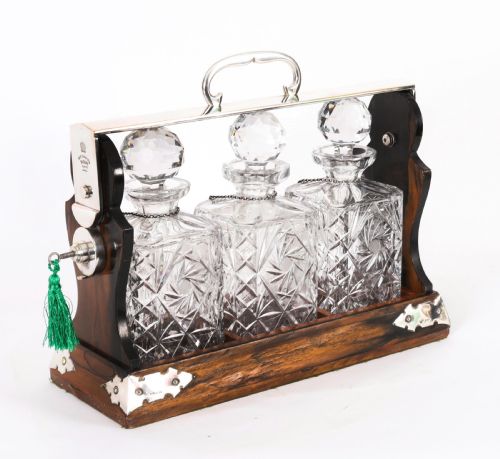
When you examine an antique silver tantalus, you encounter a locking barware frame designed to keep spirits secure from unauthorized access.
Antique Silver Tantalus
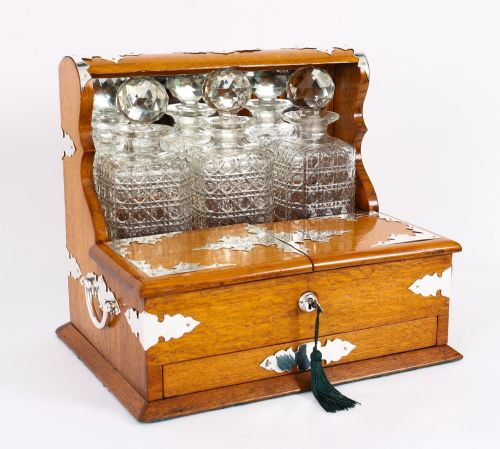
An antique silver tantalus combines a secure locking mechanism with a fitted frame to hold heavy glass decanters containing spirits like whisky, gin, and brandy. The user encounters versions primarily from the Victorian and Edwardian periods, stretching from the mid-nineteenth century through the 1930s.
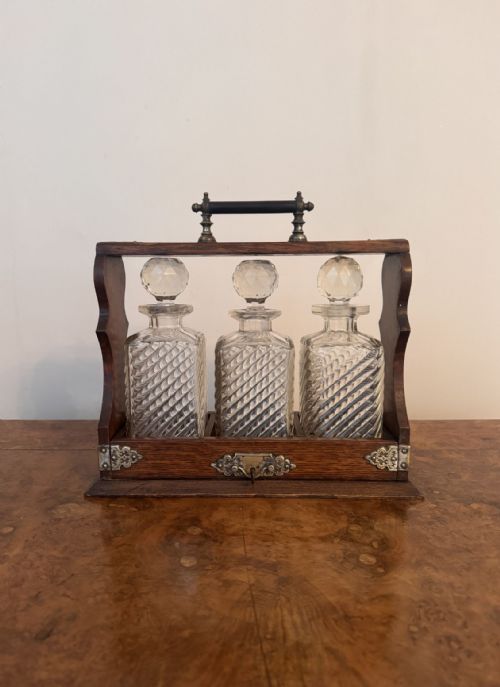
Most examples appear in oak or exotic timbers such as coromandel and burr walnut, often paired with silver plate, silver mounts, and cut crystal bottles. Certain pieces incorporate games compendiums or dry bar compartments beneath the bottle frames.
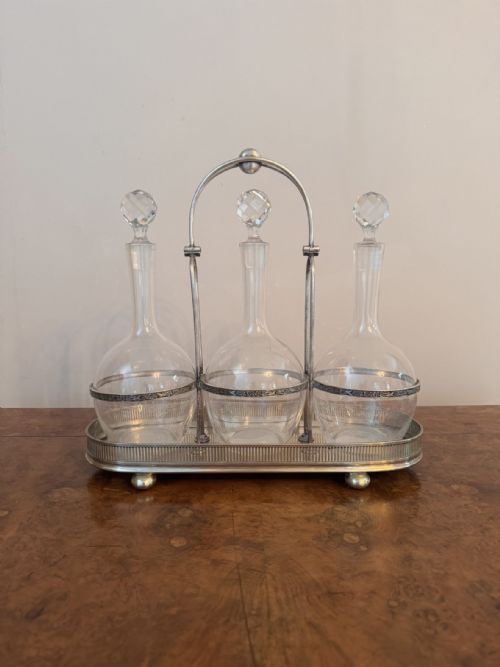
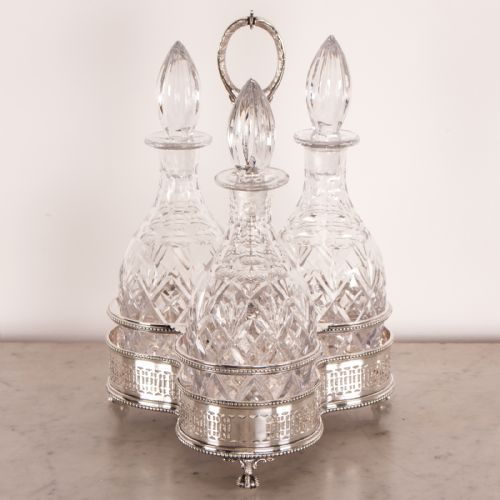
Forms range from single-bottle cased items to large triple-bottle after-dinner stands and rotating barrel dispensers. These items functioned as practical dining room furnishings for Victorian and Edwardian households.
How They Were Made
Cabinetmakers constructed the wooden bases and cases using oak, walnut, rosewood, and coromandel, often fitting them with internal partitions for glasses and game pieces. Metalworkers applied silver plating, Old Sheffield plate, or sterling silver mounts to secure the locking mechanisms and handles.
Glassmakers produced heavy cut crystal and cut glass decanters, sometimes featuring frosted barrel designs or matching tot pails. Specialist makers engineered the folding metal bars and locks that engage the stoppers to prevent removal without a key.
Materials recorded across the inventory include silver plate, sterling silver, cut crystal, oak, coromandel, and walnut.
What Varies in Quality
The distinction between standard examples and the finest pieces rests upon the complexity of the cabinetry and the integrity of the mechanism. Fitted interiors incorporating games compendiums or secret compartments indicate higher ambition in manufacture.
The weight and clarity of the cut crystal decanters, alongside the robustness of the silver-plated or sterling silver mounts, define the standing of a piece. Original working locks with functioning keys and identified maker signatures elevate certain examples above unmarked production.
Betjemann And Sons·Walker And Hall·Elkington·Hukin And Heath·Mappin And Webb·Philip Ashberry·Hobbs And Co·Daniel And Arter
The Antique Silver Tantalus Glossary
- Tantalus
- A locking beverage stand that holds decanters securely within a metal framework while leaving the contents visible, frustrating the drinker who lacks the key.
- Silver Plate
- A base metal coated with a thin layer of pure silver, widely utilised for the frames and handles of late nineteenth-century barware.
- Coromandel
- A dense, heavily figured timber imported from Asia, prized by cabinetmakers for luxury Victorian games boxes and spirit stands.
- Decanter
- A heavy glass vessel fitted with a stopper, designed for holding and serving wine or spirits from a tantalus set.
- Games Compendium
- A multi-use box containing equipment for various board games and cards, frequently integrated into the base of larger nineteenth-century spirit cabinets.
Antique Silver Tantalus: Frequently Asked Questions
What is an antique silver tantalus?
An antique silver tantalus is a locking barware stand designed to secure decanters of spirits behind a metal retaining bar. The frame prevents guests or domestic staff from pouring drinks without the key.
These pieces emerged in the Victorian era and remained popular through the Edwardian period. They combine fitted wooden frames with silver plating and cut crystal bottles.
How did a tantalus work?
The mechanism relies on a hinged metal bar that locks down over the glass stoppers of the decanters. While the stoppers remain locked beneath the bar, they cannot be pulled out to pour the contents.
Unlocking the mechanism requires a key that releases the vertical retaining arms. Once unlocked, the bar folds down or swings aside to free the bottles.
Were all tantalus sets made of oak?
While oak served as the primary timber for many Victorian and Edwardian examples, makers also utilised walnut, rosewood, and coromandel. Some luxury pieces featured elaborate cabinetwork housing games compendiums and dry bar accessories.
The metal framework varied between standard silver plate, Old Sheffield plate, and sterling silver mounts. Decanters ranged from simple glass bottles to heavy cut crystal and frosted barrels.
How do I date a tantalus?
Dating relies on the combination of timber styles, metal plating techniques, and registered design marks on the hardware. Victorian examples often feature heavy oak frames and ornate silver plate, while Edwardian versions lean towards cleaner lines.
Maker marks stamped onto the silver mounts or locks provide specific attribution. Patent dates stamped into the metalwork offer the earliest possible year of production.