


Silver Decanter Caddy
These silver decanter caddy designs hold drinks securely and elevate hospitality, spanning Victorian frames to Art Deco bars.
Silver Decanter Caddy
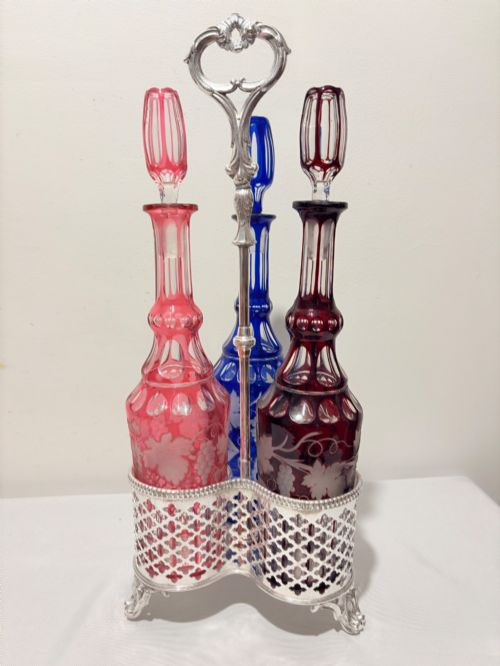
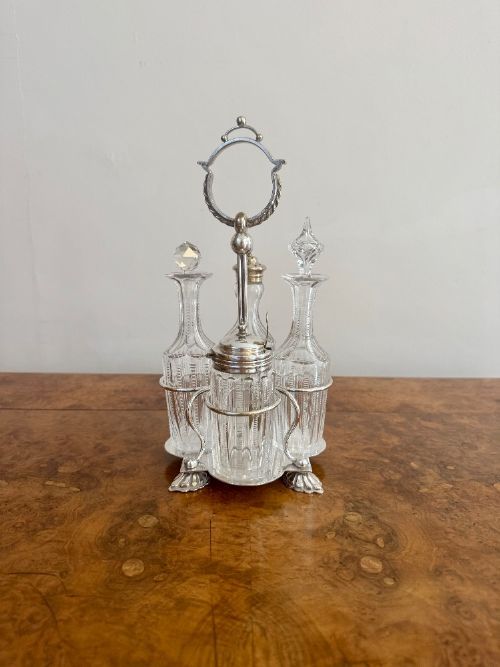
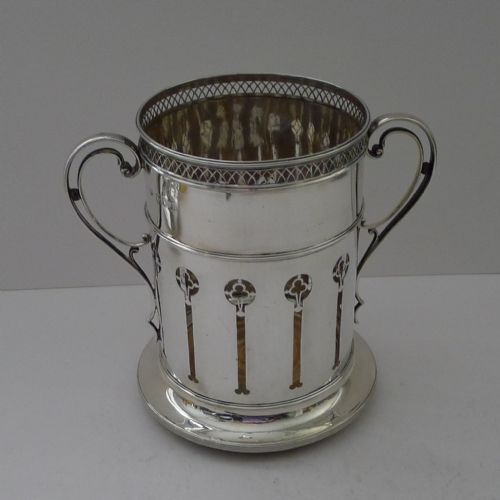
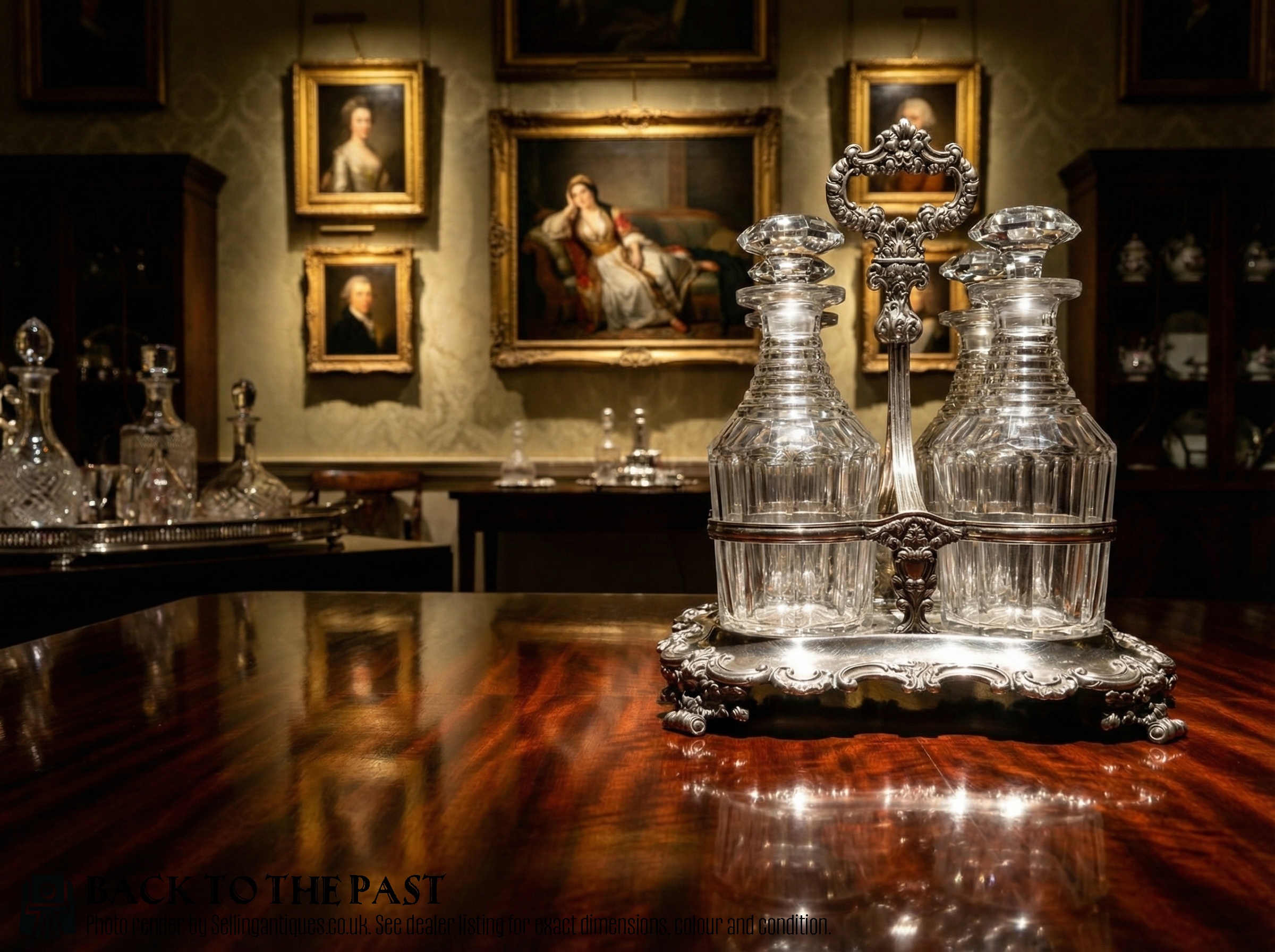
A silver decanter caddy encompasses various serving forms including tantalus frames, bottle holders, cruet sets, and liqueur stands. You encounter pieces spanning from the Victorian and Edwardian eras into the Art Deco period.
The objects serve to house glass decanters, bottles, or barrels within a structured metal framework, often featuring handles for transport. Oak and mahogany frequently form the wooden bases or frames that anchor the metalwork.
Many items incorporate cut glass or frosted crystal decanters nestled inside silver plated or solid sterling silver mounts. Formats range from single bottle coasters to multi-bottle locking tantalus units and large condiment or cruet assemblies.

Materials and construction methods
Silversmiths and manufacturers utilised silver plating over base metal alongside solid sterling silver for the primary frames and mounts. Timber foundations in oak and mahogany provide robust structural support for the heavier bottle configurations.
Vessels within the caddies rely on cut glass, frosted crystal, ceramics, and stoneware for holding liquids. Metal locking mechanisms and chrome elements appear in later Art Deco iterations alongside traditional plated brass and copper cores.
Some nineteenth century sets included tot pails alongside crystal barrels for dispensing precise drams.
Distinctions in craftsmanship and finish
Quality reveals itself in the weight of the silver plate or sterling silver, the crispness of any cast ornamentation, and the robustness of the oak or mahogany structure. Better examples feature tightly fitted locking mechanisms and original, undamaged cut glass or crystal decanters.
Subtleties such as engraved central shields, inlaid woodwork, and coordinated bottle sets distinguish high-tier productions from standard utility items.
Wade Wingfield Wilkins·Taylor, Tunnicliffe and Co·Jacques Adnet
The Silver Decanter Caddy Glossary
- Tantalus
- A locking drink caddy that secures decanters within a metal and wood frame while displaying the contents visibly. The locking bar prevents unauthorized pouring.
- Cruet Set
- A matched assemblage of bottles or cruets held in a silver plated stand, typically for condiments, oils, or liqueurs.
- Silver Plate
- A manufacturing technique where a thin layer of silver is fused to a base metal core such as copper, nickel brass, or Britannia metal.
- Frosted Crystal
- Glass treated to produce a translucent, matte surface texture, frequently utilised on barrels and bottles within nineteenth-century drink dispensers.
- Wine Coaster
- A low, portable bottle holder, often featuring a turned wooden base lined with green baize and edged in silver plate.
Silver Decanter Caddy: Frequently Asked Questions
What is a silver decanter caddy?
A silver decanter caddy is a metal frame or stand designed to hold, organise, and transport glass decanters, bottles, or cruets.
These pieces range from simple bottle holders to elaborate locking tantalus units incorporating oak or mahogany.
How do you use a tantalus caddy?
A tantalus caddy uses a hinged metal bar that locks down over the stoppers of the decanters, preventing removal without a key.
This design allowed hosts to secure spirits from servants while still displaying the collection.
How are different periods identified?
Victorian and Edwardian examples often feature ornate silver plate, heavy cut glass, and oak or mahogany frames with traditional joinery.
Art Deco pieces shift toward chrome, streamlined geometry, and modernist styling introduced in the nineteen thirties.
Can missing decanters be replaced?
Replacement decanters can be sourced, though finding pieces that match the exact neck height, cut glass pattern, and base dimensions of the original caddy requires patience.
Original matched sets command greater interest from collectors.
How should silver plated caddies be cleaned?
Silver plated surfaces require gentle cleaning with a specialised silver polish and a soft cloth to avoid wearing through the thin silver layer.
Wooden components benefit from occasional waxing to nourish the oak or mahogany grain.