


Cut Crystal Liqueur Set
A cut crystal liqueur set is a matched group of small glassware and decanters designed for serving digestifs after dinner.
Cut Crystal Liqueur Set
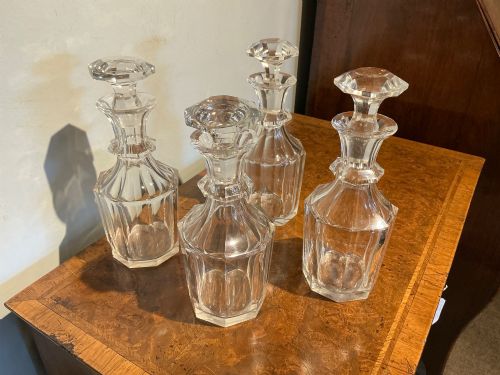
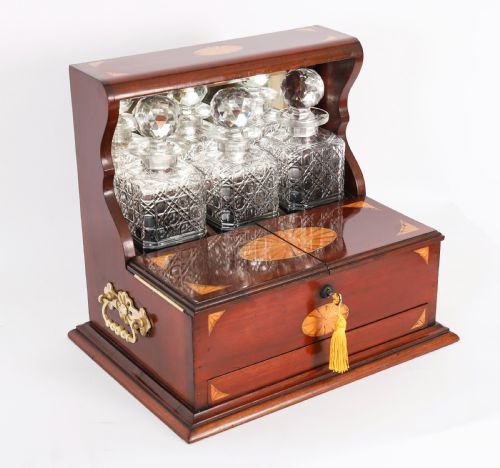
A cut crystal liqueur set brings together decanters, carafes, or cordial glasses designed for serving after-dinner spirits. You will most frequently encounter nineteenth-century decanter sets, tantaluses, and fitted drinks cabinets on this page.
The objects span Victorian, Edwardian, and Art Deco periods, alongside French Napoleon III and Art Nouveau pieces. They appear either as standalone decanters, matched sets of stemware, or complete ensembles housed on silver-plated trays and wooden frames.
Many examples incorporate fitted presentation boxes or lockable tantaluses to secure the contents. These configurations reflect the formal hospitality customs of the nineteenth and early twentieth centuries.
How they were made
The pieces on this page are formed from lead crystal and cut glass, shaped by blowing or moulding before being finished with wheel-cut geometric or floral motifs. Workshops combined glass with brass mounts, silver plate, and inlaid satinwood or mahogany for the accompanying trays and tantaluses.
French makers utilised fire-gilt or ormolu mounts to embellish glass bodies and liqueur caves. The cutting requires deep facets that refract light through the heavy lead content of the crystal.
Some nineteenth-century tantaluses came with hidden spring-release mechanisms that required knowing a secret tilt to unlock the decanters.
What varies in quality
Quality in a cut crystal liqueur set rests on the crispness of the glass cutting and the weight of the metal mounts. Sharp, deep wheel-cut facets demonstrate superior craftsmanship compared to shallow, moulded impressions.
The integrity of the housing elevates the piece, whether that is a finely polished mahogany tantalus or a heavy silver-plated tray. Complete sets with matching stemware retain greater cohesion than assembled groups.
Bacarrat·Saint-Louis
The Cut Crystal Liqueur Set Glossary
- Tantalus
- A locked wooden or metal frame that secures decanters by their stoppers while displaying the contents. The mechanism prevents access to the spirits without a key.
- Cave a liqueur
- A French portable fitted case containing a set of liqueur decanters and small glasses. These were typically lined with velvet or satin and embellished with brass or ormolu.
- Lead crystal
- Glass containing a high percentage of lead oxide, which increases brilliance and weight. This material allows for deeper and sharper facet cutting.
- Cordial glass
- A small stem glass designed for holding concentrated after-dinner liqueurs. These form the drinking vessels within a matched set.
- Ormolu
- Gilt-bronze ornamentation applied to nineteenth-century French furniture and glass mounts. It provides a rich golden contrast to the clear crystal.
Cut Crystal Liqueur Set: Frequently Asked Questions
What is a tantalus?
A tantalus is a lockable frame that holds decanters securely by their necks, allowing guests to see the spirits inside while preventing unmonitored pours.
They became popular in the Victorian era as a way for hosts to secure expensive liqueurs from household staff.
How do I date a set?
Dating relies on the style of the glass cutting, the mounting materials, and any maker marks on the base or mounts. Victorian and Edwardian pieces often feature heavier brass or silver-plated frames.
Art Deco sets from the 1930s typically show geometric Czech designs with simplified silhouettes and amber or clear glass.
Are all sets complete?
Many surviving sets have lost one or two original glasses or retain replacement stoppers over decades of use. Decanter sets and tantaluses were heavily utilised household objects.
Checking the uniformity of the glass tint and the pattern of the cut facets helps determine if the glasses belong to the decanter.
How were these sets used?
These sets were brought out in the dining room or drawing room at the conclusion of a formal meal. Hostesses served small measures of sweet liqueurs or cordials to guests from the matching stemware.
The locked tantalus or fitted liqueur cave kept the spirits portioned and secure between formal gatherings.