




Vintage Glass Barware Set
A vintage glass barware set brings period craftsmanship to the drinks trolley, offering matched decanters, glasses, or ice buckets for entertaining.
Vintage Glass Barware Set
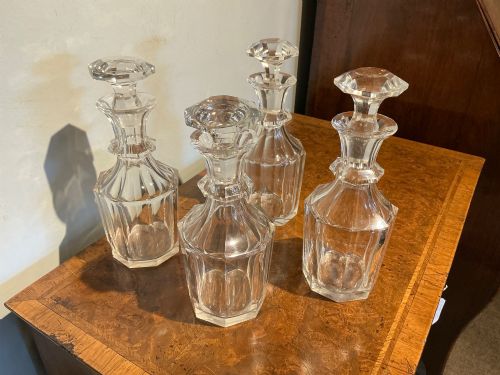
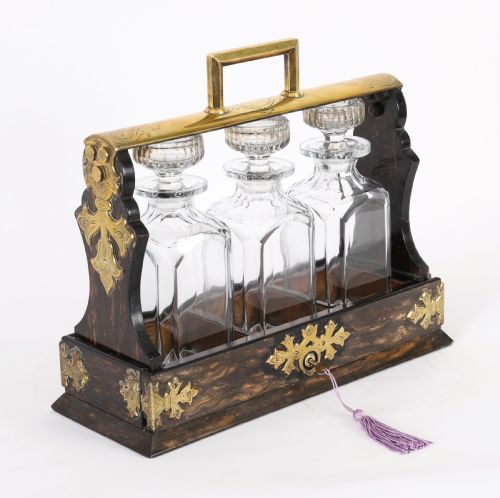
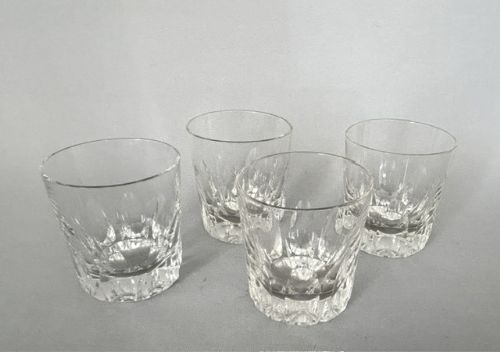
A vintage glass barware set encompasses matched collections for serving spirits and wine, spanning from Victorian tantaluses to Art Deco cocktail services. These groupings typically pair lead crystal decanters or cut glass carafes with matching tumblers, champagne coupes, or cordial glasses.
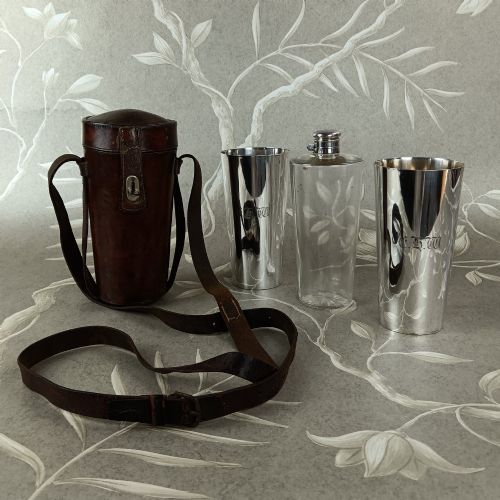
The selections encountered here range from nineteenth-century campaign spirit cases and oak-framed locking tantaluses to 1930s modernist chrome and glass liquid services. Enclosed liqueur boxes, known as caves à liqueur, and silver-plated ice buckets with cut glass liners also form part of this drinking heritage.
Originating across Britain, France, and Japan, these assemblages reflect shifting social rituals from formal Victorian after-dinner hospitality to the cocktail culture of the early twentieth century. Buyers select these groupings to acquire a functional ensemble of period glassware housed in fitted trays, boxes, or frames.
Materials and construction
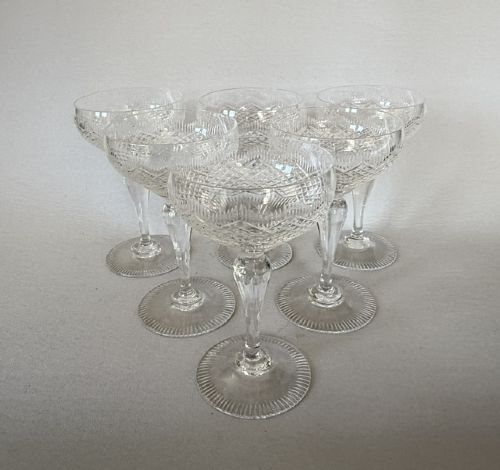
The glass components rely heavily on cut glass, lead crystal, and frosted crystal, shaped through techniques such as optical blowing, facet cutting, and hand painting. Decanters and tumblers frequently feature precise geometric wheel-cuts or engraved lettering identifying specific spirits.
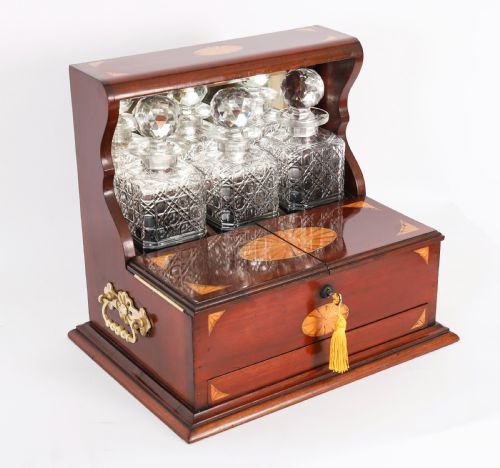
Mountings and protective housings utilise silver plate, brass, chrome, wrought iron, and oak, often paired with exotic timbers like coromandel and satinwood. Locking mechanisms on tantaluses and fitted leather cases demonstrate the integration of secure cabinetry with domestic glassware.
A locking tantalus successfully kept nineteenth-century houseguests away from the whisky while leaving them entirely free to admire it.
Distinctions in standard
The calibre of a vintage glass barware set depends on the clarity and weight of the crystal, alongside the crispness of the facet cutting. Maker attribution, such as Baccarat, Saint-Louis, or James Powell, elevates a service through superior glass purity and refined proportions.
The integrity of the accompanying framework distinguishes finer examples, noting particularly the heft of the silver plating, the precise joinery of oak and marquetry cabinets, and the presence of original locking keys or matching glassware totals.
James Dixon & Sons·Baccarat·James Powell·Saint-Louis·Val Saint Lambert·Jacques Adnet
The Vintage Glass Barware Set Glossary
- Tantalus
- A locking wooden or metal frame securing decanters to prevent unauthorized pouring while displaying the contents. The locking bar must be unlocked with a key to release the bottles.
- Cave à liqueur
- A fitted box, often lined with velvet or silk, containing a set of matching liqueur decanters and small glasses. These portable drinking cabinets date primarily from the nineteenth century.
- Champagne coupe
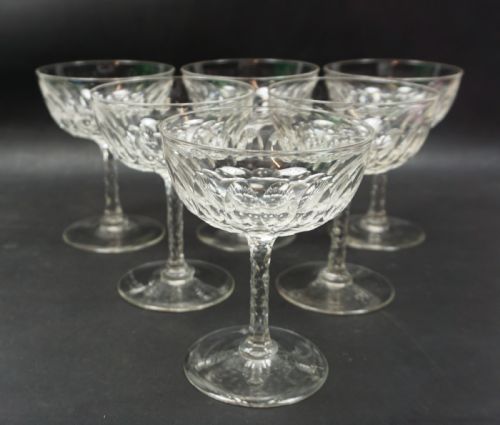
- A shallow-bowled stemmed glass designed originally for champagne, frequently featuring facet-cut stems or optic blowing. They appear across late Victorian and Edwardian dining services.
- Lead crystal
- Glass containing metal oxide that increases weight, brilliance, and acoustic resonance. This material allows for deep, sharp wheel-cutting without splintering.
- Silver plate
- A base metal, commonly copper or nickel brass, coated with a layer of pure silver. This technique provided the decorative finish for trays, ice bucket mounts, and tantalus frames.
Vintage Glass Barware Set: Frequently Asked Questions
What is a tantalus?
A tantalus is a secure housing frame fitted with a locking mechanism that restrains the stoppers of glass decanters. This device allowed hosts to display expensive spirits while restricting access.
First patented in the Victorian era, these oak or silver-plated frames typically hold two or three bottles. The locking bar must be removed with a key before any decanter can be lifted from the base.
How were cave a liqueur boxes used?
A cave a liqueur functioned as a portable cabinet for serving after-dinner cordials in nineteenth-century drawing rooms. Inside the veneered wooden box, fitted partitions cradled a set of matching small decanters and liqueur glasses.
Originating in France and Britain, these lockable services were brought out to entertain guests with brandy or sweet liqueurs. The interior framework kept fragile glassware secure during storage and transit.
How do I identify Art Deco barware?
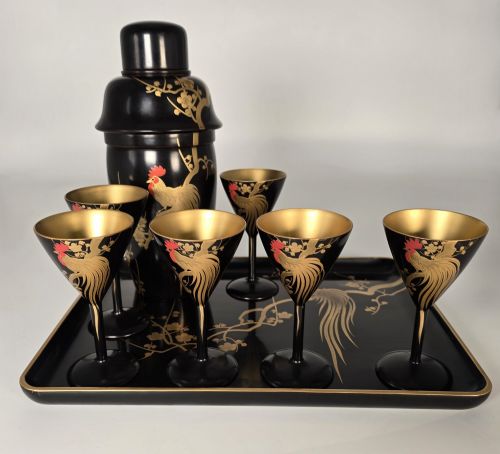
Art Deco barware relies on streamlined geometries, modernist chrome mounts, and bold silhouettes distinct from ornate Victorian designs. Sets from this period often feature matching cocktail shakers, coloured glass, and stylized motifs.
Production dates cluster around the 1930s, incorporating materials like chromium plating alongside clear or frosted crystal. Maker attributions from this era point toward European glasshouses and modernist designers.
Can I use antique decanters daily?
Antique decanters and glassware are suitable for regular use provided they receive careful manual washing. Hand washing prevents thermal shock and protects delicate silver plating or cut crystal facets.
Harsh detergents and automatic dishwashers should be avoided to preserve the clarity of nineteenth-century and early twentieth-century glass. Stoppers should be stored separately or left slightly ajar when decanters are empty.