

Antique Decanter and Glasses
An antique decanter and glasses set brings period elegance to the table, pairing cut glass vessels with matching service pieces.
Antique Decanter and Glasses
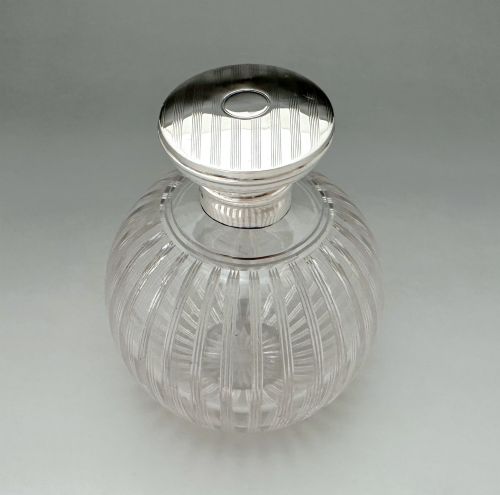
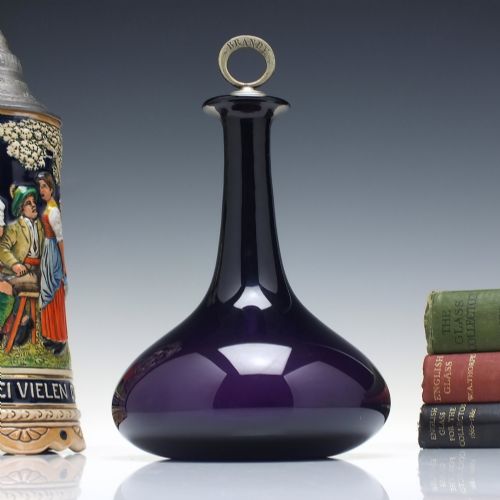
An antique decanter and glasses selection typically includes matching sets from the Victorian and Edwardian eras designed for spirits, wine, and cordials. Pieces range from single spirit bottles with silver mounts to complete cordial sets on stands.
Materials and construction
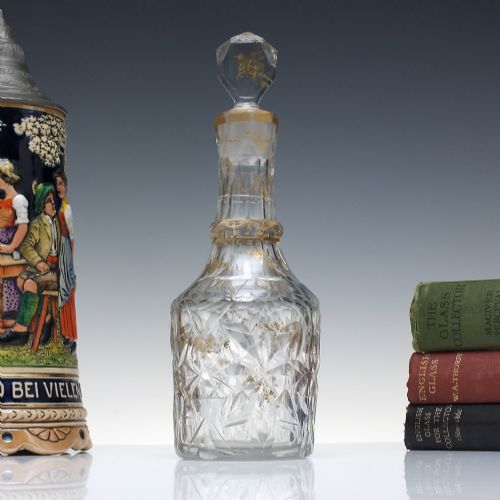
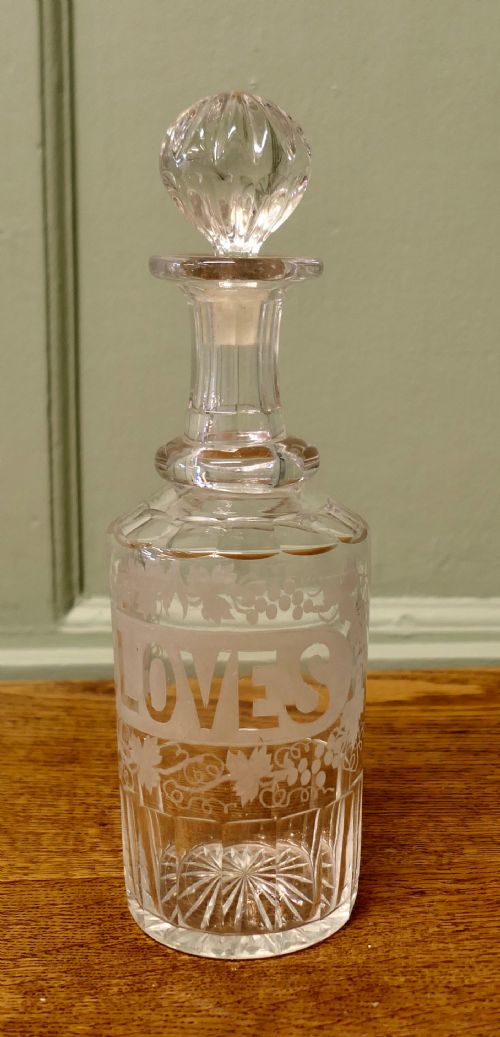
Glass vessels are created through blowing and cutting techniques, yielding pillar, prism, and hobnail patterns that catch the light. Hand-blown pieces often display pontil marks and subtle variations in thickness.
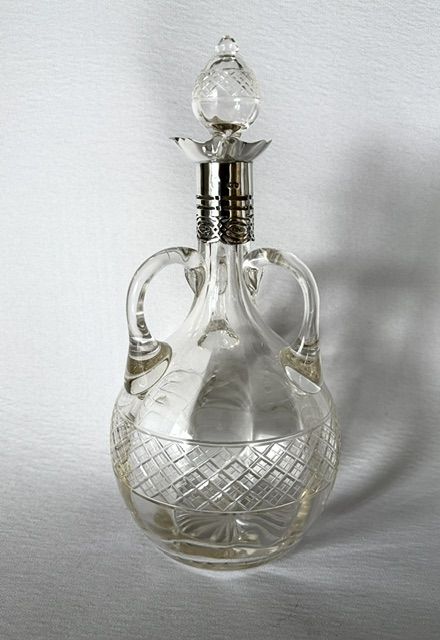
Mounts and collars utilise sterling silver and silver plate, frequently bearing hallmarks for silversmiths and assay offices. Gilt applique, enamel, and gold leaf decorate select glass bodies.
Listings feature periods from the Georgian era through to Art Deco, encompassing sterling silver, crystal, and coloured glass.
Assessing craftsmanship
Quality rests upon the depth and crispness of the glass cutting, the weight of the metal mounts, and the integration of any accompanying stands or games compendiums. Finer examples exhibit heavy lead crystal with sharp facets.
Makers and silversmiths of note elevate the standing of a piece, while matched sets with all original glasses command particular interest.
Asprey and Co. Ltd·Stevens and Williams·Walker and Hall·Henry Matthews·Gorham·James Giles
The Antique Decanter and Glasses Glossary
- Tantalus
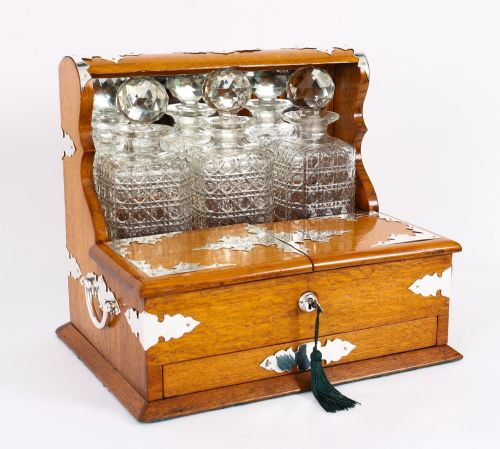
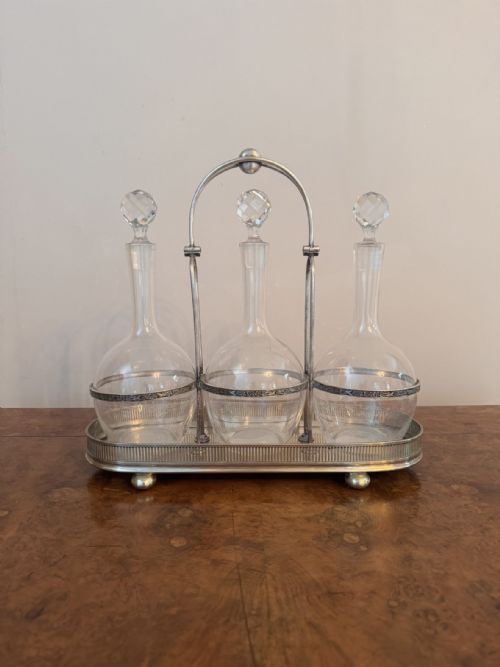
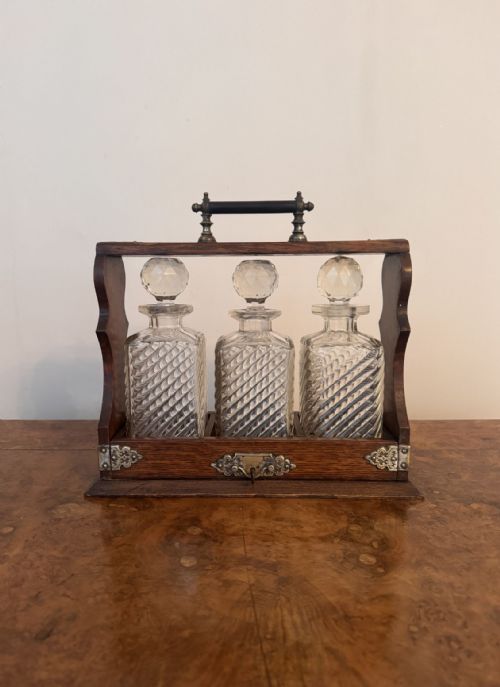
- A locking wooden frame securing decanters to prevent unauthorized access to the contents. These typically date from the late nineteenth century.
- Claret jug
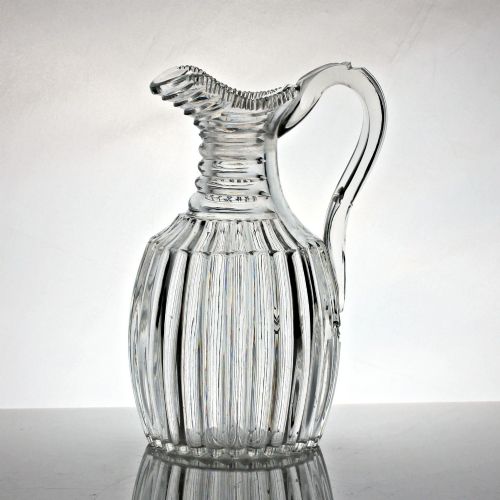
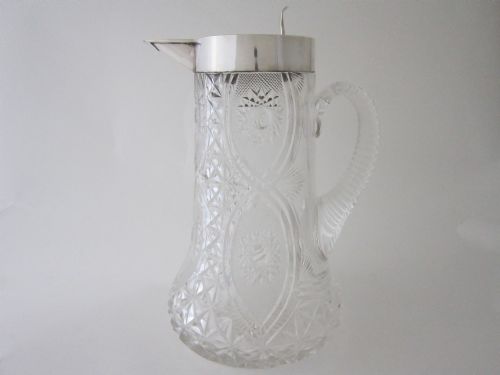
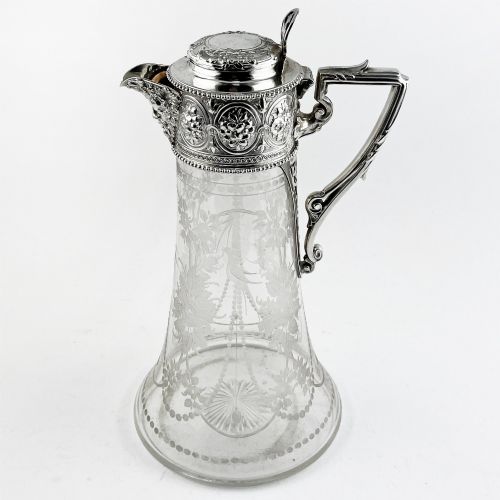
- A pouring vessel designed for red wine, combining a glass body with a hinged metal lid and handle. Many feature silver mounts.
- Ring neck
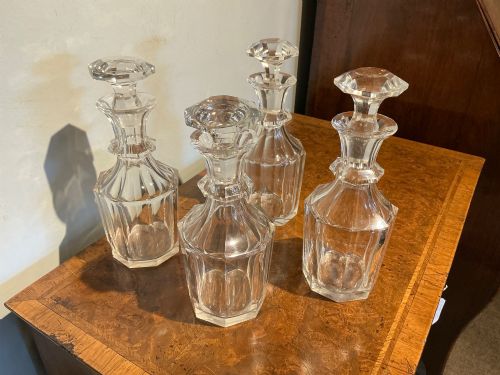
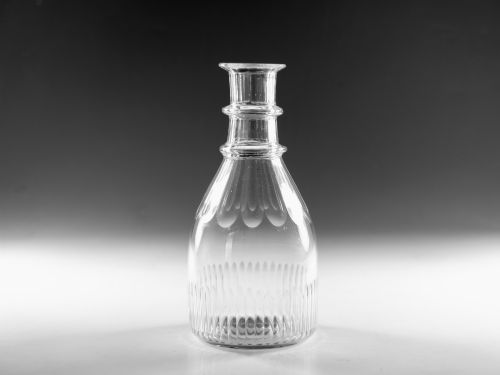
- Decanters featuring horizontal glass rings on the neck to assist with grip during pouring. These are common on nineteenth-century spirit vessels.
- Ewer
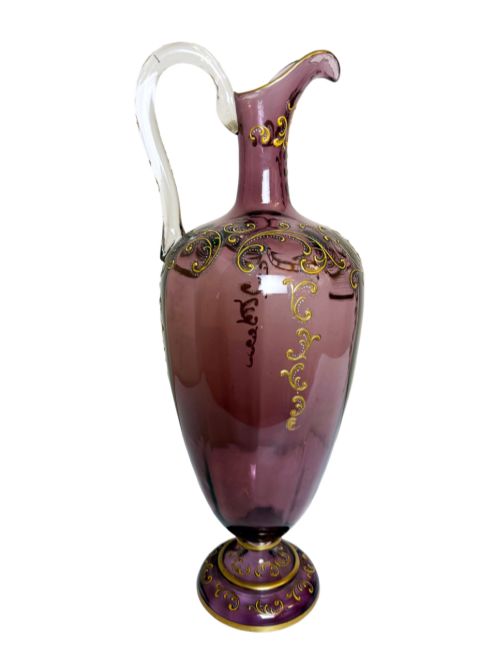
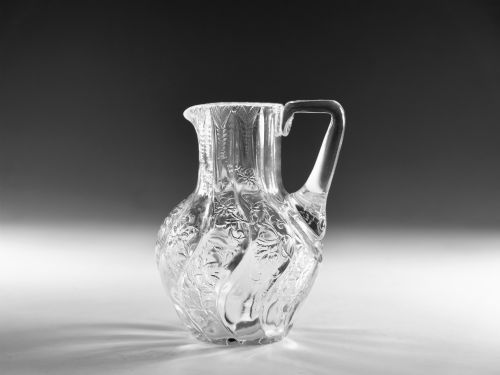
- A large jug with a wide spout and handled body used for serving water or wine. They appear in cut glass and hand-blown varieties.
- Lead crystal
- Glass containing metal oxides that increase refractive index and weight. This material allows for deep, sharp wheel cutting.
Antique Decanter and Glasses: Frequently Asked Questions
How do I date an antique decanter?
Dating relies on stylistic clues, shape, and accompanying hallmarks on any silver mounts. Pontil marks and the depth of the glass ring cutting also indicate the period of manufacture.
Victorian and Edwardian pieces frequently feature registered design numbers or clear maker marks on the silver collars, helping to narrow the production year.
What is a tantalus used for?
A tantalus holds decanters securely within a wooden frame, often fitted with a lock and key to restrict access to spirits. Wealthy households utilised them in studies or dining rooms.
Most surviving examples pair an oak framework with silver-plated lock mechanisms and three matching cut glass decanters.
Are glasses always included with decanters?
While some listings offer complete sets with matching cordial or wine glasses, many decanters were produced and sold individually. Stands often accommodated a specific number of glasses alongside the main bottle.
Complete sets featuring matching glasses and original stands represent more uncommon survivals in the archive.
How should I clean antique glass decanters?
Cleaning requires gentle warm water and mild detergent, avoiding sudden temperature changes that can crack old glass. Stubborn internal residue responds to specialist cleaning beads rather than harsh abrasives.
Silver mounts need careful polishing with a non-abrasive cloth to prevent tarnishing while protecting the surrounding glass surface.