




Lockable Decanter Stand
A lockable decanter stand protects fine spirits behind a secure bar, combining rich cabinetwork with cut crystal.
Lockable Decanter Stand
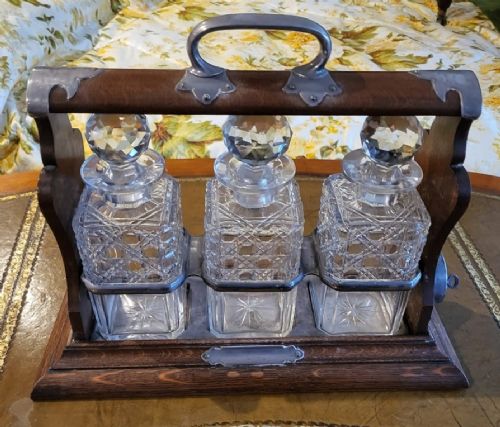
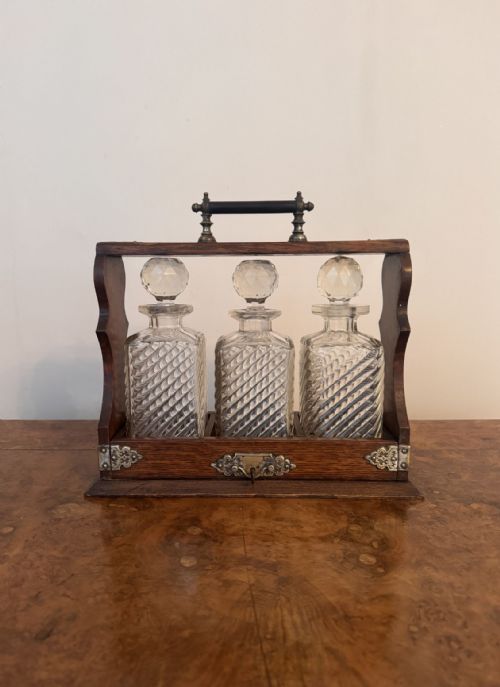
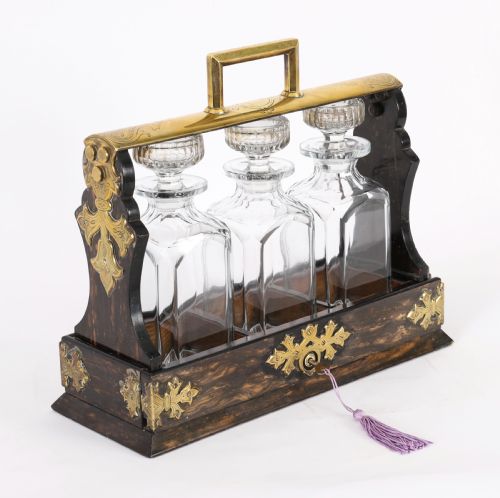
A lockable decanter stand, often known as a tantalus, is designed to keep household spirits secure from unauthorised access by servants or guests. These pieces house two or three cut crystal or glass decanters within a rigid frame fitted with a metal locking bar.
The versions most commonly met on this page date from the Victorian and Edwardian periods, stretching from the 1870s through to the 1920s. They take the form of standalone wooden frames, compartmented boxes, or combined tantalus and games compendiums.
Makers utilised dense timbers such as oak, coromandel wood, walnut, and other hardwoods to construct the bodies. Brass mounts, marquetry stringing, and silver-plated hardware complete the construction of these elaborate barware items.
How they were made
Cabinetmakers built the frames using durable hardwoods like oak, walnut, and coromandel wood, frequently enhancing the surfaces with marquetry stringing or brass mounts. These dense timbers provided the structural rigidity necessary to support heavy glass decanters and the mechanical locking mechanism.
The associated decanters consist of heavy cut crystal or cut glass, shaped to fit precisely within the locking frame compartments. Metalwork components, including silver plating and brass brackets, secure the bottles in place when the key is turned.
Lockable Decanter Stand Retail Price Guide 2026
Typical asking prices for lockable decanter stand among the pieces listed under this phrase on Sellingantiques today, from the lower quarter to the upper quarter. They describe what is for sale here now, not the wider market.
The available pieces span the Victorian, Edwardian, and nineteenth-century periods, alongside dedicated games compendium combinations.
What varies in quality
The quality of a lockable decanter stand rests upon the choice of timber and the precision of the metal locking mechanism. Finer examples utilise exotic timbers such as coromandel wood and incorporate intricate marquetry stringing alongside substantial silver-plated mounts.
The execution of the cut crystal decanters and the robustness of the brass framing distinguish superior pieces from standard production. Fully operational locking bars with working keys elevate the utility and desirability of the standalone frame or games compendium.
The Goldsmith Co.·Philip Ashberry
The Lockable Decanter Stand Glossary
- Tantalus
- A locking drink stand that holds decanters in place so they remain visible yet impossible to pour without a key. This namesake refers to the mythological figure Tantalus, who suffered eternal thirst within sight of water.
- Coromandel wood
- A dense, heavily figured tropical hardwood prized by Victorian cabinetmakers for luxury boxes and tantalus frames. It displays dark brown and black streaks across a warm background.
- Marquetry stringing
- Inlays of thin contrasting wood strips embedded into the surface of a cabinet to form geometric borders. This decorative technique highlights the edges of Victorian oak and walnut boxes.
- Silver plate
- A thin layer of silver fused to a base metal foundation to give the appearance of solid silver hardware. Manufacturers used this technique on the locking bars, handles, and collars of Edwardian and Victorian barware.
Lockable Decanter Stand: Frequently Asked Questions
What is a lockable decanter stand?
A lockable decanter stand is a secure framework designed to hold cut crystal decanters of spirits. A metal bar locks over the stoppers to prevent anyone from pouring the contents without the matching key.
These items served a practical purpose in large Victorian and Edwardian households where masters wished to restrict access to expensive alcohol. They double as decorative barware pieces suitable for display on sideboards or in studies.
How do you date these stands?
Dating relies on identifying the timber choices, metal plating techniques, and overall decorative styles associated with specific eras. Victorian examples often feature heavy oak or coromandel wood with substantial brass mounts.
Edwardian pieces tend to show lighter construction styles or integrate multi-use compartments like games compendiums. Hallmarks on silver-plated hardware also provide clues regarding the manufacturing period.
Did they always hold three bottles?
These stands were manufactured to hold either two or three decanters depending on the size of the frame. Three-bottle configurations appear frequently in both Victorian and Edwardian inventories.
Smaller two-bottle versions provide a more compact footprint while maintaining the same mechanical locking mechanism. The number of cut crystal decanters corresponds directly to the width of the wooden base.
How should I clean the woodwork?
Maintenance of the wooden frame involves dusting with a soft cloth and applying appropriate beeswax sparingly. Avoid harsh chemical cleaners that can strip the original polish from oak, walnut, or coromandel surfaces.
Keep the metal locking bars and silver-plated mounts clean with a gentle wipe to prevent tarnish accumulation. Ensure the timber stays away from direct heat sources to prevent the wood from splitting.