

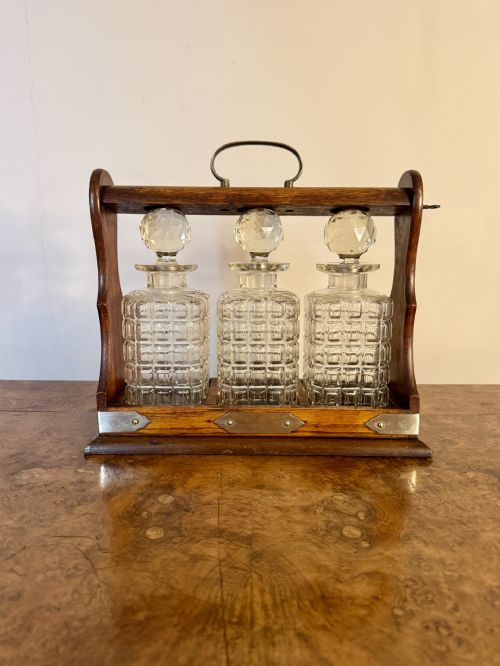
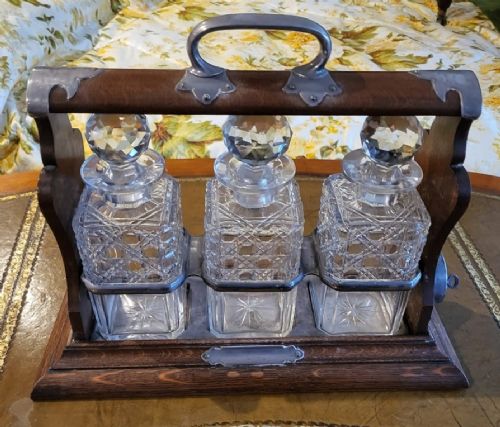

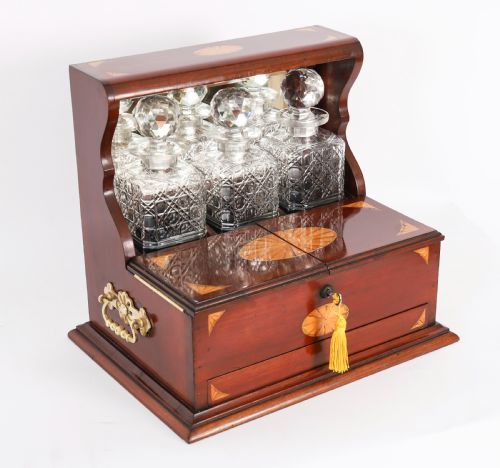


Edwardian Lockable Decanter Set
These edwardian lockable decanter set pieces secure fine crystal bottles within timber frames, protecting private reserves.
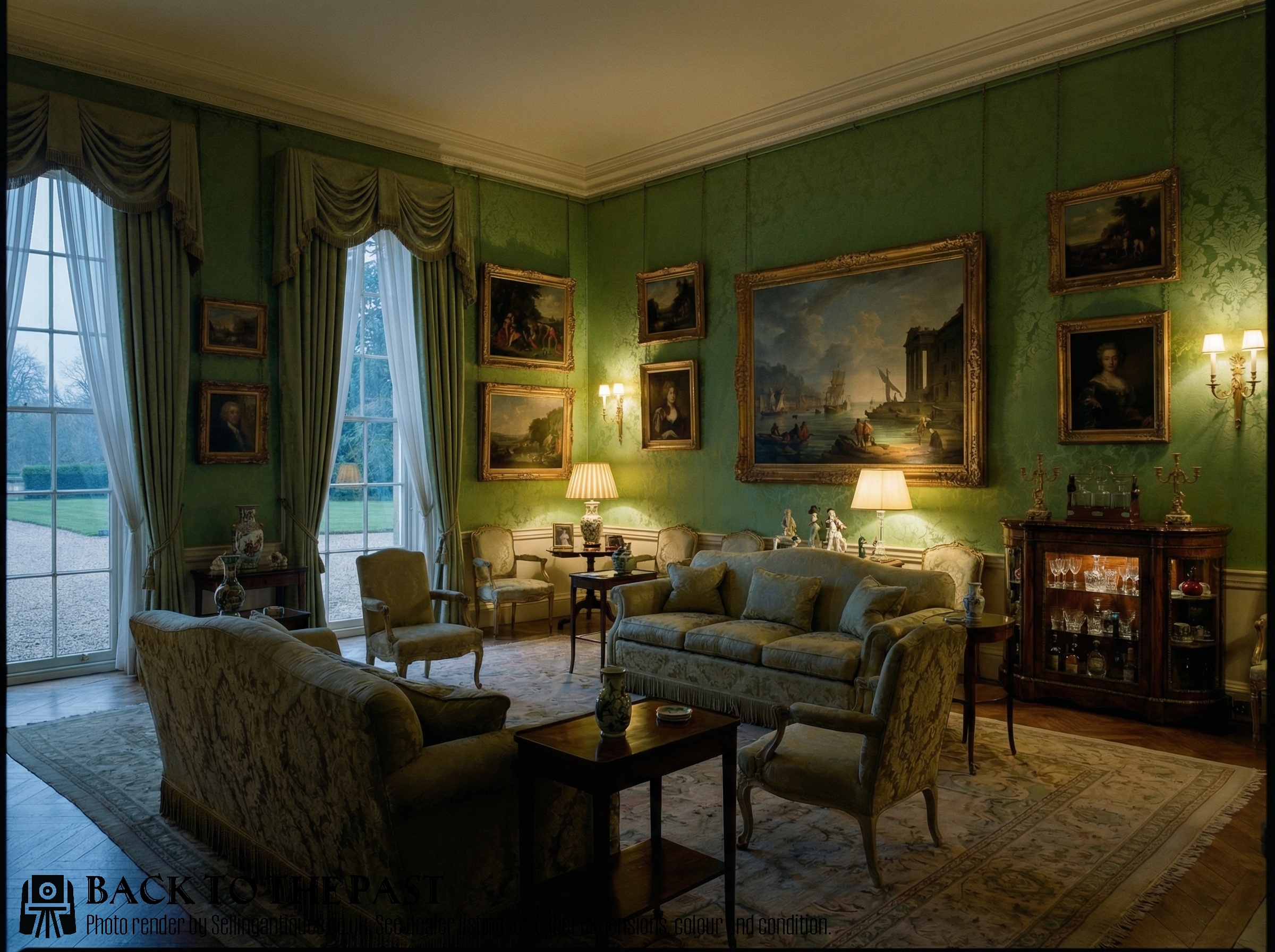
Edwardian Lockable Decanter Set
An edwardian lockable decanter set, also known as a tantalus or games compendium, holds glass bottles securely behind a locking bar. The pieces seen on this page span the Victorian and Edwardian periods, stretching from eighteen seventy to nineteen twenty.
Oak forms the primary timber body for many examples, often complemented by mahogany, satin wood, and walnut. These woods receive brass mounts, silver plating, and marquetry stringing.
Most configurations house either two or three cut glass or cut crystal decanters. Some incorporate compartments for games alongside the bottles.
How they were made
Cabinetmakers constructed the main framework using solid oak, mahogany, or walnut, sometimes applying satin wood inlay or marquetry stringing for decoration. These wooden housings provide the sturdy structure required to hold heavy glass vessels safely.
Metalworkers fitted brass mounts and silver plated hardware to secure the locking mechanism and corners. Cut glass and cut crystal decanters were then shaped to fit precisely within the partitioned wooden bases.
Edwardian Lockable Decanter Set Retail Price Guide 2026
Typical asking prices for edwardian lockable decanter set among the pieces listed under this phrase on Sellingantiques today, from the lower quarter to the upper quarter. They describe what is for sale here now, not the wider market.
Some lockable sets doubled as gaming hubs, ensuring guests could gamble and drink simultaneously under one locked roof.
What varies in quality
The choice of timber and decorative technique dictates much of the standard across these pieces. Examples utilising satin wood inlay, marquetry stringing, or fitted games compartments sit above plain oak housings.
The refinement of the cut crystal decanters and the substantial weight of the brass mounts also separate standard production from superior pieces.
The Edwardian Lockable Decanter Set Glossary
- Tantalus
- A locking drink cabinet that holds decanters visible yet inaccessible without a key. The metal bar blocks the stoppers from being removed until unlocked.
- Games compendium
- A combination box housing drinking vessels alongside equipment for pastimes like cards or board games. These multifunctional pieces often include folding surfaces and small storage compartments.
- Marquetry stringing
- Thin lines of contrasting wood inlaid into the primary timber surface for decoration. Cabinetmakers used this technique to define panels on cabinet lids and drawer fronts.
- Silver plate
- A thin layer of silver applied over a base metal foundation. This treatment provided the appearance of solid silver hardware on mounts and locking mechanisms.
Edwardian Lockable Decanter Set: Frequently Asked Questions
What is an edwardian lockable decanter set?
An edwardian lockable decanter set is a secure drinks holder featuring a locking mechanism that prevents the removal of glass bottles. These units combine timber frames with metal hardware to safeguard spirits.
Versions range from simple two bottle frames to elaborate three decanter arrangements with integrated games boxes.
How do you open the locking mechanism?
A small key operates the lock on the metal top bar, allowing the side bracket to pivot downward. This action releases the stoppers so the decanters can be lifted free.
Original keys are uncommon due to the passage of time, though many mechanisms accept replacement keys fitted by specialists.
What materials are used in these sets?
The frames employ hardwoods such as oak, mahogany, walnut, and satin wood. Metal components consist of brass mounts and silver plated hardware alongside cut crystal or cut glass decanters.
Combination pieces also incorporate interior elements for cards and gaming pieces.
How do I date a piece?
Dating relies on timber selection, construction methods, and the style of the brass mounts. Pieces span the Victorian and Edwardian eras, with design details shifting from heavier carved oak towards inlaid satin wood.
Reference markers include patent dates on locks and the specific cutting patterns on the crystal decanters.