



Three Bottle Decanter Caddy
These three bottle decanter caddy pieces house your spirits securely in fitted frames, offering both functional service and period display.
Three Bottle Decanter Caddy
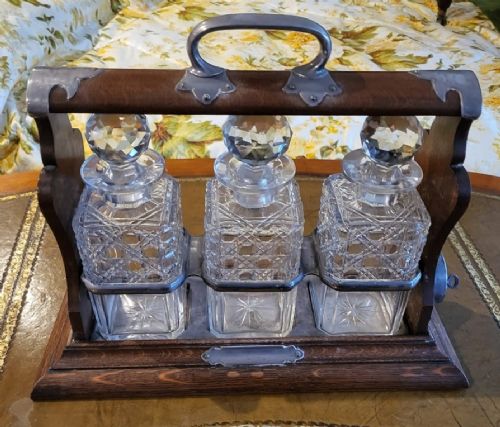
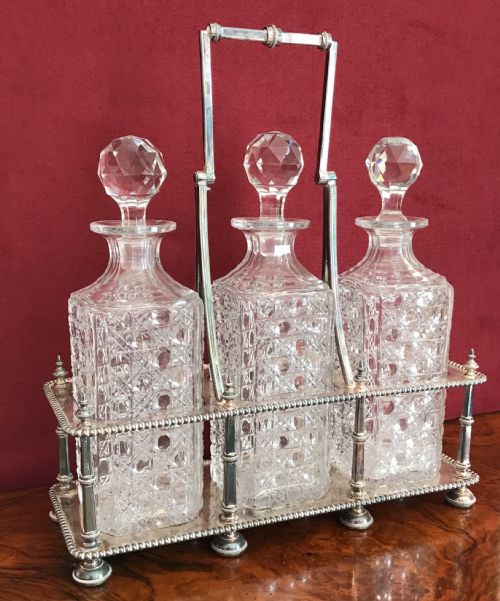
A three bottle decanter caddy organises a trio of vessels within a structured metal, glass, or wooden frame designed for household hospitality. Such items appear across the Victorian, Edwardian, and 1930 periods, taking the form of tantalus decanters, decanter stands, and ornate caskets.
You are most likely to encounter oak frames fitted with silver plate or brass mounts, often housing three cut glass decanters. These objects function simultaneously as barware and locking security frames, commonly referred to as tantaluses in late nineteenth and early twentieth century households.
How they were made
Maker construction relies heavily on solid oak for the chassis, shaped and joined to support heavy glassware securely. Metal components in silver plate and brass form the handles, locking mechanisms, and decorative mounts.
The glassware involves cut glass techniques, producing faceted surfaces that catch the light within the caddy frame. Mirror glass occasionally lines the base or interior of caskets to enhance the visual depth of the bottles.
Three Bottle Decanter Caddy Retail Price Guide 2026
Typical asking prices for three bottle decanter caddy among the pieces listed under this phrase on Sellingantiques today, from the lower quarter to the upper quarter. They describe what is for sale here now, not the wider market.
Listings span the Victorian, Edwardian, and 1930 periods, utilising oak, silver plate, brass, and cut glass.
What varies in quality
The calibre of a three bottle decanter caddy depends on the precision of its metal framing and the weight of the cut glass bottles. Heavier oak housings and finer silver plating elevate a piece above standard utility versions.
Workmanship shows in the integration of the locking mechanism and the harmony between the wooden chassis and the metal mounts. Pieces with ornate framing or bevelled mirror glass components sit at the higher end of the period range.
The Three Bottle Decanter Caddy Glossary
- Tantalus
- A locking drink cabinet or frame that secures decanters by their stoppers while keeping the contents visible. This device prevents unauthorised access to the spirits inside.
- Silver plate
- A thin layer of silver applied to a base metal such as copper or brass. This technique provided the appearance of solid silver at a lower manufacturing cost.
- Cut glass
- Glassware decorated by grinding facets and patterns into the surface using a wheel. This method creates brilliant light refraction across the body of the decanter.
- Casket
- A decorative box or chest used to hold valuables or specific household items. In this context, it houses glass bottles within a protective enclosure.
- Barware
- Utensils and vessels utilised for the storage and serving of alcoholic beverages. These items formed an essential part of period entertaining.
Three Bottle Decanter Caddy: Frequently Asked Questions
What is a tantalus?
A tantalus is a locking decanter frame that holds bottles securely behind a metal bar. It gained its name from the mythological figure Tantalus because the contents remain visible yet out of reach when locked.
These pieces typically utilise a key to release the top mechanism, allowing the bottles to be lifted from the oak base.
How do I date an oak caddy?
Dating relies on stylistic clues and construction methods associated with Victorian, Edwardian, and later periods. Edwardian examples often feature simpler oak framing, whereas Victorian versions lean towards heavier brass mounts and ornate silver plating.
Examining the depth of the glass cutting and the type of metal plating provides further clues to the decade of manufacture.
Were these used for whisky?
These caddies held various spirits, most commonly whisky, within matched sets of three cut glass bottles. Households displayed them in dining rooms or smoking rooms for evening hospitality.
The locking mechanism was originally intended to stop domestic staff from helping themselves to the master's private stock.
Are the bottles usually original?
Many surviving caddies retain their original set of three cut glass decanters, though replacements occur frequently due to accidental breakage over the decades. Matching the exact collar size and cut pattern requires care if a bottle is missing.
Checking the fit within the wooden base helps determine if the glassware belongs to the original frame.
How do I clean the oak frame?
Maintenance involves gentle dusting and occasional feeding of the wood with traditional wax to preserve the finish. Moisture should be kept away from both the wood and any silver plated mounts to prevent tarnishing.
Metal components benefit from soft cloth wiping rather than abrasive chemical cleaners that damage the plate.