


Oak Chiming Clock
When you search for an oak chiming clock, you uncover robust timber cases housing intricate gear trains that play traditional melodies.
Oak Chiming Clock
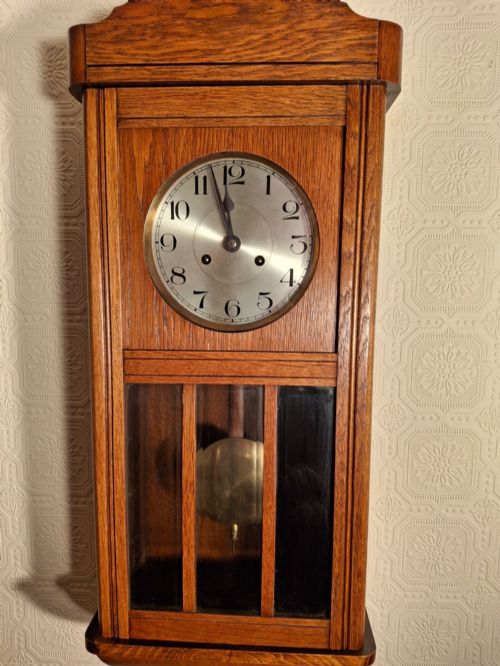
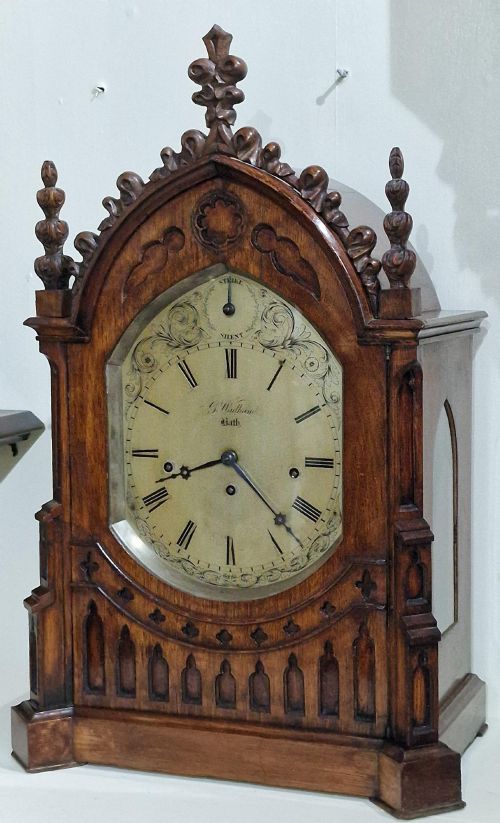
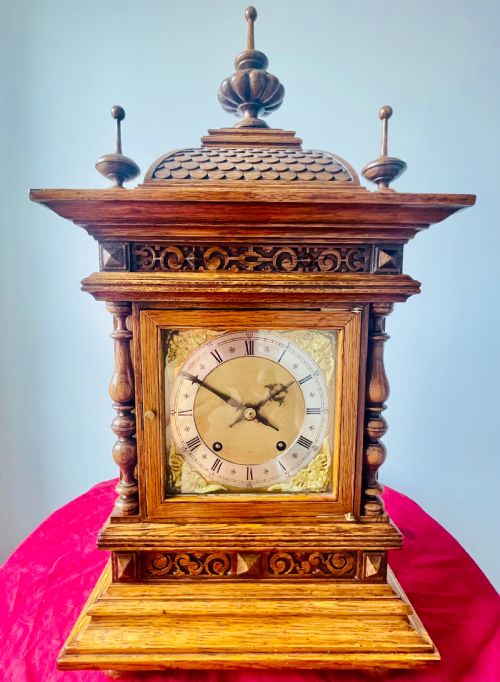
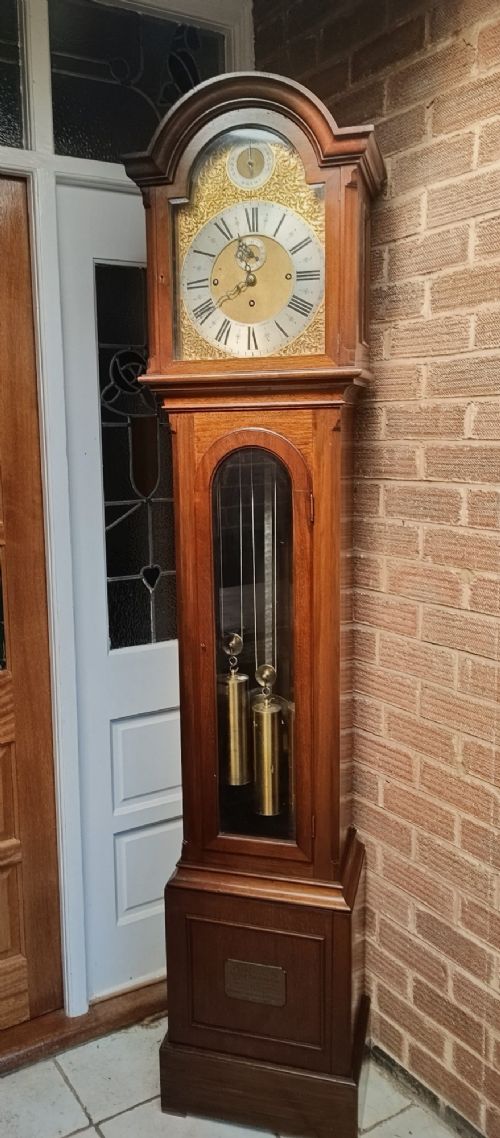
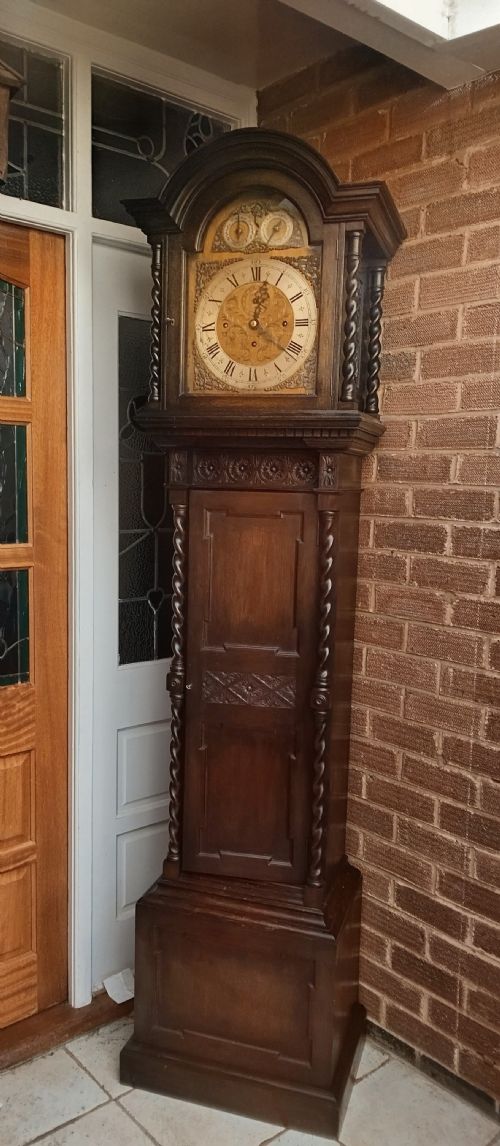
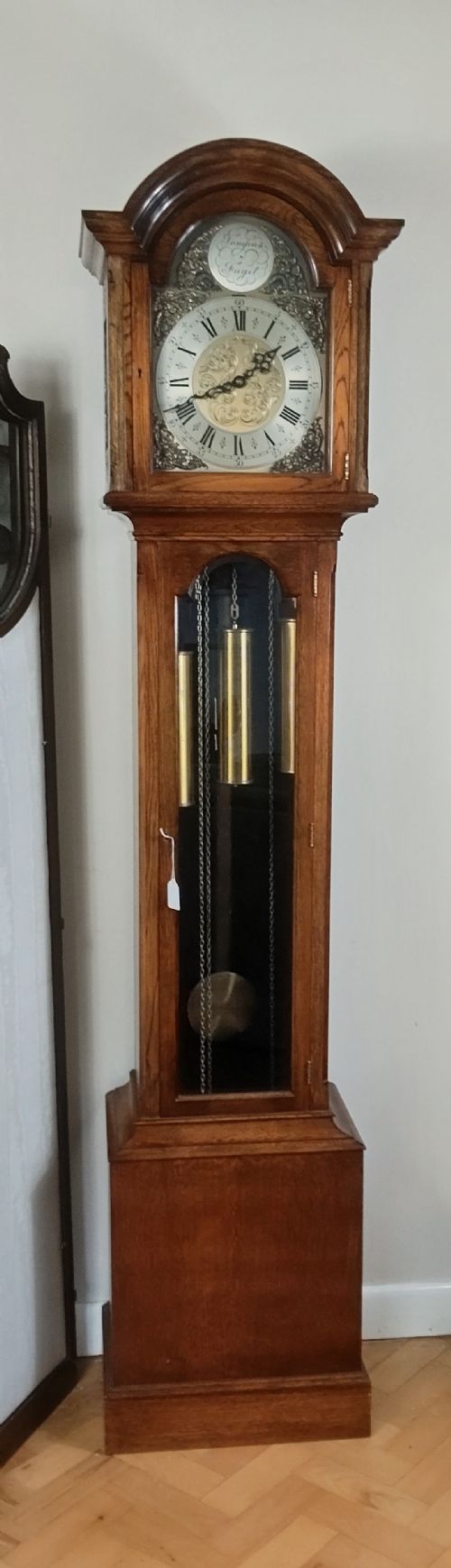
An oak chiming clock combines a durable hardwood enclosure with a complex mechanical movement designed to sound the hours and quarters. These pieces range from compact mantel and bracket models to tall floor-standing longcase and grandfather formats.
The material palette leans heavily on golden, dark, or figured oak timber paired with brass dials and silvered metal chapters. Stylistic influences span Victorian and Edwardian revivals through to Art Deco geometry and functional early twentieth-century engineering.
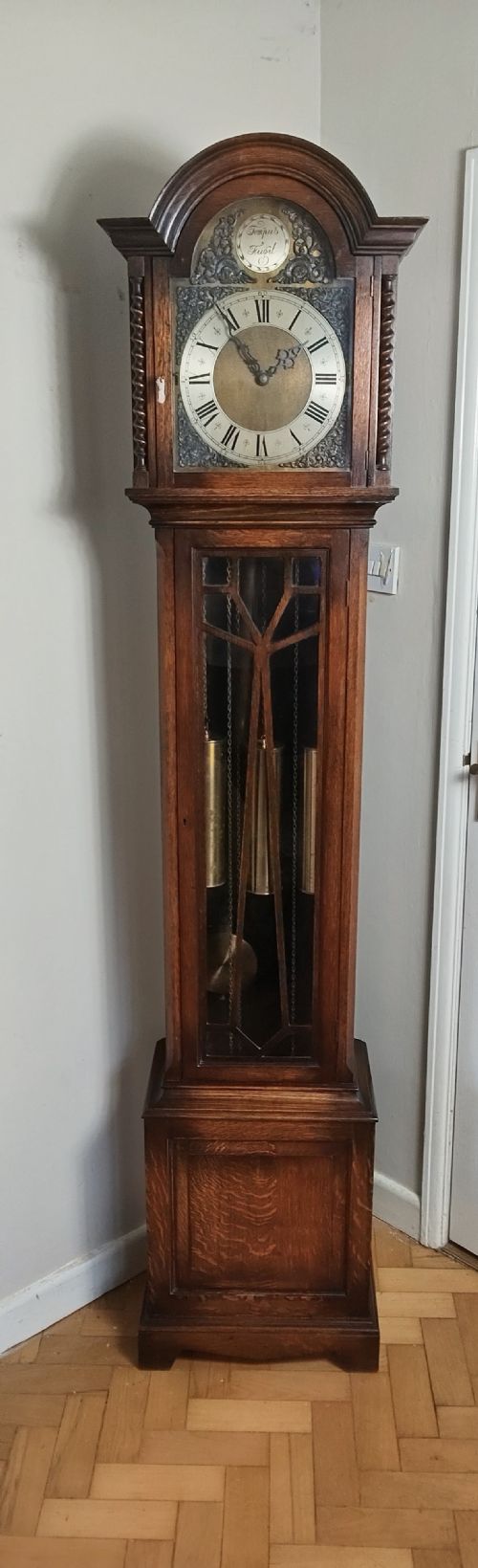
Floor-standing variants appear frequently as tall grandfathers or reduced grandmother scales, while smaller shelf versions occupy bracket and mantel positions. British and continental European makers contributed extensively to this category throughout the late nineteenth and early twentieth centuries.
How They Were Made
Cabinetmakers constructed the wooden housings using solid oak timbers, frequently applying carved details, glass viewing panels, and astragal glazing to the trunk doors. These enclosures protected the internal spring-driven or weight-driven mechanisms from dust and environmental changes.
Horologists utilised brass, steel, and chrome components to assemble intricate gear trains capable of quarter-striking, ting-tang sounds, and multi-tune musical cylinders or bells. Silvered metal dials provided legible faceplates, often accented with applied numerals and subsidiary regulation indicators.
Listings feature oak cases spanning the Victorian, Edwardian, and Art Deco periods, housing movements driven by weights, springs, and triple-train mechanisms.
What Varies in Quality
The sophistication of the internal movement distinguishes standard striking mechanisms from elaborate triple-fusee or multi-tune musical apparatuses. Greater horological ambition involved more complex bell configurations, gong arrangements, and multiple weight trains.
Cabinet construction and surface finishing reveal the original maker's investment in materials, seen through deeply carved decorative motifs, select timber grain matching, and substantial brass dial furniture. Architectural proportions and overall harmony between the case and the internal clockwork further separate ordinary productions from exceptional examples.
Winterhalder And Hofmeier·Junghans·Enfield·W Prior Skipton·Waite And Son Cheltenham
The Oak Chiming Clock Glossary
- Bracket Clock
- A portable clock designed to sit on a bracket, shelf, or table, typically featuring a carrying handle and a glazed door.
- Grandfather Clock
- A tall floor-standing timepiece enclosed in a longcase, driven by hanging weights and controlled by a swinging pendulum.
- Grandmother Clock
- A smaller, more slender version of the longcase clock, standing lower to the floor while retaining weight-driven mechanical movements.
- Fusee
- A conical pulley used in spring-driven clocks to equalise the declining power of the mainspring as it unwinds.
- Ting-Tang
- A two-hammer striking system that hits two distinct bells or gongs in rapid succession to mark the quarters or hours.
- Westminster Chime
- A four-note melody played on quarter hours, widely adopted by clockmakers across Britain and Europe during the late Victorian and Edwardian periods.
Oak Chiming Clock: Frequently Asked Questions
How do I wind an oak chiming clock?
Most mechanical models utilise a key inserted into winding holes on the dial face to tension the internal springs or draw up the hanging weights.
Care must be taken not to over-wind the movement, stopping as soon as resistance is felt to protect the internal gear trains.
What is the difference between a grandfather and grandmother clock?
Grandfather clocks typically stand over seven feet tall and possess large proportions suited to substantial hallways or reception rooms.
Grandmother clocks offer a slender, reduced scale measuring significantly lower, making them suitable for tighter domestic spaces.
Why does my clock chime the wrong time?
Chiming mechanisms can get out of sequence if the hands are moved backward or if the clock runs down entirely between windings.
Allowing the strike train to run its course or gently advancing the minute hand forward through a full cycle usually realigns the sequence.
How do I identify the period of an oak clock?
Case styles provide primary clues, with heavy carving indicating Victorian tastes, clean geometric lines pointing to Art Deco, and lighter honey oak finishes suggesting Edwardian or 1930s production.
Dial signatures, movement stamps, and construction methods offer further confirmation of the manufacturing decade.