




Art Deco Chiming Clock
An art deco chiming clock brings architectural form and mechanical melody together, offering striking presence on a mantel or wall.
Art Deco Chiming Clock
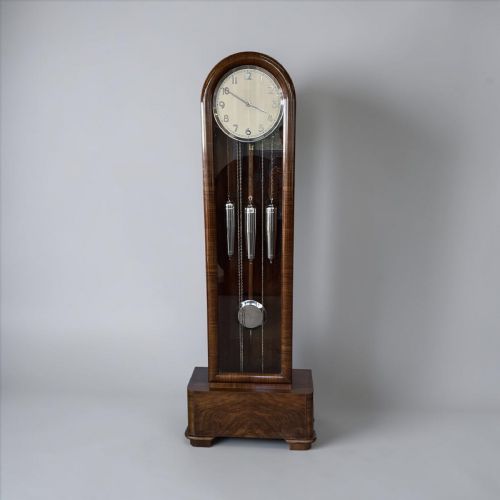
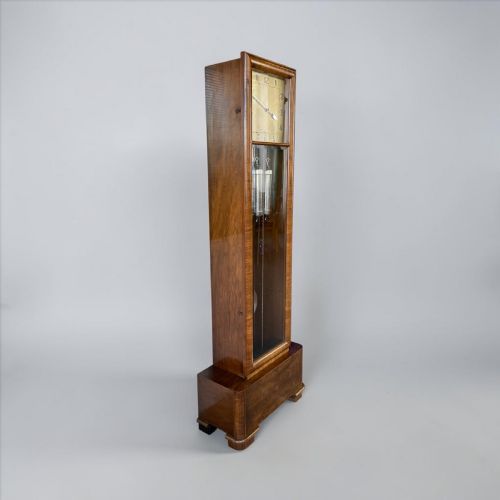
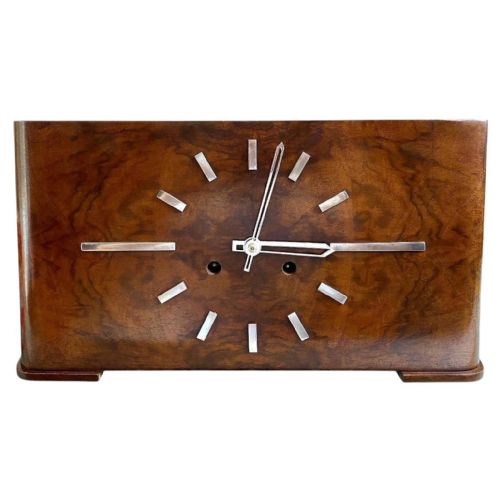
An art deco chiming clock combines geometric styling with audible timekeeping, spanning mantel clocks, wall clocks, and longcase clocks.
The pieces appearing on this page date principally across the 1920s, 1930s, 1940s, and into the 1950s, reflecting the enduring popularity of the aesthetic.
Mantel clocks and wall clocks dominate the selection, alongside taller longcase and grandfather formats originating from Britain, France, Germany, and Italy.
Materials and construction methods
Cabinetmakers utilised rich timbers such as walnut, walnut veneer, and oak, often shaping them into stepped architectural silhouettes characteristic of the period.
Makers integrated contrasting materials including chrome, brass, glass, and mirrored glass to accentuate the modern industrial lines of the clock cases.
Complex mechanical movements powered the carillon and Westminster chimes, housed securely behind glazed or carved wooden doors.
Some clocks pack four distinct melodies into a single wooden cabinet, ensuring your living room doubles as a miniature cathedral.
Differentiating quality across examples
Superior execution shows in the crispness of the timber grain, the precision of walnut veneering, and the integration of metal elements like chrome and brass.
The sophistication of the internal movement, from standard striking mechanisms to multi-carillon setups by notable makers, separates standard production from finer work.
Proportion and case design determine visual success, where balanced geometric forms and clean glass framing elevate the piece.
Odo·Vedette·Haller·Girod·Perivale·Junghans·Pfeilkreuz Junghans·EMBE
The Art Deco Chiming Clock Glossary
- Westminster Chime
- A melodic sequence of four notes played on the quarter hour by the clock movement. This tune remains the most common audio pattern found in the period.
- Carillon
- A set of bells or tuned rods played by the clock mechanism to produce specific melodies. Multiple carillon systems allow clocks to cycle through different tunes.
- Walnut Veneer
- A thin layer of figured walnut wood applied over a stable secondary timber base. This technique allowed makers to create symmetrical grain patterns across large clock fronts.
- Longcase Clock
- A tall floor-standing timepiece housed in a wooden trunk, also referred to in smaller proportions as a grandmother or grandfather clock.
Art Deco Chiming Clock: Frequently Asked Questions
How do I wind the movement?
Most mechanical clocks require a key inserted into specific winding holes on the dial face to tension the springs or lift the weights.
Care must be taken not to overwind the springs, stopping as soon as resistance is felt to protect the internal brass gear train.
Where should I place a wall clock?
Wall-mounted timepieces need a secure fixing directly into a solid wall or wall stud to support the weight of the wooden case and movement.
Keeping the clock away from damp walls and direct sunlight preserves the timber veneer and ensures the mechanical pendulum swings freely.
What causes the chimes to go out of sequence?
Moving the minute hand backwards or interfering with the mechanical rack can cause the chime train to desynchronise with the time shown on the dial.
Allowing the clock to complete its chiming cycle naturally usually corrects minor positional errors in the striking sequence.
How do I identify the period?
Stylistic clues such as stepped wooden cornices, chrome detailing, and specific dial typography point towards the 1920s and 1930s design ethos.
Maker signatures on the movement backplate or dial often provide a reliable manufacturing date or era.