

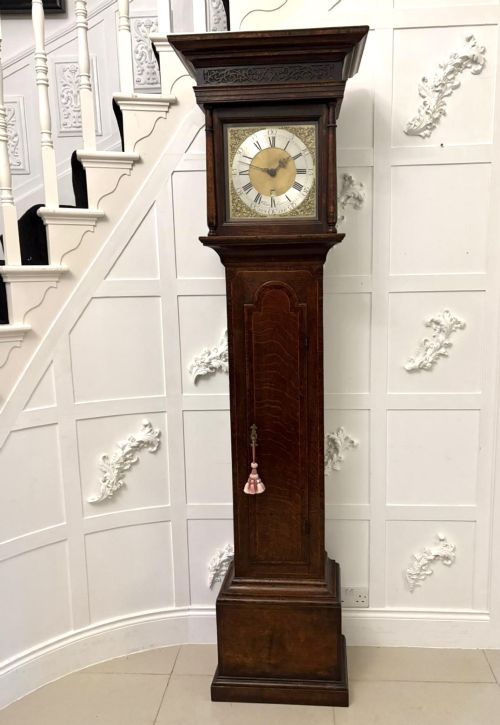
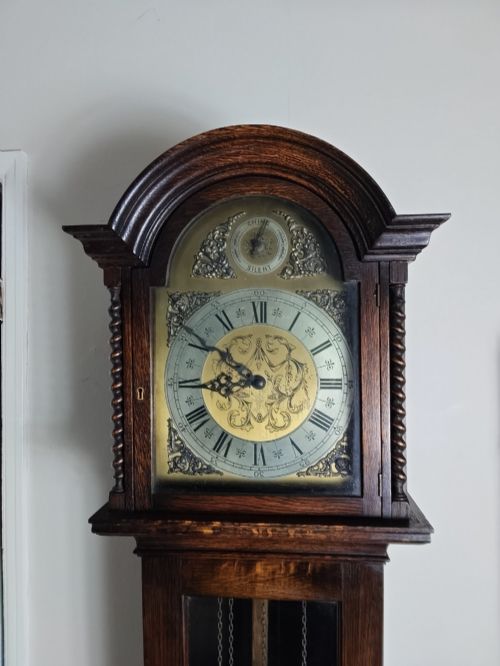
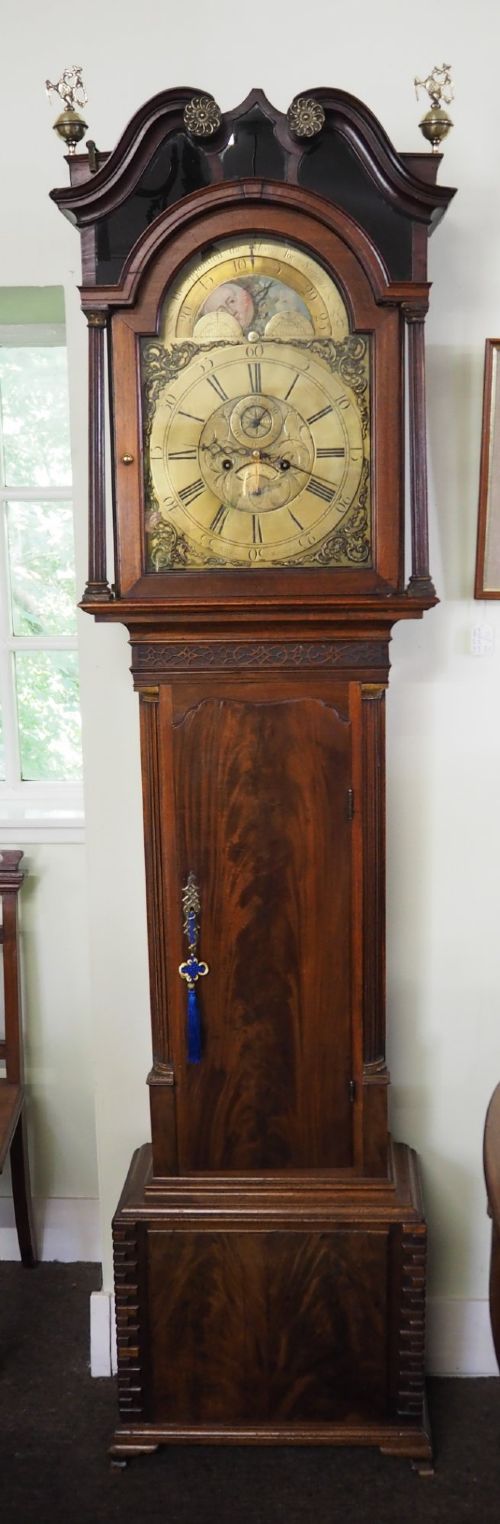
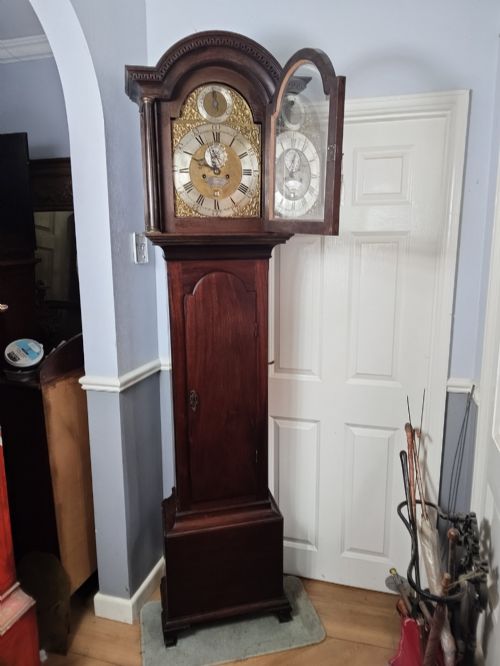


Brass Weight Longcase Clock
A brass weight longcase clock anchors a room with mechanical precision and timber presence, offering the enduring rhythm of swinging pendulums and descending brass weights.
Brass Weight Longcase Clock
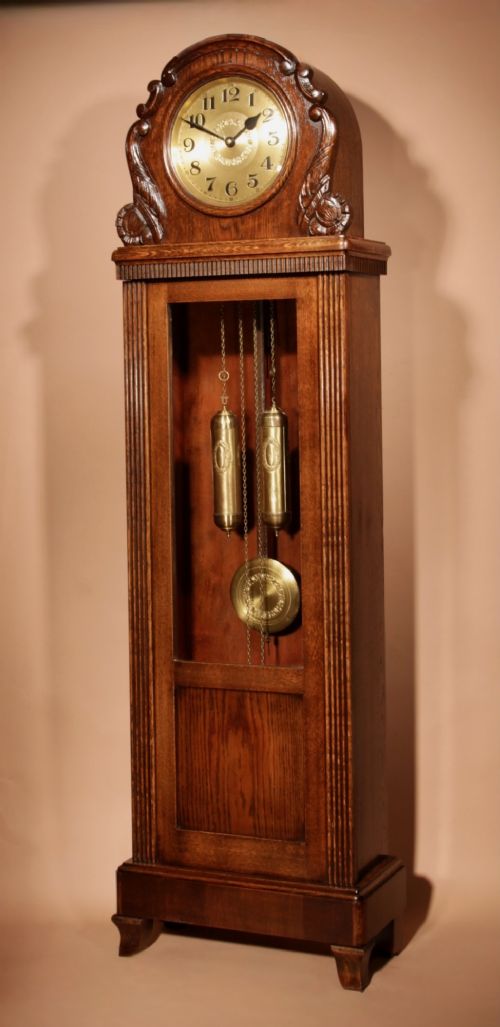
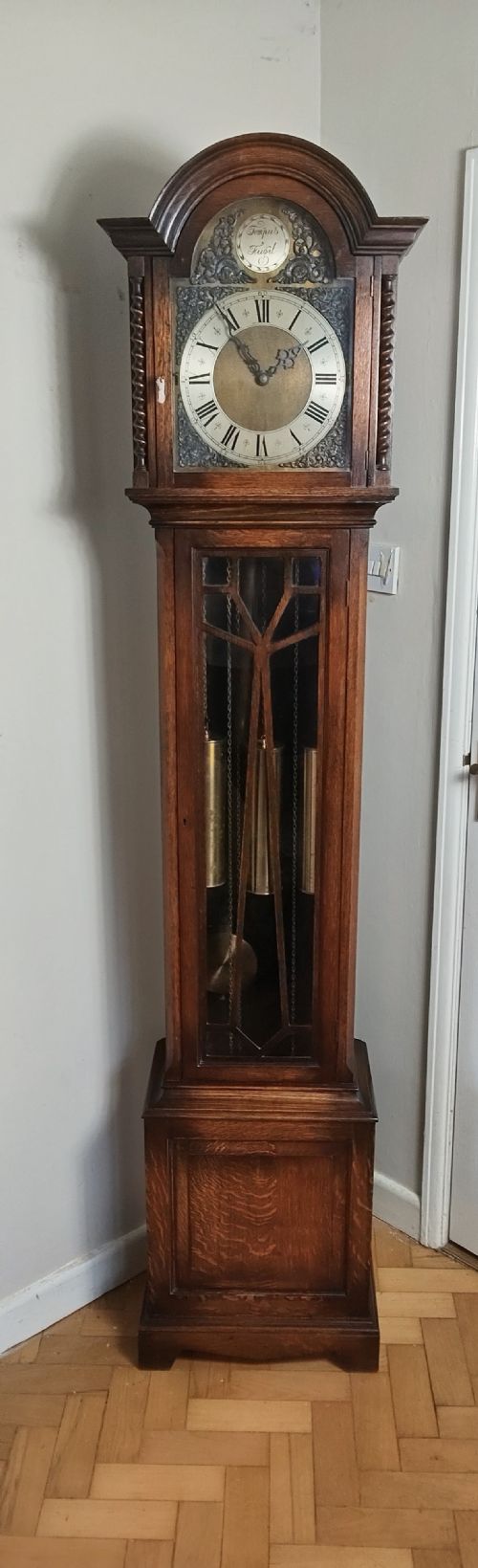
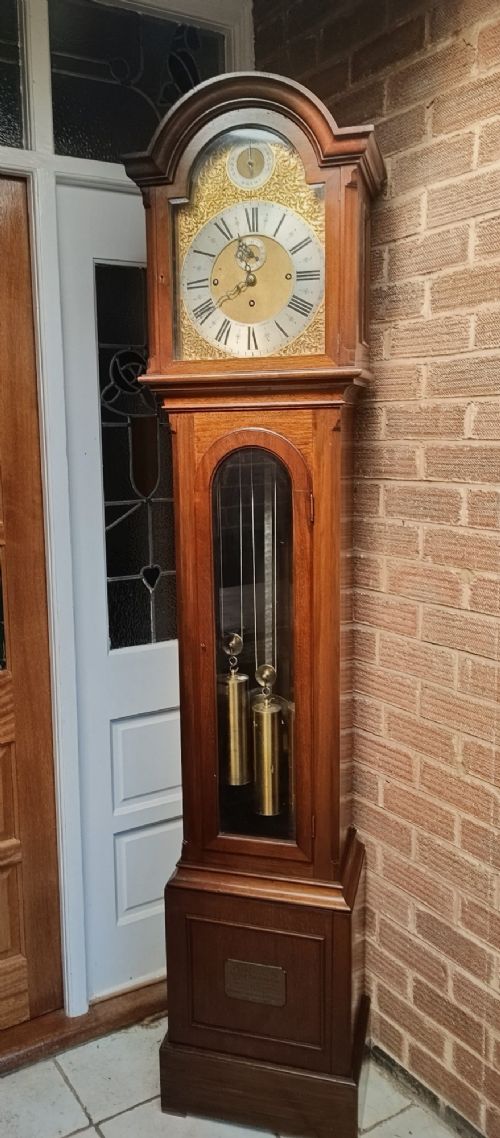
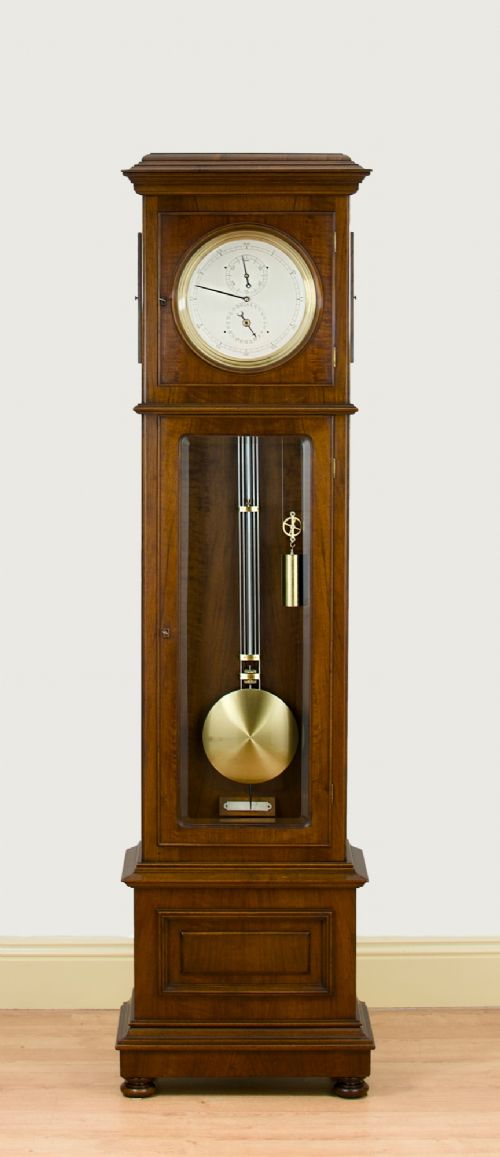
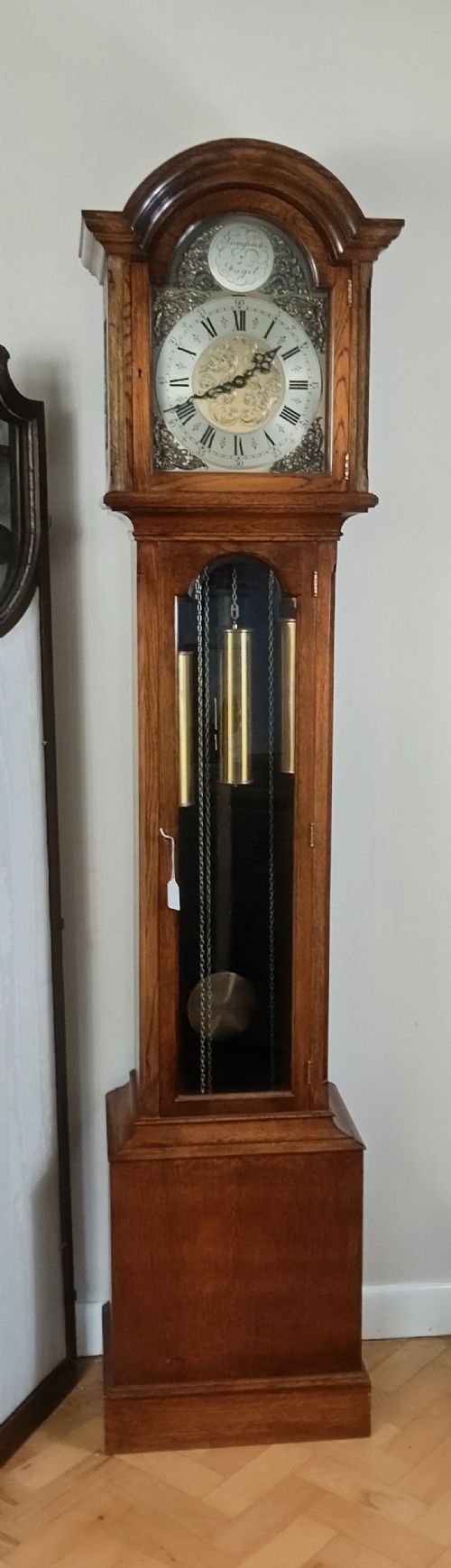
When you search for a brass weight longcase clock, you enter a category spanning tall floor-standing timepieces driven by hanging metal masses. These clocks measure time through the descent of heavy brass weights connected to cords or chains within the wooden trunk.
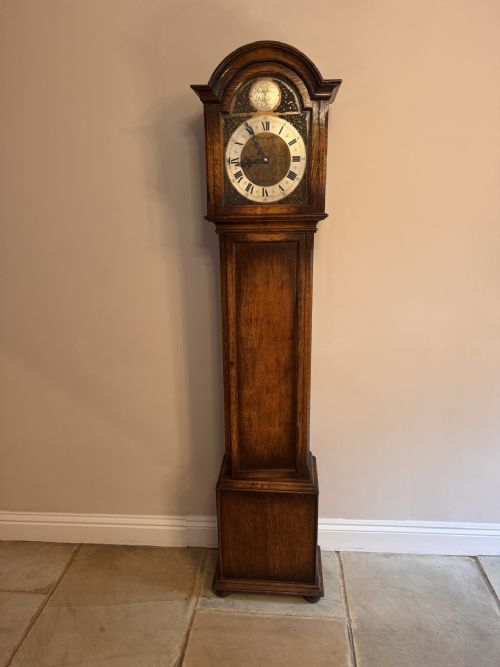
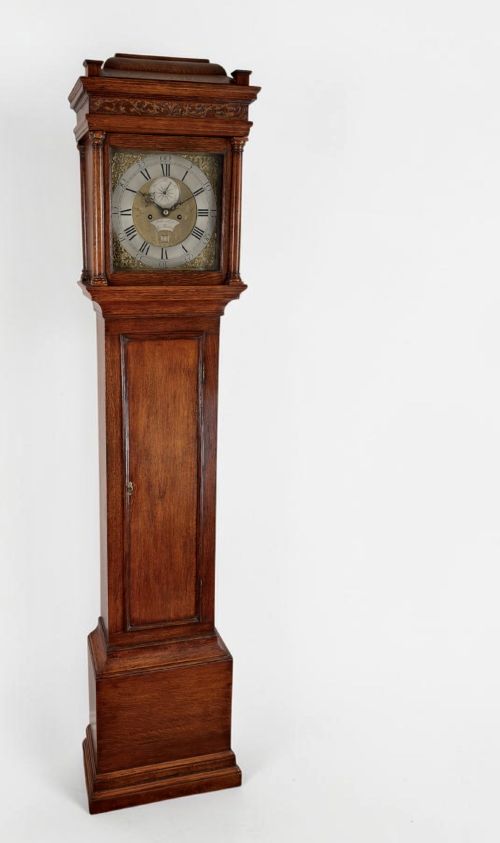
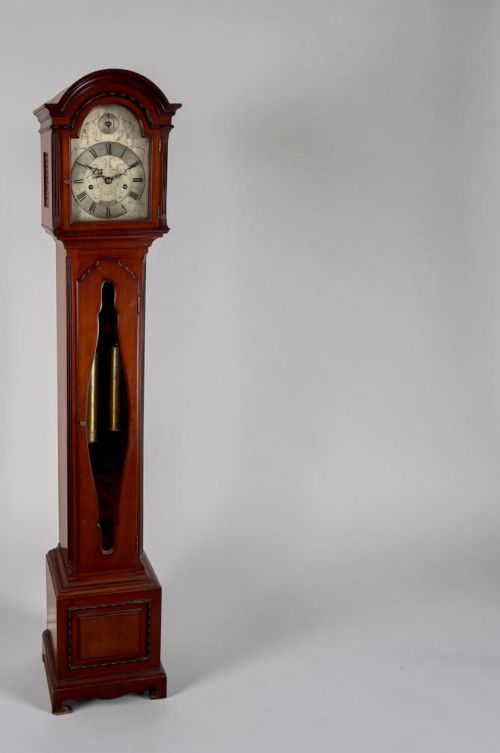
You meet examples originating from the eighteenth century through the Edwardian era and into the 1930s. The forms vary from full-sized grandfathers to smaller grandmother clocks and regulators, housed in woods such as oak, mahogany, walnut, and burr oak.
Regional makers and larger London firms alike contributed to this tradition, producing pieces that range from simple country timekeepers to complex musical and chiming regulators. The dial work often combines brass chapter rings with subsidiary seconds and calendar apertures.
Distinctions in Quality
The sophistication of the movement largely separates simpler timepieces from high-end examples, with eight-day durations, quarter-chiming mechanisms, and musical barrels commanding greater craftsmanship. Precision regulators designed for exact timekeeping exhibit meticulous gear cutting and temperature-compensated pendulums.
Cabinetwork quality shows in the selection of figured timbers, the crispness of carved details like pagoda tops, and the integrity of the joinery in the trunk and hood. Dial execution, from engraved brass faceplates to hand-painted numerals, reflects the skill of the original horologist.
Brass Weight Longcase Clock Retail Price Guide 2026
Typical asking prices for brass weight longcase clock among the pieces listed under this phrase on Sellingantiques today, from the lower quarter to the upper quarter. They describe what is for sale here now, not the wider market.
Some models hide musical barrels inside their tall wooden trunks, ready to play tunes across the room every three hours.
Gillett and Johnston of Croydon·Lee of Great Marlow·Elliott·Lenzkirch·Enfield·Francis Perigal of Bond Street·William Wady of Twickenham·Lister and Sons·Benjamin Rogers·Anthony Marsh·Aitchison of Glasgow·Frederick Rowe of Great Marlow·JJ Elliot
The Brass Weight Longcase Clock Glossary
- Grandmother clock
- A smaller version of the traditional longcase clock, typically produced during the Edwardian period and the early twentieth century. These scaled-down floor clocks suit rooms with lower ceilings while retaining weight-driven movements.
- Regulator
- A high-precision clock designed for exact timekeeping and often used as a standard for setting other timepieces. They frequently feature simplified dials with sweep seconds hands and heavy brass weights.
- Quarter chiming
- A movement complication that plays a melody on bells or gongs every fifteen minutes. This system requires additional weight trains alongside the standard going train.
- Strike silent
- A mechanism that allows the owner to disengage the hour-striking train so the clock remains quiet during the night. It operates via a small lever near the dial face.
- Chapter ring
- The outer metal circle on a clock face that bears the hour numerals. On brass dials, this ring is usually silvered and pinned to the brass dial plate.
Brass Weight Longcase Clock: Frequently Asked Questions
How do I wind a brass weight longcase clock?
Winding involves using a crank key to pull the cords or chains upward, raising the heavy brass weights back to the top of the trunk. Care must be taken not to overwind the movement and to keep the door closed to protect the swinging pendulum.
Most eight-day movements require this attention weekly, while thirty-hour versions need more frequent winding. Establishing a consistent routine preserves the tension on the gear train.
Where should I place a longcase clock in my home?
These tall timepieces require a stable, level floor against a solid interior wall to ensure the pendulum swings evenly without catching. Avoid areas subject to dampness, direct sunlight, or extreme temperature fluctuations that affect wood and metal.
A hallway, landing, or principal reception room provides the necessary vertical clearance and acoustic resonance for the chimes to carry clearly through the space.
How do I tell an 18th-century clock from a later one?
Eighteenth-century examples often display square brass dials with pinned movements and solid oak or mahogany cases shaped by hand cabinetmaking techniques. The proportion of the trunk and the style of the hood mouldings reflect Georgian design principles.
Later pieces from the Edwardian period or the 1920s and 1930s frequently incorporate factory-produced movements, arched dials, or revival styles like Art Deco and Jacobean. Examining the interior timber and movement signatures helps confirm the era.
Why does my clock need to be beat set?
The tick-tock sound must maintain an even rhythm to keep the pendulum swinging symmetrically and the movement functioning accurately. If the beat becomes uneven, the clock may stop running entirely.
Adjusting the crutch wire or shifting the position of the case on the floor corrects the alignment. This simple adjustment ensures the escapement releases the gear teeth at precisely timed intervals.