





Oak Pendulum Hall Clock
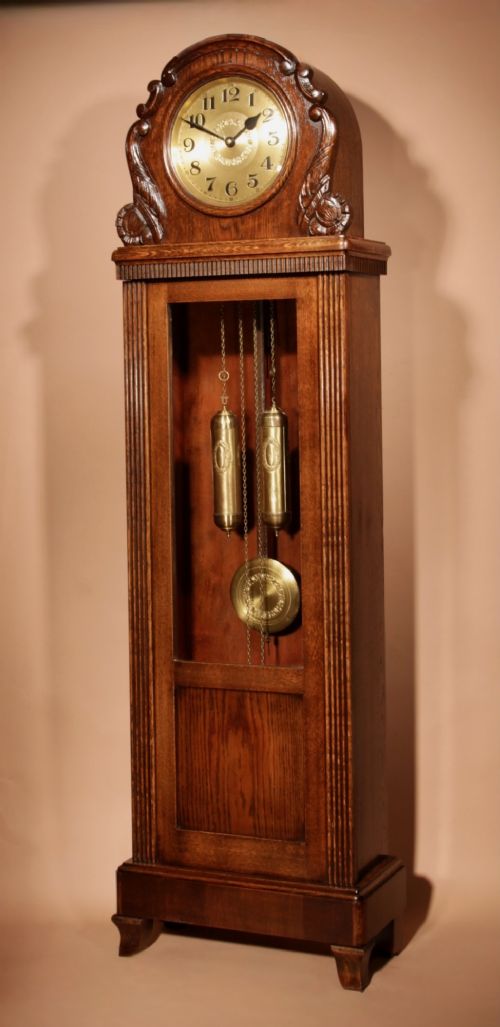
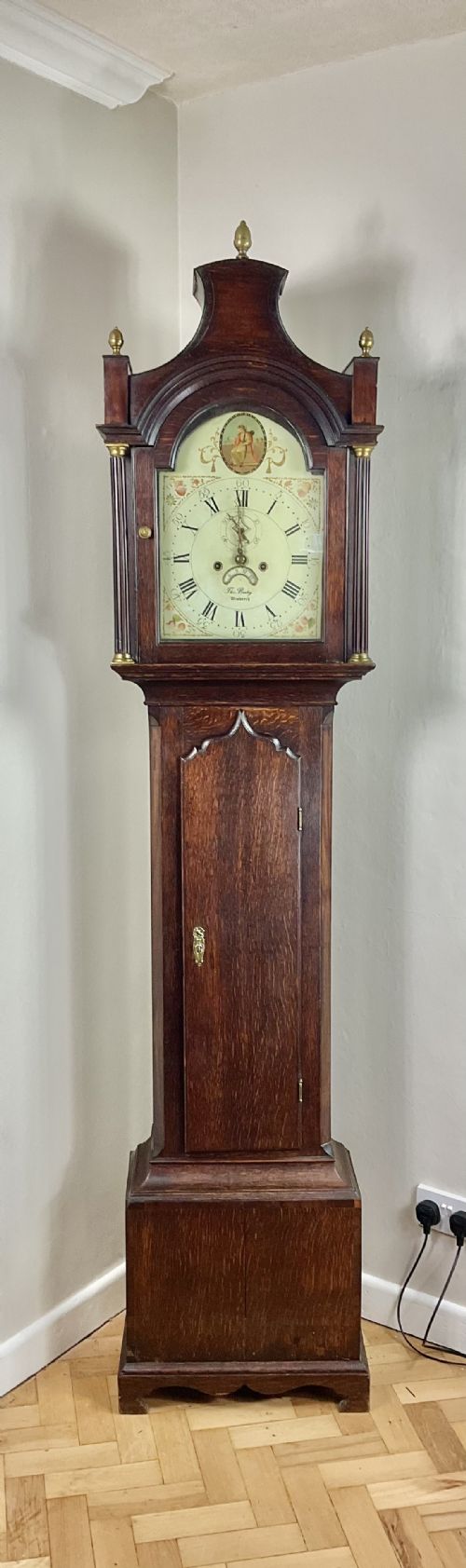
An oak pendulum hall clock stands tall in a traditional interior, measuring time through steady beats and anchoring the room with timber presence.
Oak Pendulum Hall Clock
When searching for an oak pendulum hall clock, a buyer explores tall floor-standing timepieces that combine practical utility with cabinet-maker artistry. The selection on this page centres primarily on Georgian and 1920s examples, spanning grand longcase clocks and smaller grandmother clock variations.
Most pieces presented here adopt the traditional longcase or grandfather format, constructed from solid oak with glass viewing panels and brass fittings. Alongside these traditional forms, variations from the Regency era and Jacobean revival styles appear, alongside German production from the 1920s.
The domestic scale ranges from substantial eight-day floor clocks to smaller tall clocks designed for compact hallways. Cabinet proportions shift across periods, moving from early Georgian architectural austerity to later decorative revivals.
How they were made
Makers constructed these longcase bodies using solid oak, occasionally incorporating mahogany secondary elements or accents. Cabinetry techniques relied on traditional jointing methods to house the heavy weights and pendulum movements securely within the timber trunk.
Dial faces feature brass components, painted iron, and glass doors to protect the moving indicators. Mechanical gear trains utilise weights or spring mechanisms, regulated by the swinging pendulum visible through trunk doors or dial apertures.
Oak Pendulum Hall Clock Retail Price Guide 2026
Typical asking prices for oak pendulum hall clock among the pieces listed under this phrase on Sellingantiques today, from the lower quarter to the upper quarter. They describe what is for sale here now, not the wider market.
Some clocks offer multiple tunes alongside the standard hour strike, turning the hallway into a private concert hall.
What varies in quality
Quality rests upon the harmony between the oak cabinetwork and the sophistication of the internal movement. Finer pieces demonstrate superior timber selection and skilled dial engraving by named makers.
Simpler regional timepieces contrast with elaborate quarter-chiming or multi-tune musical mechanisms. The precision of the joinery and the integrity of the original oak surfaces dictate the standing of each clock.
John Wylde·Richard Northen·Herbert of Haversham
The Oak Pendulum Hall Clock Glossary
- Longcase clock
- A tall, weight-driven pendulum clock housed in a protective wooden case. These floor-standing instruments are also frequently termed grandfather or grandmother clocks depending on their height.
- Fusee
- A conical pulley used in clock movements to maintain even driving force as the power source unwinds. This mechanism ensures consistent timekeeping across the duration of the wind.
- Quarter chiming
- A movement complexity that sounds the quarter hours on bells or gongs in addition to striking the full hour. Such mechanisms require intricate gear trains within the case.
- Grandmother clock
- A smaller variant of the traditional longcase clock, typically standing under six feet tall. These proportions suited domestic spaces where standard grandfather clocks proved too imposing.
Oak Pendulum Hall Clock: Frequently Asked Questions
What is an oak pendulum hall clock?
An oak pendulum hall clock is a tall floor-standing timepiece enclosed in an oak wooden case, utilising a swinging pendulum for timekeeping regulation. These pieces serve as both functional timekeepers and prominent architectural furniture.
Most examples found here date from the Georgian period through to the 1920s, encompassing grand longcase and smaller grandmother formats.
How do I tell an 18th-century clock from a 1920s piece?
Eighteenth-century examples display the structural proportions and timber patination characteristic of the Georgian and early Georgian eras, often featuring brass dial work and hand-carved details. Maker signatures from this time reflect distinct regional British workshops.
Twentieth-century pieces often incorporate revival styles, including Art Deco influences or quarter-chiming movements produced in German workshops during the 1920s.
Where should I place a hall clock?
These tall timepieces require a stable, level floor and a secure wall fixing to support the vertical oak case safely. Hallways and landings provide traditional placement where the pendulum swing and hourly strikes resonate clearly.
Avoid positioning the timber case in direct sunlight or beside active heat sources to protect the oak structure from environmental stress.
What is the difference between a grandfather and a grandmother clock?
A grandfather clock is a full-sized longcase timepiece, usually standing over six feet tall and built to accommodate long falling weights. These dominate room corners and grand hallway spaces.
A grandmother clock is a scaled-down version of the same form, offering a reduced overall height while retaining the pendulum and weight-driven mechanics suitable for smaller interiors.