

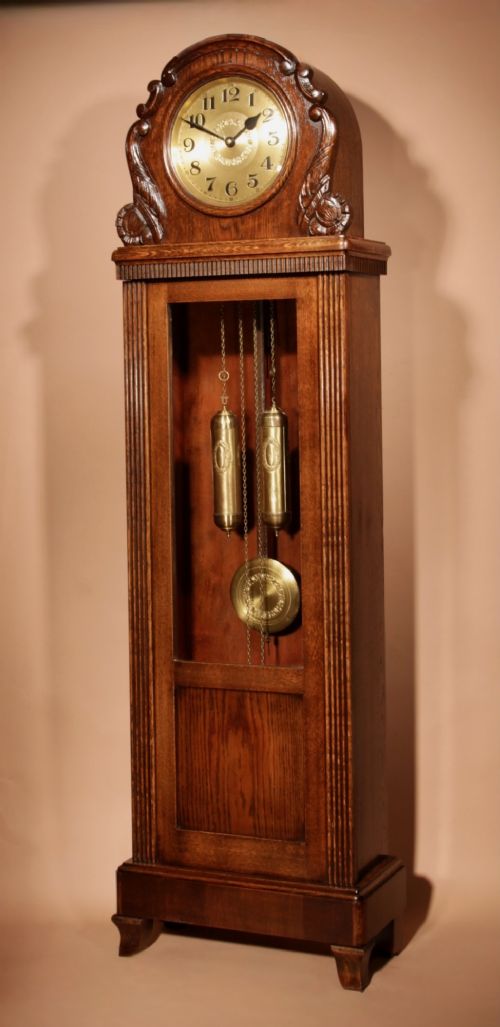
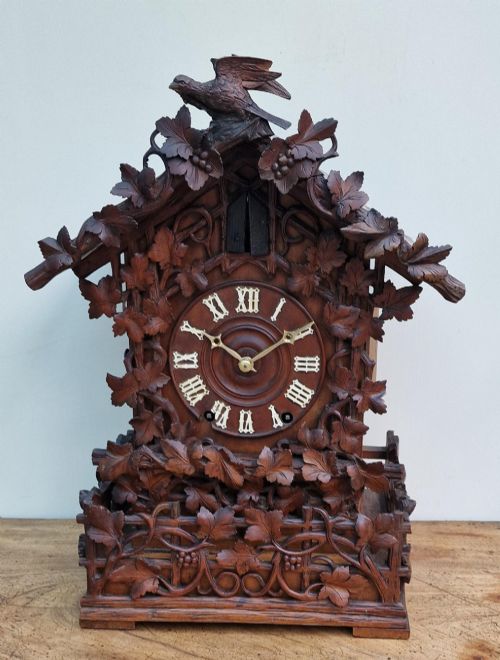
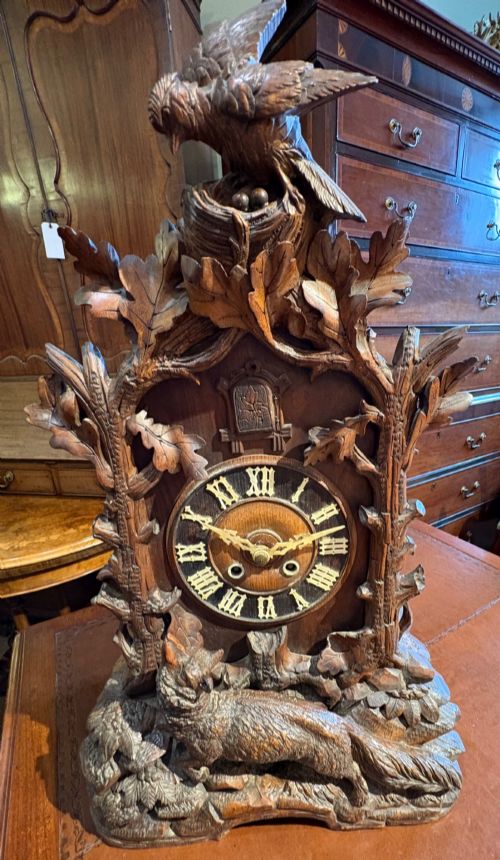


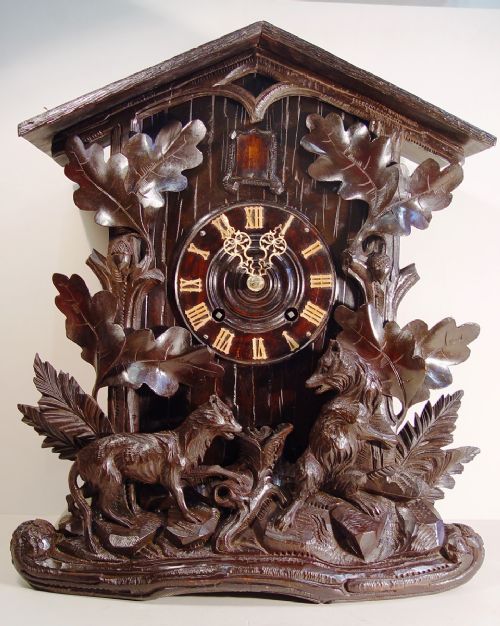
Black Forest Oak Clock
These black forest oak clock examples bring rustic woodland carving and reliable movement straight into a room.
Black Forest Oak Clock
A black forest oak clock combines traditional German woodcarving traditions with sturdy domestic timekeeping. When searching for a black forest oak clock, buyers encounter several distinct silhouettes ranging from wall-hanging regulators to substantial longcase pieces.
The material palette spans multiple eras, with nineteenth-century Victorian examples sitting alongside later twentieth-century interpretations. Walnut and carved oak dominate the forms, frequently accented by enamel dials and brass fittings.
Mantel clocks and cuckoo clocks represent the most common configurations on this page. These pieces showcase the regional craftsmanship of the Black Forest through elaborate carved foliage and animal motifs.
Materials and construction
Makers shaped these cases using solid oak and walnut, applying deep relief carving by hand. The timber provides a stable foundation for intricate undercut foliage and naturalistic animal carvings.
Internal movements rely on brass mechanisms, sometimes incorporating twin fusee gear trains for precise timekeeping. Enamel dials and glass face covers protect the delicate hands and numerals from dust.
Black Forest Oak Clock Retail Price Guide 2026
Typical asking prices for black forest oak clock among the pieces listed under this phrase on Sellingantiques today, from the lower quarter to the upper quarter. They describe what is for sale here now, not the wider market.
Listings span from the nineteenth century into the mid-twentieth century, featuring oak, walnut, brass, and enamel.
Assessing quality in carving and movement
The depth and sharpness of the hand-carved wood separate ordinary production from superior workshop output. Crisp undercut details in the oak foliage indicate a skilled carver rather than a hurried workshop.
Mechanical complexity also dictates the standing of a piece, with twin fusee movements and musical complications representing higher standards of horology. The integration of quality brass components ensures the longevity of the movement.
Philipp Haas·Beha
The Black Forest Oak Clock Glossary
- Twin fusee
- A mechanical movement system utilising a cone-shaped pulley and chain to equalize the force of the mainspring as it unwinds. This mechanism improves timekeeping accuracy across the power reserve.
- Cuckoo clock
- A striking clock that uses bellows and whistles to mimic the call of a bird on the hour. These mechanical novelties form a cornerstone of Black Forest horology.
- Aneroid barometer
- An instrument that measures atmospheric pressure without using liquid mercury, relying instead on a flexible metal box. These dials frequently accompany clock movements in regional wall cases.
- Gothic Revival
- An architectural and decorative style drawing inspiration from medieval forms, characterised by pointed arches and heavy tracery. This aesthetic influences the carved details on specific nineteenth-century cases.
Black Forest Oak Clock: Frequently Asked Questions
How do I wind a cuckoo clock?
Winding requires gently pulling the chains downward to elevate the pine-cone weights back toward the base of the case.
Care must be taken not to pull the chains off their internal sprockets during the process.
Where were these clocks made?
Production centred on the Black Forest region of Germany, where local woodcarvers and clockmakers collaborated.
Craftsmen utilised native timbers such as oak and walnut sourced directly from the surrounding woodland.
How do twin fusee movements work?
A conical pulley uses a fine chain to regulate the pull of the mainspring as tension decreases.
This clever mechanical arrangement delivers even power to the escapement for more reliable timekeeping.
What maintenance do these movements need?
Professional cleaning and oiling every few years keep the brass gears and pivots functioning smoothly.
Placing the case on a level wall or stable surface also prevents the pendulum from hanging unevenly.