





Geometric Wooden Clock
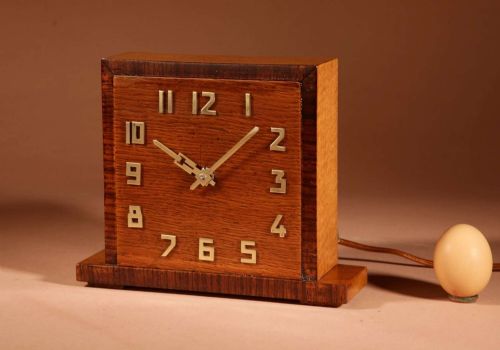
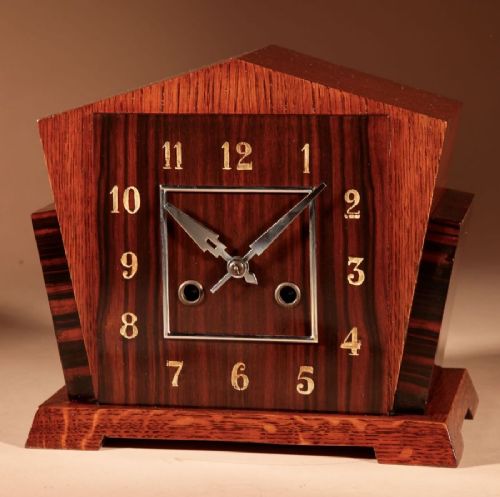
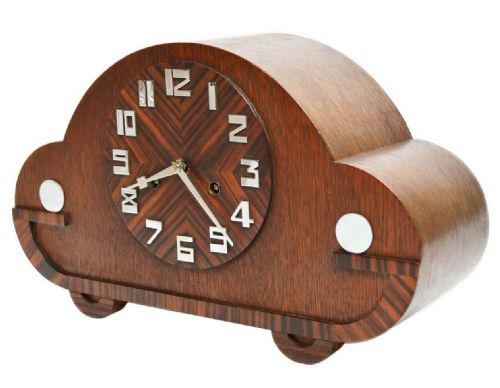
A geometric wooden clock brings strong lines and architectural form into a room, most commonly found as an oak or walnut mantel or wall clock from the 1920s to 1940s.
Geometric Wooden Clock
A geometric wooden clock is a striking timepiece defined by clean angles, architectural forms, and rich timber surfaces. When you search for a geometric wooden clock, you are looking at items primarily originating from the 1920s, 1930s, and 1940s.
The versions most frequently met on this page take the form of mantel clocks and wall clocks. These timepieces embody Art Deco and Amsterdam School Art Deco design principles, utilising contrasting wood tones and geometric shapes to create visual impact.
Origins span across England, France, and Germany, featuring makers and brands such as Bravingtons Ltd of London, Junghans, and Pfeilkreuz Junghans. The selection ranges from compact mantel designs to larger chiming wall clocks.
How they were made
These clocks are constructed using a combination of solid hardwoods and decorative veneers applied to carcases. Cabinetmakers utilised oak, walnut, and walnut veneer alongside exotic accents like rosewood, macassar ebony, and coromandel to achieve distinct two-tone visual effects.
Metal components such as chrome, brass, and glass were integrated into the wooden structures for bezels, dials, and movement surrounds. Movements ranged from standard eight-day mechanisms to early electrical systems and Westminster carillon chimes.
Listings feature oak, walnut, rosewood, and macassar ebony across mantel and wall clock forms spanning the 1920s to the 1940s.
What varies in quality
Quality in these timepieces rests upon the sophistication of the timber selection and the precision of the geometric cabinetry. Pieces featuring contrasting veneers like rosewood or macassar ebony demonstrate a higher level of cabinetmaking ambition than plain single-timber examples.
The integration of specialised movements, such as Westminster chimes or early electrical mechanisms by notable makers, elevates a piece above standard domestic timekeepers. The crispness of the architectural lines and the condition of the glass and metal fittings further distinguish finer examples.
Bravingtons Ltd of London·Junghans·Pfeilkreuz Junghans·Vedette
The Geometric Wooden Clock Glossary
- Mantel clock
- A portable clock designed to sit on a fireplace mantel or shelf. These usually feature substantial wooden cases housing spring-driven or electrical movements.
- Wall clock
- A timepiece designed to be hung directly on a vertical surface. Examples in this category often include striking or chiming mechanisms visible through glass-fronted doors.
- Art Deco
- A design style characterised by sleek lines, geometric shapes, and stylised motifs. It flourished internationally during the 1920s and 1930s.
- Amsterdam School
- An architectural and design movement originating in the Netherlands known for expressive, rounded brickwork and rich organic woodwork. Applied here, it yields deeply textured geometric clock cases.
- Veneer
- A thin slice of decorative wood applied to a base timber surface. This technique allowed makers to create striking two-tone geometric patterns across the clock face and body.
Geometric Wooden Clock: Frequently Asked Questions
Where should I place a mantel clock?
A mantel clock suits flat surfaces such as sideboards, bookcases, and shelves where its architectural form is clearly visible. Ensure the placement allows safe access for winding or adjusting the movement.
Keep the clock away from direct heat sources and damp environments to protect the wooden case and delicate internal metalwork.
How do I identify an Art Deco clock?
Art Deco clocks are distinguished by symmetrical geometric shapes, stepped wooden cases, and contrasting timber veneers. Dials often feature stylised numerals and chrome or brass bezels.
Look for architectural silhouettes that reflect the modernist design trends of the 1920s and 1930s.
What is an eight day clock?
An eight day clock requires winding approximately once a week to keep accurate time. This movement type uses springs that store sufficient energy for extended operation without daily attention.
Most mechanical pieces from this era utilise this reliable system for domestic convenience.
How do I care for wooden clock cases?
Maintain the wooden case by dusting gently with a dry, soft cloth to prevent surface build-up. Avoid using modern aerosol polishes or silicone-based sprays that can damage vintage finishes.
Protect the timber from direct sunlight to prevent fading and preserve the rich contrast of the original veneers.