
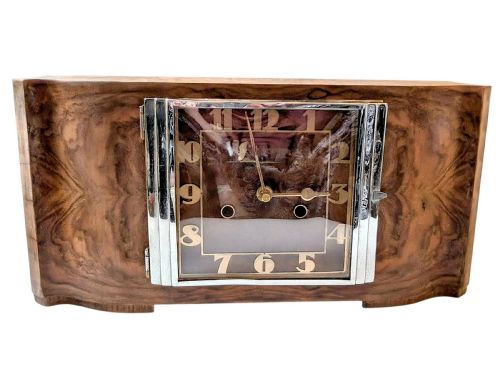


Chrome Bezel Clock
A chrome bezel clock brings the geometric discipline of the nineteen twenties and thirties straight into a modern interior.
What a chrome bezel clock is
A chrome bezel clock is fundamentally a timepiece defined by its metallic rim, housing the dial beneath a glass face. The pieces found here sit firmly within the Art Deco and Bauhaus traditions, originating from the nineteen twenties and nineteen thirties.
Mantel clocks form the primary focus of this selection, designed specifically for domestic placement on shelves, desks, or fireplace surrounds. These objects marry utilitarian timekeeping with the distinctive design language of the early twentieth century.
Most examples rely on wooden bodies to anchor the metal components, bringing warmth to balance the cool industrial shine of the bezel. Collectors encounter both British makers like Perivale and continental European workshops reflecting German modernist principles.
How they were made
Makers constructed the primary chassis from solid woods and applied veneers, utilising burr walnut, plain walnut, oak, and rosewood. These wooden cases were shaped into architectural or streamlined silhouettes typical of the Art Deco period.
The defining chrome bezels were manufactured from base metals plated with chromium, offering a durable and reflective perimeter around the dial. Glass elements protected the face, while brass components often appeared within the internal mechanical movements and acoustic chime rods.
Current listings exclusively feature mantel clocks from the nineteen twenties and nineteen thirties, uniting British and German production.
What varies in quality
Quality separates along the ambition of the timber selection and the complexity of the internal mechanism. Simple time-only pieces contrast with sophisticated Westminster chime movements housed in richly figured veneers like burr walnut.
The execution of the metalwork also dictates standing, with heavier chrome bezels and crisper dial typography marking out superior production standards. Finer items demonstrate a harmonious proportion between the warmth of the wood body and the industrial precision of the metal framing.
Perivale
The Chrome Bezel Clock Glossary
- Bezel
- The metal rim that holds the glass face in place over the dial of the clock. It provides both structural protection and a polished aesthetic border.
- Art Deco
- A design style spanning the nineteen twenties and thirties characterised by sleek geometric shapes, streamlined forms, and modern industrial materials. It dominates the visual language of these timepieces.
- Mantel clock
- A portable clock designed to sit on a fireplace mantel or shelf. These domestic objects frequently feature decorative wooden cases.
- Veneer
- A thin layer of decorative wood applied to a base timber carcass. Common examples include walnut and rosewood to create striking grain patterns.
- Bauhaus
- A German modernist design movement emphasising functionalism and industrial techniques. It influences the stripped-back, geometric aesthetic seen on continental models.
Frequently Asked Questions
What is a chrome bezel clock?
A chrome bezel clock is a timepiece featuring a distinctive metallic rim around its glass face, typically originating from the Art Deco period of the nineteen twenties and thirties.
These pieces combine industrial metalwork with wooden cases to serve as decorative mantel timepieces.
How do I date a chrome bezel clock?
Dating relies on stylistic markers such as geometric Art Deco silhouettes, Bauhaus minimalism, and the specific use of veneers like burr walnut and rosewood.
Most examples in this category trace back to the nineteen twenties and nineteen thirties based on their construction and design.
What materials are used in these clocks?
The primary materials include chromium-plated metal for the bezels and glass for the dial covers. Cases are built from timbers such as oak, walnut, and rosewood veneer, often supplemented by internal brass components.
This mix bridges industrial manufacturing with traditional cabinet making.
Where should I place a mantel clock?
Mantel clocks are traditionally sized for placement on shelves, desks, or the flat surface above a fireplace. Their finished backs and wooden bodies allow them to be viewed from multiple angles in a room.
Ensure the location is stable and away from excessive moisture to protect the vintage wood and metal.