
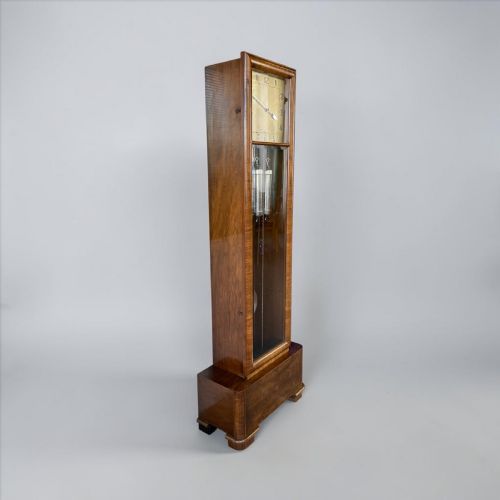


Stepped Art Deco Clock
A stepped art deco clock brings architectural drama to a mantelpiece, capturing the vertical ambition of the interwar period.
Stepped Art Deco Clock
A stepped art deco clock takes many forms across the inventory, ranging from classic mantel clocks and desk clocks to grander grandfather clocks and combined desk sets. These timepieces translate the geometry of skyscrapers and modernist architecture into domestic objects designed for prominent display.
The aesthetic relies heavily on tiered silhouettes and clean architectural lines. Pieces most frequently emerge from the 1920 and 1930 periods, reflecting the height of modernist design and the mechanical confidence of the era.
How they were made
Makers combined industrial metals with traditional cabinetry, pairing chrome and brass with warm walnut wood, heavy green marble, and polished onyx. Glass panels and mirrored surfaces added reflective depth to the geometric facades.
Early plastics such as bakelite introduced vibrant colour and smooth moulded contours to the modernist repertoire. Movements ranged from standard mechanical 8-day escapements to specialised electrical mechanisms like the Bulle system.
Stepped Art Deco Clock Retail Price Guide 2026
Typical asking prices for stepped art deco clock among the pieces listed under this phrase on Sellingantiques today, from the lower quarter to the upper quarter. They describe what is for sale here now, not the wider market.
Several models doubled as barometers and thermometers, ensuring your living room remained thoroughly informed about the weather.
What varies in quality
Quality rests in the harmony of materials and the ambition of the architectural silhouette. Pieces that successfully integrate contrasting elements like chrome against rich walnut or deep onyx stand apart from simpler iterations.
Signature movements and signed dials by known makers elevate a clock beyond standard production models. The precision of the stepped tiers and the integrity of the applied metals define the upper tier of the range.
Elliott·P.M.Favre·Blangy Clockmakers·Smiths·JAZ
The Stepped Art Deco Clock Glossary
- Bakelite
- An early synthetic thermosetting plastic prized for its durability and rich colour range. It allowed manufacturers to mould smooth, glossy housings in striking shades of red and black.
- Chrome
- Electroplated chromium applied to metal bases to provide a bright, corrosion-resistant finish. This material defined the metallic sheen of interwar industrial design.
- Onyx
- A banded variety of chalcedony used as a dense, polished stone housing for desk and mantel pieces. Its natural veining gave weight and luxury to modernist forms.
- Skyscraper style
- An architectural and decorative movement that emulated the vertical setbacks of modern high-rise buildings. This stepped silhouette is central to the design of these clocks.
Stepped Art Deco Clock: Frequently Asked Questions
Where should I place a stepped art deco clock?
These pieces suit prominent locations where their architectural silhouettes can be appreciated from multiple angles. Mantelpieces, central desks, and sideboards provide ideal surfaces to showcase their vertical geometry.
Ensure the chosen spot protects the clock from direct sunlight and excessive moisture, particularly if the piece incorporates delicate glass, mirrors, or sensitive bakelite components.
How do I wind an 8 day clock?
An 8 day clock requires winding approximately once a week using a matching key inserted into the dial arbors. Turn the key gently until you feel firm resistance, taking care not to overwind the mainspring.
Keep the winding key in a safe, consistent place near the clock so you do not misplace it between maintenance intervals.
What is a Bulle clock?
A Bulle clock is an electro-magnetic timepiece that utilises a battery-powered pendulum system rather than a traditional mainspring. This mechanism represents an innovative technical crossover from the early twentieth century.
The swinging pendulum maintains its motion through electrical impulses, making these clocks distinct from standard mechanical counterparts.
How do I identify a 1930s piece?
Authentic pieces from the 1930s typically feature characteristic stepped profiles, modernist numerals, and combinations of chrome, walnut, and bakelite. Look for authentic ageing on metal components and period-appropriate movement signatures.
Construction methods, such as the use of solid silver casing on specific desk models, further confirm the manufacturing standards of the interwar period.