
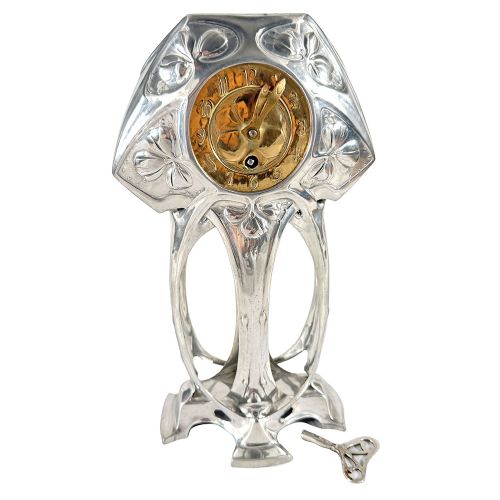


Silver Metal Clock
These silver metal clock pieces span desk timepieces, mantel clocks, and trade signs, offering useful twentieth-century design for any interior.
Silver Metal Clock
When you search for a silver metal clock, you are looking at timepieces and desk accessories created across the nineteenth and twentieth centuries. These objects range from compact travel alarms to large trade signs and architectural mantel clocks. The variety reflects shifts in domestic and commercial interiors from Victorian workshops to mid-century modern desks.
You are most likely to meet Art Deco chrome and silvered metal examples dating from the 1930s. These pieces often feature streamlined forms, easel backs, or modernist geometric cases designed for tabletop use. Makers such as Smiths and Bayard appear frequently among these mid-century designs.
Earlier pieces from the nineteenth century and the 1900 Art Nouveau period bring different forms, including pewter cases, Gothic revival details, and industrial nautical timepieces. Larger items like trade signs and desk compendiums also feature, giving collectors options beyond standard mantel designs.
Materials and construction methods
Makers utilised a range of metals including chrome, brass, zinc, pewter, and silvered metal to construct the cases and dials. Glass protects the clock faces, while heavier materials like marble provide stable bases for larger desk compendiums and mantel clocks.
Techniques varied from the cast pewter work seen in Art Nouveau pieces to the stamped and plated chrome favoured in Art Deco manufacturing. Mechanical movements drove these timepieces, housed securely behind bezels and backplates designed for ease of winding and setting.
Listings feature items from the nineteenth century through the 1950s, utilising chrome, brass, marble, and glass.
Assessing quality in metal timepieces
Quality rests in the weight of the metal chassis and the precision of the dial markings. Better examples employ solid brass or heavy chrome plating that resists pitting, alongside clean lettering on trade signs and crisp casting on decorative mounts.
The sophistication of the movement and the integrity of the original case components distinguish standard production items from finer workshop pieces. Retaining original glass, hands, and mounting hardware contributes significantly to the integrity of an antique clock.
Friedrich Adler for Osiris·Smiths Clockmakers·A.L. Davenport·Bayard·Blangy
The Silver Metal Clock Glossary
- Art Deco
- A design style characterised by sleek lines, geometric shapes, and modern industrial materials popular during the 1920s and 1930s. It marks a departure from ornate Victorian decoration.
- Art Nouveau
- An international style of art and architecture prevalent around 1900, notable for flowing organic motifs and sinuous plant forms. Pewter was frequently cast to achieve these soft, sculptural contours.
- Desk Compendium
- A multi-functional desk accessory that often combines a timepiece with other instruments such as barometers, thermometers, or inkwells. These heavy pieces served executive offices and studies.
- Trade Sign
- A large dimensional sign designed to advertise a shop or profession, sometimes incorporating a functioning clock face. They hung outside or stood within retail premises to attract customers.
Silver Metal Clock: Frequently Asked Questions
What is a silver metal clock?
A silver metal clock is a timepiece housed in a case of chrome, silvered metal, or pewter. These objects date from the nineteenth and twentieth centuries and serve as desk clocks, mantel timepieces, or travel alarms.
They combine practical timekeeping with the decorative styles of their period, ranging from industrial designs to streamlined Art Deco forms.
How do I date a metal clock?
Dating relies on stylistic clues, materials, and maker marks stamped on the dial or movement. Art Deco pieces typically feature geometric chrome cases from the 1930s, while 1900 pieces often display organic pewter work.
Heavier cast brass and ornate detailing usually point to nineteenth-century or Victorian industrial origins.
Where were these clocks used?
These timepieces were made for domestic desks, bedside tables, mantelpieces, and commercial spaces. Trade signs hung in shopfronts to draw the public eye.
Smaller travel clocks were designed for portability, often folding into protective leather or metal cases for journeys.
How do I care for antique metal clocks?
Keep metal clocks away from damp environments to prevent tarnishing and corrosion of the movement. Dust the glass and case gently with a soft dry cloth.
Avoid harsh chemical polishes that can strip plated finishes or damage delicate painted dial numbers.