


1930s Walnut Clock
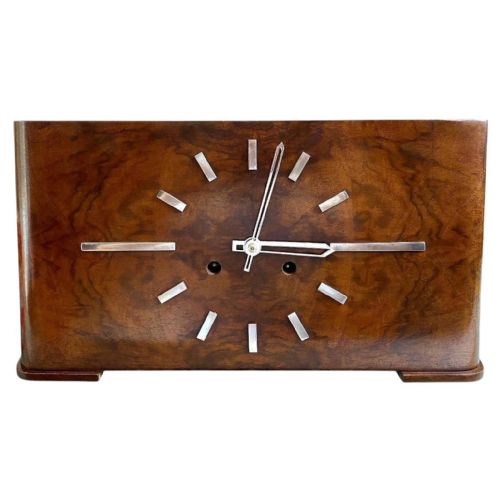
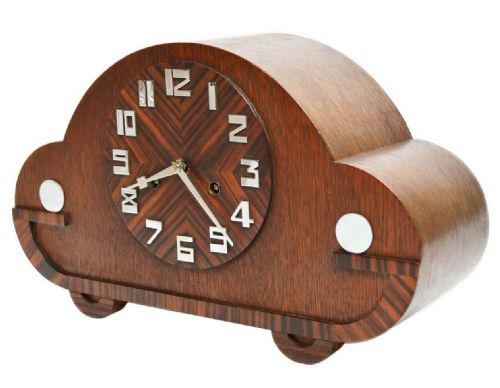
These 1930s walnut clock pieces bring bold Art Deco geometry and rich wood grain straight into a room.
1930s Walnut Clock
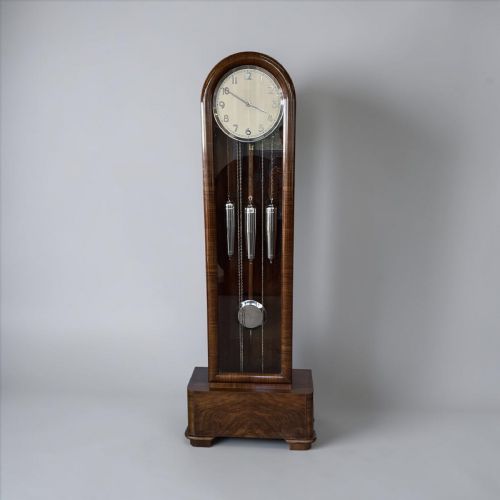
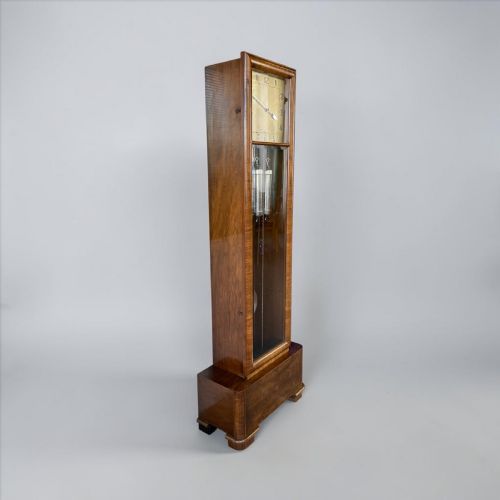
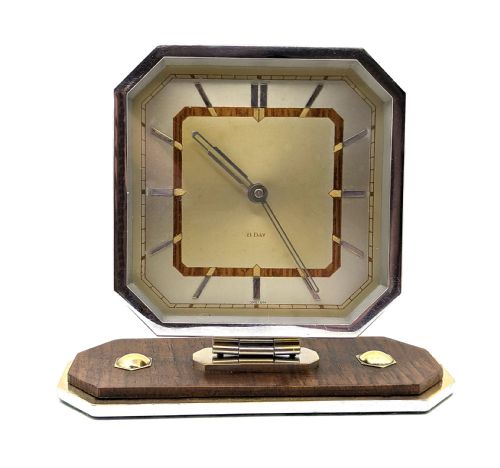
A 1930s walnut clock represents the distinctive design output of the Art Deco period, utilising rich timber veneers and geometric forms. When searching this phrase, buyers encounter various timepieces ranging from compact desk models to commanding longcase clocks.
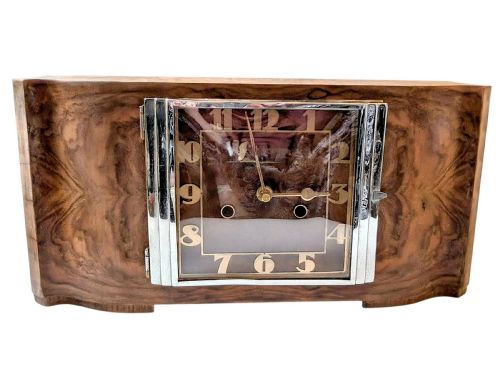
The mantel clock is the version most commonly met on this page, often built with symmetrical or stepped wooden cases. These domestic timepieces sit comfortably on shelves and mantelpieces, combining function with period aesthetics.
Originating predominantly from English and continental workshops, these clocks span the 1920s and 1930s eras. They frequently incorporate contrasting materials like chrome and glass alongside the primary walnut timber.
How they were made
Cabinet makers constructed these clock cases using solid timbers and decorative walnut veneers, often selecting burr walnut for dramatic figuring on the dial surrounds. These wooden bodies were paired with metal bezels, glass dial covers, and occasional chrome or brass accents to create the characteristic industrial warmth of the decade.
Mechanical movements powered these timepieces, with eight-day movements requiring weekly winding alongside specialised chiming mechanisms. Makers integrated movements supplied by specialist clockmakers into custom-built wooden housings.
Listings include walnut, burr walnut veneer, chrome, brass, and oak across mantel, wall, desk, and grandfather clock forms.
What varies in quality
The grade of timber veneer and the precision of the cabinet work set the better examples apart from standard production items. Superior pieces exhibit carefully matched wood grain patterns across the geometric surfaces and robust mechanical movements by recognised makers.
The integration of secondary materials such as polished chrome trim and heavy bevelled glass plates indicates higher manufacturing standards. Well-executed dial typography and substantial brass fittings further distinguish the finer timepieces from simpler variants.
Haller·Elliott·Perivale·Bravingtons Ltd of London·Junghans·Pfeilkreuz Junghans
The 1930s Walnut Clock Glossary
- Art Deco
- A design style characterised by streamlined forms, geometric shapes, and modern industrial materials. It dominated architecture and decorative arts during the interwar period.
- Burr walnut
- A highly figured timber veneer obtained from tree growths where the grain has swirled and grown in distorted patterns. It creates intricate decorative surfaces on clock cases.
- Westminster chime
- A melodic four-note quarter-hour chime sequence historically associated with clock towers and adopted by domestic mantel clocks. It produces a familiar musical tone on the hour and quarters.
- Veneer
- A thin slice of superior wood applied over a stable secondary timber base. This technique allowed cabinet makers to display dramatic grain patterns without using solid scarce hardwoods.
1930s Walnut Clock: Frequently Asked Questions
How do I wind an eight day clock?
Use the provided key to turn the arbors clockwise until gentle resistance indicates the mainspring is fully tensioned.
Take care not to overwind the movement, as this can damage the internal mechanisms.
What is a Westminster chime?
It is a specific quarter-hour musical sequence played on multiple gongs inside the clock case.
The full melody sounds on the hour following the strike for the hour count.
How do I identify a 1930s clock?
Look for stepped geometric wooden cases, contrasting chrome or brass trim, and stylized Arabic or Roman numerals on the dial.
Internal movement stamps and stylistic cues often point directly to the interwar manufacturing period.