


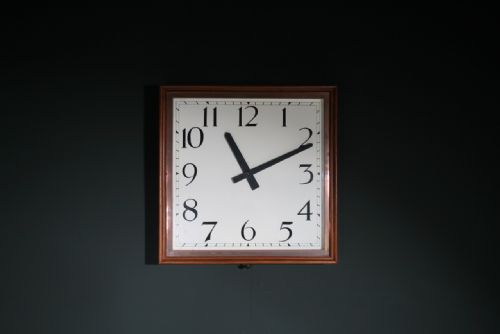


Art Deco Walnut Clock
An art deco walnut clock brings geometric presence and rich grain to a room, combining period movement with striking architectural form.
Art Deco Walnut Clock
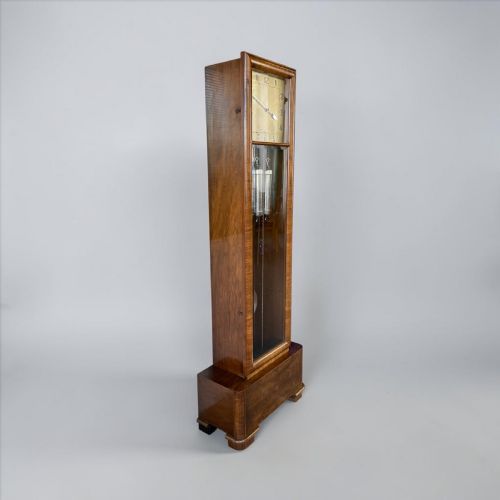
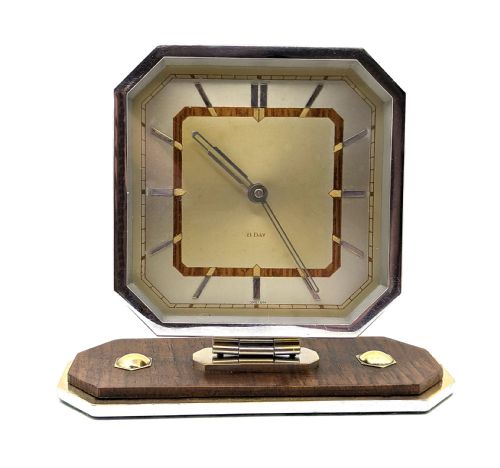
When buyers search for an art deco walnut clock, they encounter timepieces spanning mantel, wall, desk and longcase formats produced primarily across the nineteen-twenties, thirties and forties. These clocks range from compact desk models to tall grandfather and grandmother clocks designed for domestic spaces.
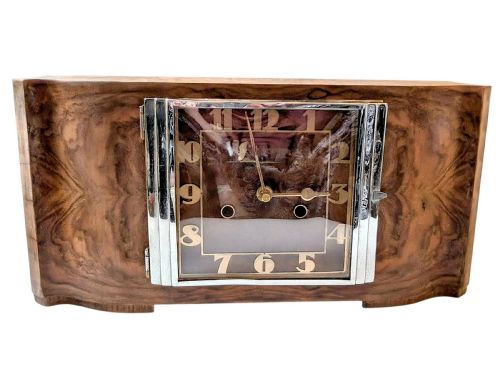
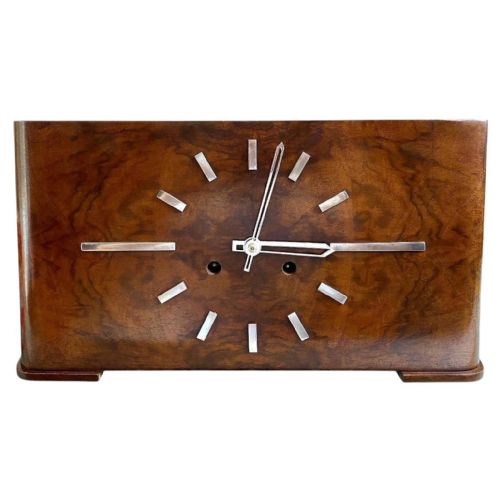
The mantel clock version dominates the selections, appearing in horizontal geometric shapes, vertical skyscraper forms and chiming configurations. English, French and German makers contributed heavily to this output, employing walnut solids and veneers to achieve distinct modernist profiles.
Materials and construction
Cabinet makers utilised walnut and burr walnut veneer over secondary timbers, often pairing the warm timber surfaces with contrasting chrome, brass, copper and glass elements. This combination of figured wood and polished metal defines the visual language of the period.
Mechanical movements, including eight-day and chiming systems such as Westminster carillons, sit within these timber housings alongside electrical movements from the era. Dials typically feature stylised numerals, chrome bezels and geometric chapters that match the exterior case design.
Judging quality in walnut timepieces
Quality rests upon the selection and matching of the walnut veneer, where symmetrical grain patterns and burr sections elevate the visual impact of the case. Superior examples display crisp architectural lines, integrated metal detailing and well-preserved timber finishes without heavy restoration.
The sophistication of the internal movement and the integration of maker-signed mechanisms distinguish finer pieces. Original dials, matching hands and functional chiming systems contribute to the standing of a clock within the range.
Bravingtons Ltd of London·Elliott·Junghans·Mauthe·Odo·Perivale·Pfeilkreuz Junghans·Haller·Vedette·Girod
The Art Deco Walnut Clock Glossary
- Burr walnut
- A figured wood grain derived from tree growths, highly prized for its swirling patterns on clock cases. It provides decorative depth to flat and curved surfaces.
- Westminster carillon
- A chime mechanism playing a four-note melody on multiple gongs or rods. This feature appears frequently in mantel and wall clocks from the period.
- Skyscraper style
- An architectural furniture form influenced by modern city architecture, featuring stepped vertical tiers. It translates directly into the silhouette of tall mantel clocks.
- Eight day movement
- A mechanical clock movement requiring winding once a week to maintain operation. It serves as the standard for mechanical desk and mantel pieces.
- Veneer
- A thin layer of superior walnut timber applied over a base wood foundation. This technique allows makers to display striking grain patterns across large surfaces.
Art Deco Walnut Clock: Frequently Asked Questions
How do I wind an eight day clock?
Insert the matching key into the winding holes on the dial and turn it gently until resistance increases. Avoid over-winding to protect the internal spring mechanism.
Ensure you turn the key in the correct direction specified for the particular movement type. Regular winding maintains accurate timekeeping across the week.
Where should I place a mantel clock?
Position the piece on a stable, level surface such as a mantelpiece, sideboard or desk away from direct sunlight and damp conditions. Level placement ensures the pendulum or balance wheel operates correctly.
Keep the clock away from exterior walls with temperature fluctuations to protect the walnut veneer and internal movement from moisture damage.
How do I identify a chiming movement?
Check the dial or case for additional winding arbours, levers or labels indicating Westminster chime capability. Chiming models typically feature multiple gongs mounted inside the wooden case.
Inspect the rear access door to view the hammer arrangement striking the rods or gongs during operation. Silence levers sometimes appear on the side or face of these pieces.
What is the difference between a wall clock and a mantel clock?
Wall clocks incorporate hanging brackets or rear mounting provisions to secure them vertically against room partitions. Their cases often feature drop dials or elongated wooden backboards.
Mantel clocks feature flat bases designed to stand independently on horizontal furniture surfaces. Their proportions prioritise width and height for stability on shelves.