


1930s Chiming Clock
A 1930s chiming clock brings architectural presence and mechanical movement to a room, combining Art Deco design with traditional Westminster chimes.
1930s Chiming Clock
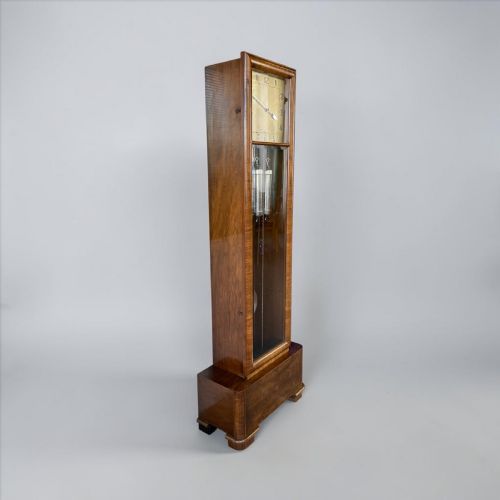
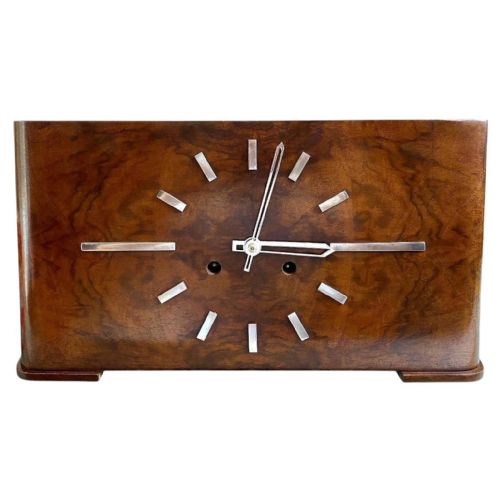
A 1930s chiming clock spans both compact mantel designs and tall floor-standing longcase models. The selection on this page leans heavily toward Art Deco mantel clocks alongside occasional grander grandfather and grandmother formats.
Most pieces date firmly to the 1930 period, drawing upon streamlined modernism and occasional Georgian Revival influences. Makers such as Haller, Junghans, Perivale, and Pfeilkreuz dominate the selection, offering striking cabinet work housing mechanical chimes.
How they were made
Cabinet makers utilised rich woods including walnut, oak, and mahogany to build substantial cases, often pairing timber with contrasting materials like chrome, brass, and glass. Mirrored glass also appears in select designs, reflecting light through geometric clock faces.
Internal movements rely on dependable mechanical engineering, driving eight-day trains and weight-driven mechanisms to sound Westminster chimes. Exterior housings reflect bold Art Deco geometry and clean lines characteristic of the period.
Current listings feature walnut, oak, and mahogany alongside modern touches of chrome, glass, and mirrored glass.
What varies in quality
Quality rests in the harmony between cabinet timber selection and the precision of the internal movement. Clocks featuring figured walnut veneers or unusual glass and chrome combinations sit at the upper end of the scale.
Signed movements by established makers command greater interest than unsigned equivalents. The preservation of original casework and the crisp execution of the acoustic chime further separate standard examples from finer works.
Haller·Perivale·Junghans·Pfeilkreuz Junghans
The 1930s Chiming Clock Glossary
- Westminster chime
- A melodic sequence of four notes played on the quarters of the hour. This acoustic feature is driven by precision mechanical gear trains.
- Mantel clock
- A portable clock designed to sit on a fireplace mantel or shelf. These domestic timepieces range from compact wood cases to elaborate glass designs.
- Longcase clock
- A tall floor-standing clock enclosed in a wooden case with a swinging pendulum. Also referred to as grandfather or grandmother clocks depending on their height.
- Eight day
- A mechanical movement requiring winding once a week. This denotes a reliable domestic standard for twentieth-century clocks.
1930s Chiming Clock: Frequently Asked Questions
How do I wind a 1930s chiming clock?
Most models use a key inserted into winding holes on the dial face. Turn the key gently until resistance is felt.
Avoid overwinding the springs to protect the internal mechanical gear train from unnecessary strain.
What materials are common in these clocks?
Cabinets typically feature walnut, oak, or mahogany woodwork. Metal elements like chrome and brass appear alongside glass and mirrored glass.
These varied combinations define the distinct material palette of the period.
Are these clocks suitable for daily use?
Yes, mechanical movements designed for domestic spaces function reliably when properly maintained. Regular placement on a level surface ensures the pendulum swings evenly.
Professional servicing helps keep the Westminster chime accurate over time.
How do I identify an Art Deco clock?
Look for geometric case shapes, stepped wooden outlines, and clean Arabic numerals on the dial. Chrome and glass accents further signal modernist design influences.
These stylistic traits distinguish 1930s pieces from earlier revival styles.