


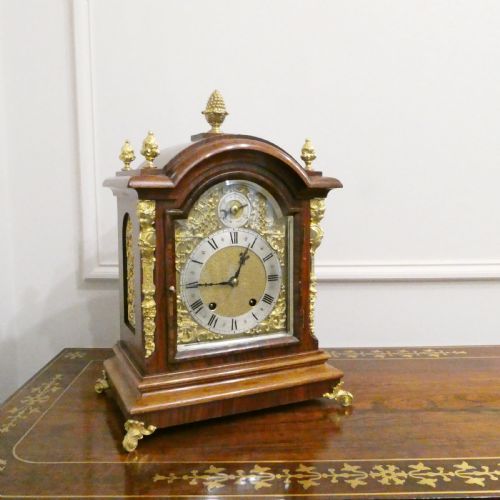


Vintage German Mantel Clock
A vintage german mantel clock brings precision engineering and striking woodwork into a room, offering both reliable timekeeping and period design.
Vintage German Mantel Clock
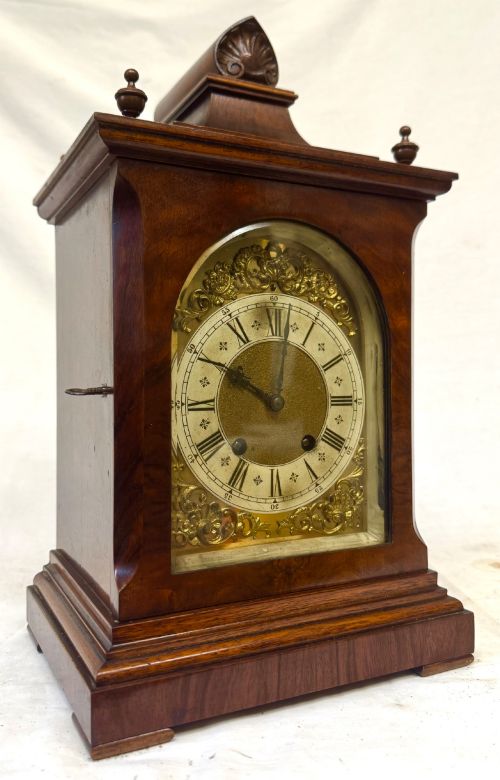
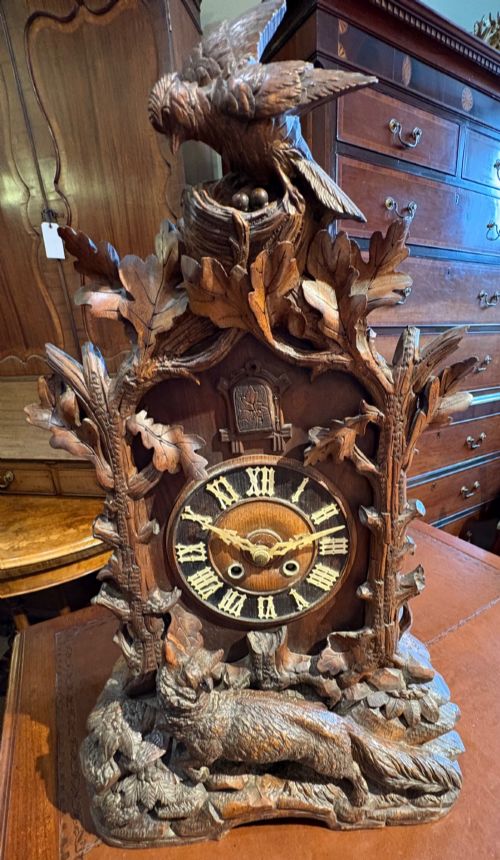
When you search for a vintage german mantel clock, you encounter a range of timepieces spanning the nineteenth century through to the mid-twentieth century. These horological items encompass mantel clocks, bracket clocks, desk clocks, and cuckoo clocks housed in distinctive wooden, metal, and glass cases.
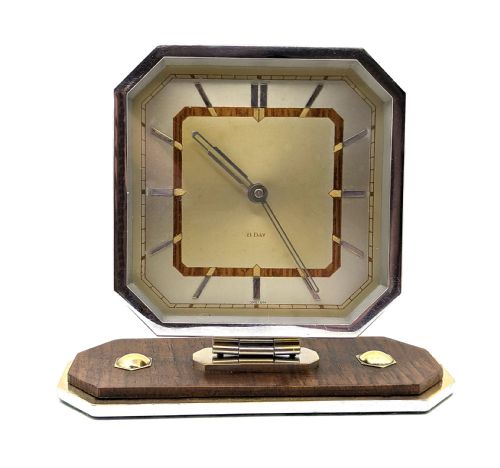
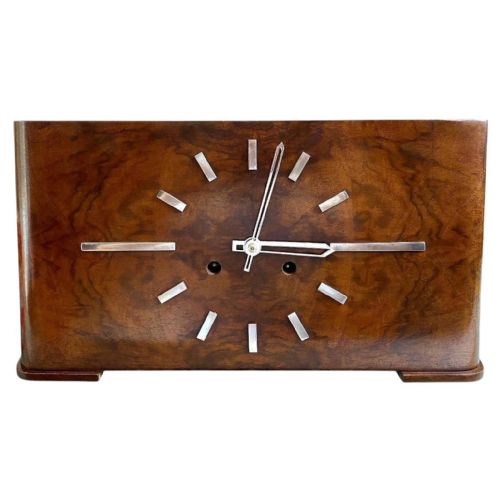
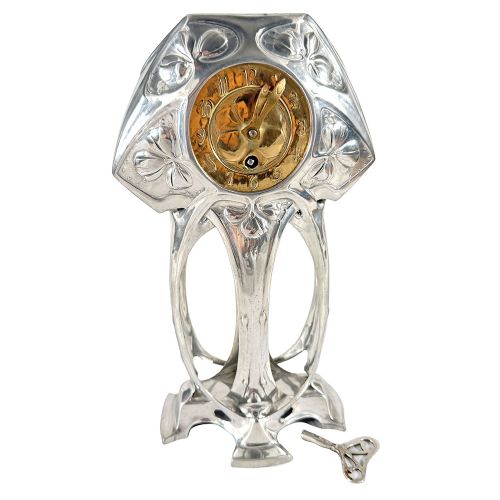
The pieces appearing on this page originate from periods including the Victorian era, Edwardian period, Art Nouveau, Art Deco, and Mid-Century Modern designs. Walnut, mahogany, and oak dominate the wooden housings, whilst brass, chrome, and pewter appear in the metal variations.
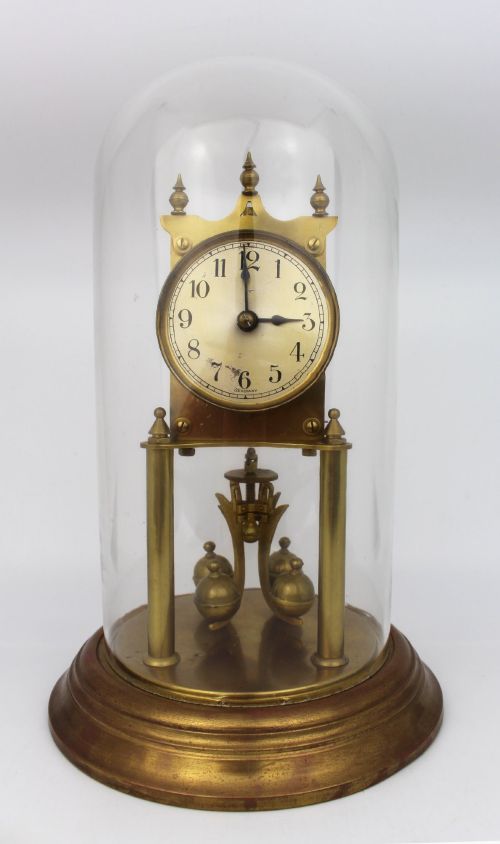
You are most likely to meet walnut and mahogany bracket or mantel clocks dating from around nineteen hundred, alongside later Art Deco chrome and walnut models. These range from traditional chiming movements to torsion year clocks and anniversary timepieces.
Materials and construction
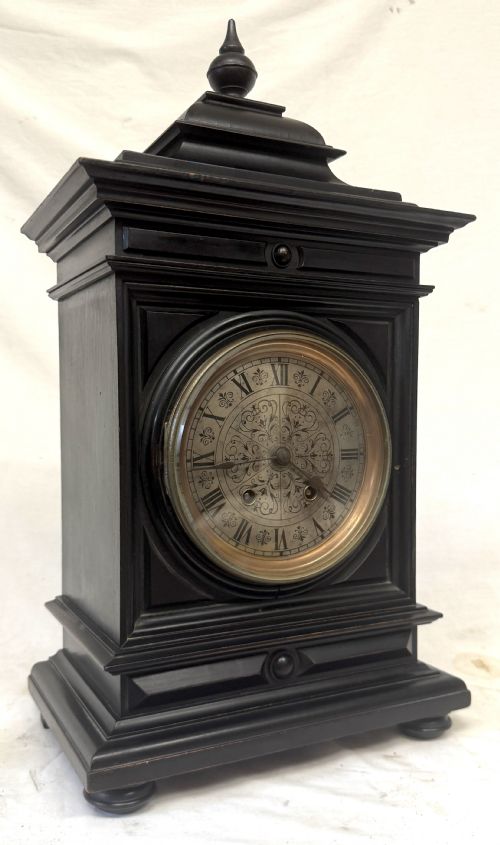
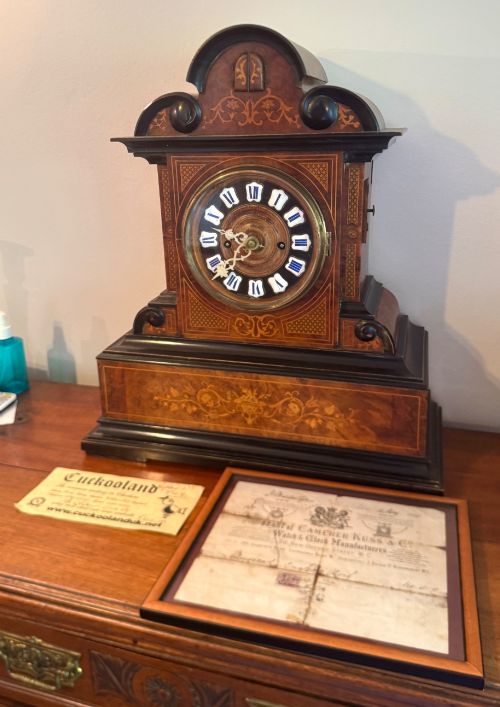
Maker workshops utilised rich timbers such as walnut, mahogany, and oak to construct sturdy cases, frequently incorporating marquetry, ebonised details, or burr walnut veneers. Metal elements such as brass dials, silvered chapters, gilt ormolu, chrome, and silver plating provide contrast and structural detail.
Movements were engineered by established German makers utilising mechanical wind systems, ting-tang striking mechanisms, and torsion springs. Glass panels protect dials and pendulum chambers, whilst enamel and metal feature prominently in the construction of clock faces.
A German shepherd dog sculpted by Michel Decoux keeps permanent guard over one particular Art Deco clock and garniture set.
Distinctions in quality
The division between standard and superior pieces rests in the intricacy of the movement and the refinement of the case work. Finer examples feature signed mechanisms from renowned workshops, substantial timber construction with careful marquetry or ebonising, and detailed brass or silvered dials.
Simpler pieces rely on standard mass-produced movements and plain wooden cases without decorative veneer work. The presence of specialised complications, such as chiming trains or torsion mechanisms, marks the upper tier of these horological objects.
Lenzkirch·Mauthe·Haller·Schneckenburger·Winterhalder Hofmeier·Junghans·Kienzle
The Vintage German Mantel Clock Glossary
- Bracket clock
- A portable clock originally designed to sit on a wall bracket, though later placed on mantelpieces and tables. These typically feature substantial mechanical movements and enclosed wooden cases.
- Ting-tang
- A striking mechanism utilising two bells or gongs to sound the quarters and hours with a distinctive two-tone chime. This system appears frequently in nineteenth-century bracket clocks.
- Torsion clock
- A timepiece controlled by a torsion pendulum that rotates rather than swings, often requiring only an annual wind. These are also known as anniversary or four-hundred-day clocks.
- Ormolu
- Gilded bronze or brass applied to clock cases for decorative effect. This technique adds metallic highlights to wood-cased mantel pieces.
- Garniture
- A set consisting of a clock flanked by matching decorative objects such as sculptural figures or urns. These sets coordinate in material and style to form a cohesive mantel display.
Vintage German Mantel Clock: Frequently Asked Questions
How do I wind a mechanical German mantel clock?
Mechanical wind clocks require a key inserted into the winding arbors on the dial face to tension the mainspring.
Care must be taken not to over-wind the movement, turning the key gently until resistance is felt.
What is a ting-tang striking movement?
A ting-tang movement sounds two different notes on separate gongs or bells to mark the passing of the quarters and hours.
This acoustic feature is common in nineteenth-century bracket clocks produced by German workshops.
Where should I place a heavy wooden mantel clock?
These clocks require a stable, level surface such as a mantelpiece, sideboard, or sturdy desk to ensure the pendulum swings evenly.
Uneven placement can cause the mechanical beat to become erratic and eventually stop the clock.
How do I identify an Art Deco German clock?
Art Deco models typically feature geometric case designs, chrome or polished metal framing, and stylised Arabic numerals on the dial.
These pieces often date from the nineteen thirties and incorporate movements by makers such as Junghans or Mauthe.