


Oak Desk Clock
These oak desk clock pieces bring timber warmth and precise timekeeping to any interior.
Oak Desk Clock
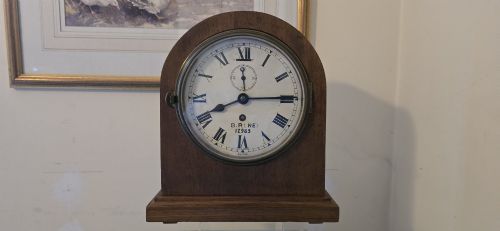
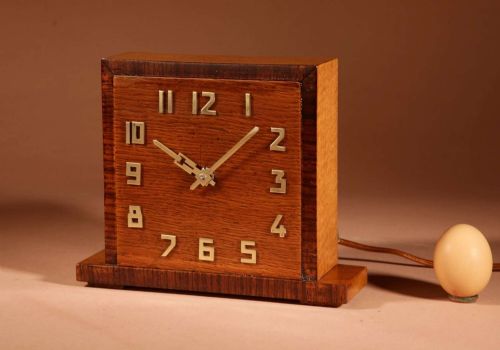
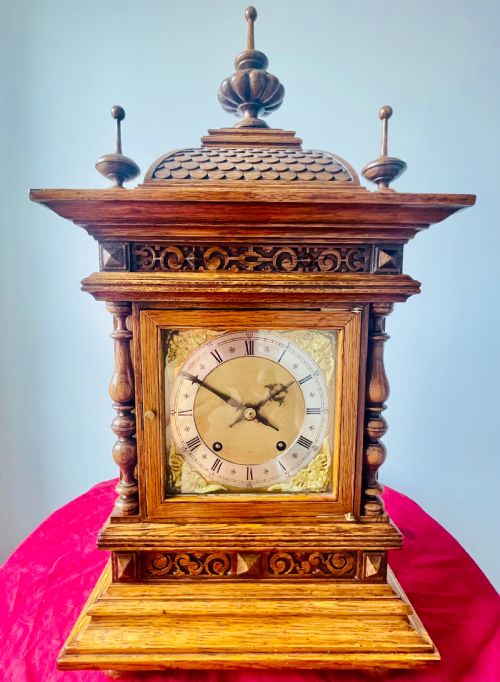
An oak desk clock combines solid timber cases with mechanical or electrical movements, serving as both a functional timepiece and a decorative object. When you search for an oak desk clock, you encounter various forms ranging from architectural bracket clocks to simpler mantel timepieces.
The pieces appearing on this page span several distinct periods including the Victorian era, Edwardian period, and the 1920s and 1930s. You will frequently find styles such as Art Deco, Art Nouveau, Arts and Crafts, and Black Forest carvings alongside military pieces.
Origins and makers vary, with London makers appearing alongside continental European workshops. Housing these movements often involves carved oak, pollard oak, or inlaid wooden cases fitted with brass bezels and glass dials.
How they were made
Makers constructed the cases using solid oak and pollard oak, frequently employing hand carving, geometric inlay, or architectural mouldings to define the style. These wooden housings were then fitted with brass bezels, glass covers, and enamel or metal dials to protect the movement.
Movements within these pieces ranged from single fusee mechanisms to quarterly striking systems and early electrical setups. Craftsmen integrated the clockworks securely into the wooden enclosures, often pairing the timepiece with barometers or weather instruments.
Materials appearing across these timepieces include brass, glass, enamel, and intricate inlaid woods.
What varies in quality
The quality of an oak desk clock depends on the crispness of the hand carving, the selection of figured pollard oak or deliberate inlay work, and the structural integrity of the timber case. Superior examples display balanced proportions and refined architectural detailing.
Internal mechanics also dictate standard, where fine fusee movements or signed London makers elevate the piece beyond standard domestic timepieces. The integration of auxiliary instruments like barometers further distinguishes more ambitious desk sets.
Winterhalder·Pennington of Camberwell·Payne and Co
The Oak Desk Clock Glossary
- Fusee
- A conical pulley used in spring-driven clocks to equalise the torque of the mainspring as it unwinds. This mechanism helps maintain consistent timekeeping as the clock runs down.
- Bracket clock
- A portable table clock traditionally placed on a bracket or shelf. These pieces often feature substantial wooden cases and striking movements.
- Pollard oak
- Timber taken from trees that have been pollarded, producing wood with a dense, highly figured grain pattern. Cabinet makers prize this material for decorative veneer and case fronts.
- Barograph
- A mechanical instrument that continuously records barometric pressure onto a paper chart. They are frequently housed in oak cases alongside desk clocks.
Oak Desk Clock: Frequently Asked Questions
How do I wind an oak desk clock?
Most mechanical desk clocks require a dedicated winding key inserted into the dial holes to tension the mainspring. Care must be taken not to overwind the movement.
Consult the specific mechanism type before applying pressure to the key, as fusee and spring-driven movements operate differently.
Where should I place a desk clock?
These clocks sit comfortably on flat surfaces such as mantels, desks, tables, or specialised wall brackets. Ensure the location remains stable and free from excessive vibrations.
Keep wooden cases away from direct heat sources and strong sunlight to prevent the oak from drying out or warping.
How do I identify the period of my clock?
Examine the stylistic cues of the oak case, such as the geometric lines of Art Deco pieces or the organic carvings of Arts and Crafts and Art Nouveau examples. Maker signatures on the dial or movement also provide precise dating.
Hardware materials like brass bezels and the construction techniques used on the wooden housing offer further clues to the era of manufacture.
Did these clocks always include barometers?
While many desk clocks function solely as timepieces, some examples were built as combination weather stations. These multifunctional pieces house barometers, thermometers, or hygrometers alongside the clock face.
Such desk sets were popular for domestic studies and officers' messes.