
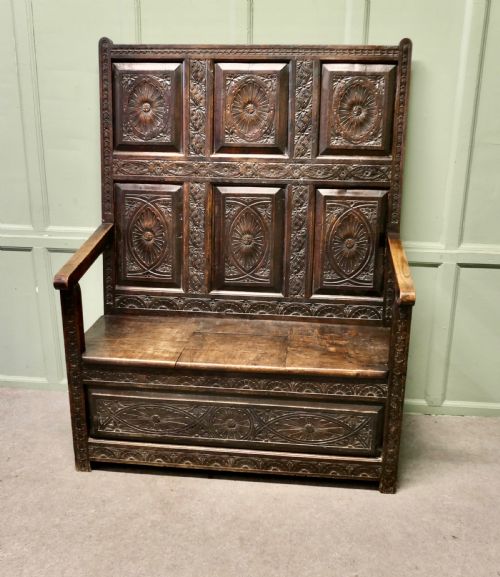
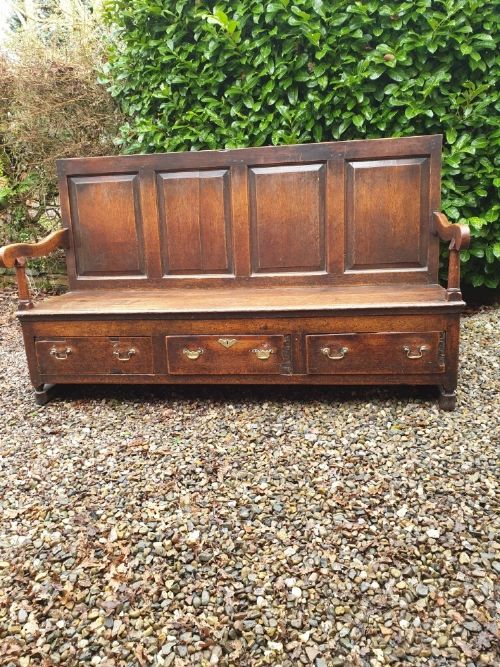
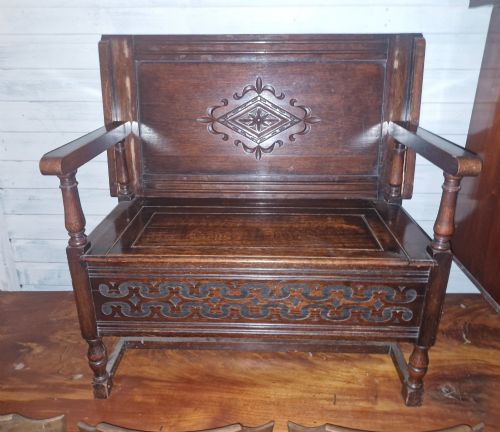
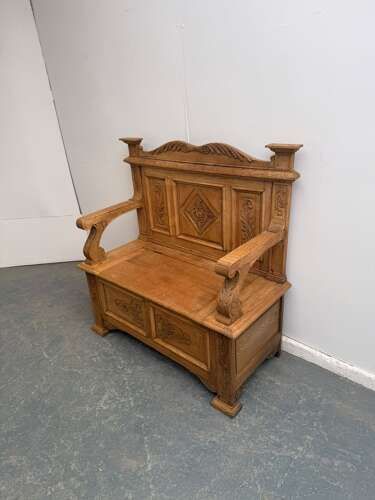
Oak Box Bench
When you search for an oak box bench, you seek a sturdy seating form with integrated storage that spans centuries of domestic utility.
Oak Box Bench
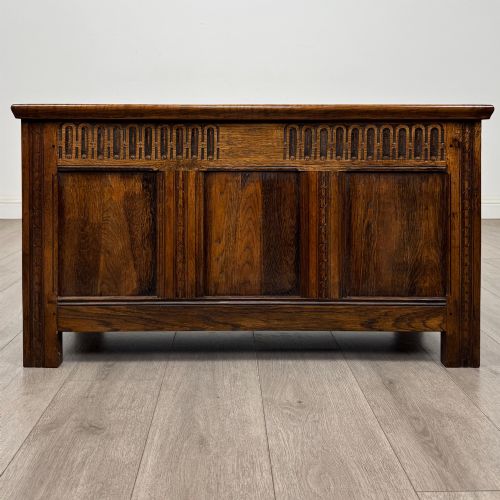
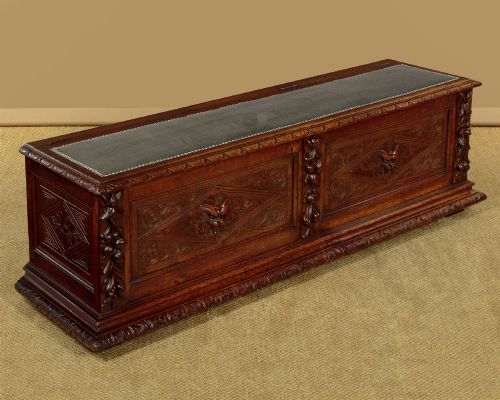
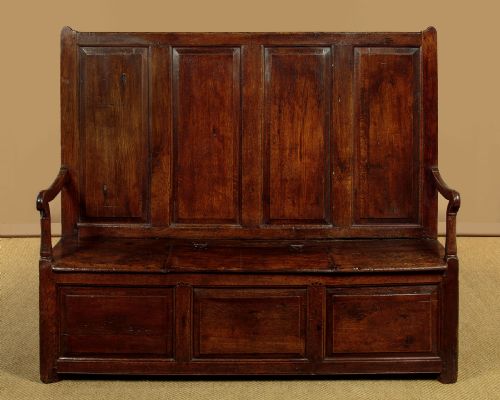
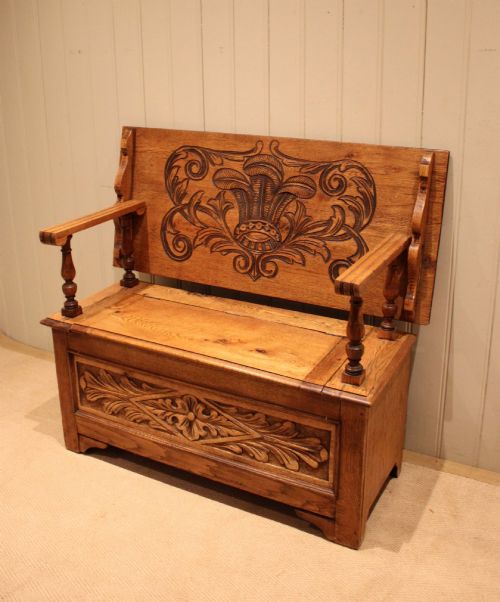
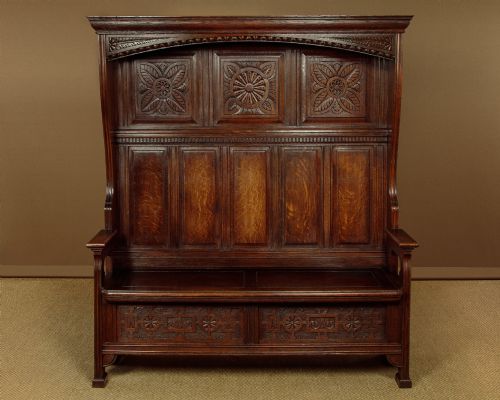
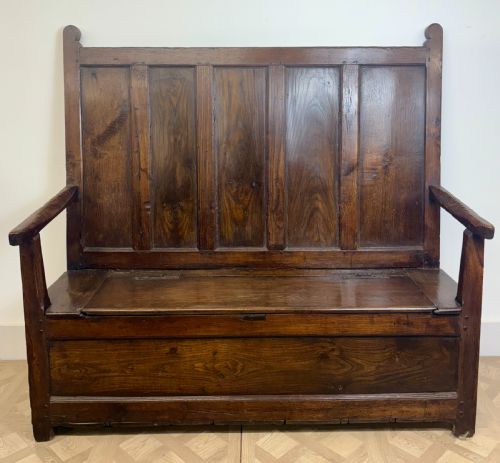
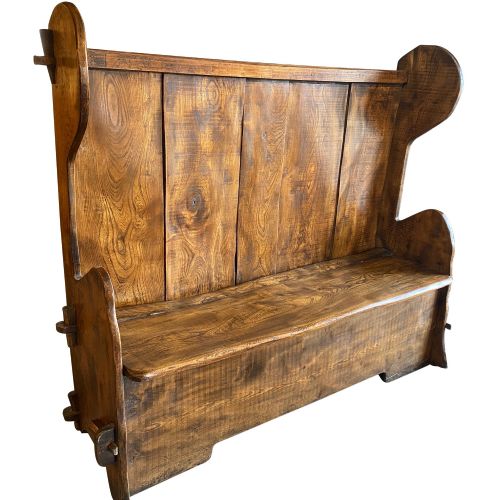
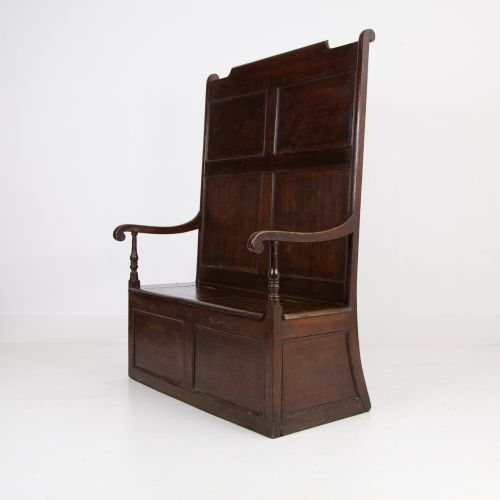
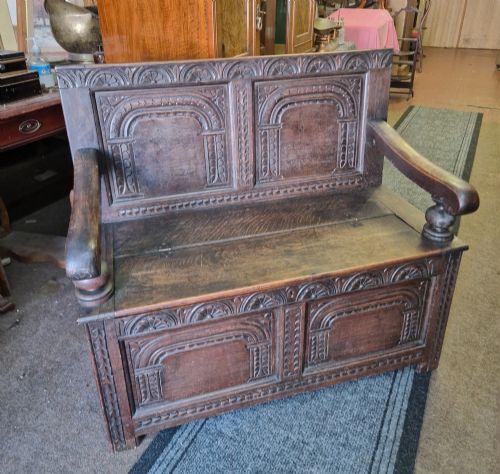
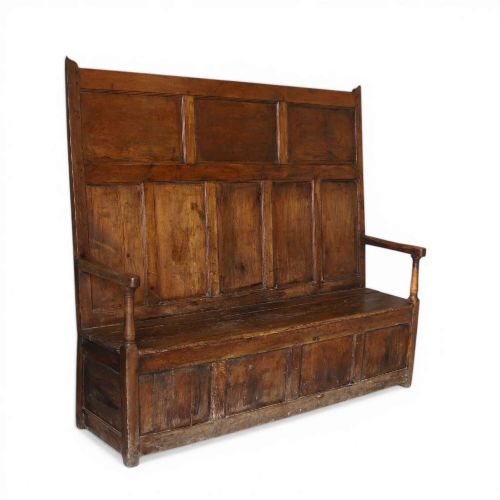
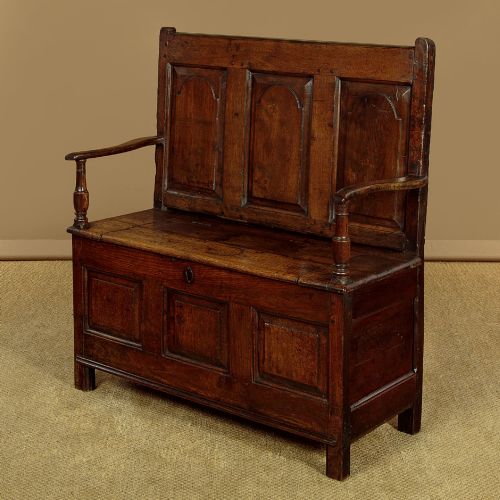
An oak box bench combines a seat with an enclosed compartment beneath, functioning historically as a secure storage chest and a place to sit by the hearth. This category encompasses settle benches, high-back hall settles, monks benches with folding tops, and blanket boxes adapted for seating.
The pieces listed here originate from diverse periods ranging from the seventeenth century through the Victorian era and into the early twentieth century. Vernacular country pieces and revival styles appear frequently, reflecting both early utilitarian origins and later stylistic revivals.
Many examples serve primarily as hall furniture or kitchen seating, utilising hinged lids, panel-backs, and armrests. The form adapts across centuries, moving from heavy jointed construction in earlier periods to lighter carved designs in Edwardian and later workshops.
Materials and Construction
Solid oak serves as the primary material, frequently supplemented by secondary timbers such as ash, elm, and walnut in panel construction and internal framing. Joinery relies on traditional methods including mortise and tenon joints, pegged frames, and panel-in-groove assembly.
Surface finishing involves natural waxing, historical stripping, or carved surface decoration including linenfold, geometric panels, and figurative motifs like the Green Man. Iron and brass hardware, such as hinges and strapwork, secure the lifting seats and lids on these storage forms.
Some nineteenth-century oak box benches hide carved Green Man faces grinning from the back panels to ward off bad spirits.
Factors Determining Quality
Construction integrity distinguishes pieces, specifically the tightness of the joints, the thickness of the solid timber planks, and the original state of the box base. Pieces retaining their structural timbers without extensive modern timber replacement hold greater integrity.
The depth and execution of hand carving vary significantly, separating workshop output from mass-produced revival pieces. Furthermore, the retention of original brass or iron hardware and unaltered hinges influences the overall character of the furniture.
The Oak Box Bench Glossary
- Settle
- A wooden bench with a high back, solid arms, and a closed base used to block draughts in older homes. This form provides both seating and enclosed storage.
- Monks Bench
- A multifunctional furniture piece featuring a hinged top that folds forward to convert the seat back into a table. These commonly appear in later revival styles.
- Coffer
- A large wooden chest used for storing valuables or textiles, which often forms the base structure for box benches and hall seats. Early examples utilise heavy six-plank construction.
- Panel-back
- A backrest constructed from wooden panels fitted into grooved framing uprights and rails. This method accommodates seasonal wood movement.
- Vernacular
- Furniture made by regional craftsmen following local traditions rather than strict academic design patterns. These pieces utilise readily available timbers like oak, elm, and ash.
Oak Box Bench: Frequently Asked Questions
What is an oak box bench used for?
These pieces function primarily as dual-purpose furniture providing a seat alongside concealed storage for blankets, boots, or household goods. Historically placed in halls or kitchens, they kept items secure and off damp floors.
Today, they serve similar organizational roles in modern hallways and living spaces while displaying traditional woodworking and period character.
How do I date an oak box bench?
Dating relies on examining construction methods, tool marks, timber shrinkage, and stylistic indicators such as panel-backs or carved motifs. Seventeenth-century pieces typically show heavy hand-pegged joinery and simpler plank construction, whereas Victorian and Edwardian examples often feature machine-sawn timber and revival carving.
Hardware styles also provide clues, as handmade iron strap hinges differ significantly from later mass-produced brass fittings.
Where were box benches placed in old houses?
Box benches stood commonly in drafty entrance halls, farmhouse kitchens, and great halls where they functioned as seating near the fire. Their high backs and solid wooden sides deflected cold air currents.
The enclosed box kept domestic textiles and daily essentials protected from dust and dampness.