
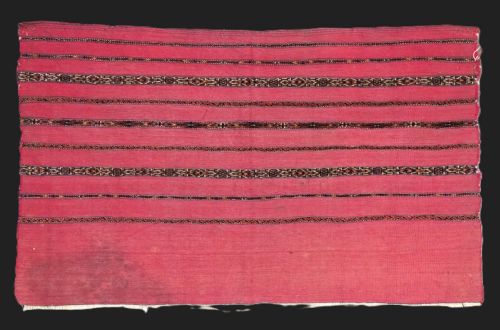


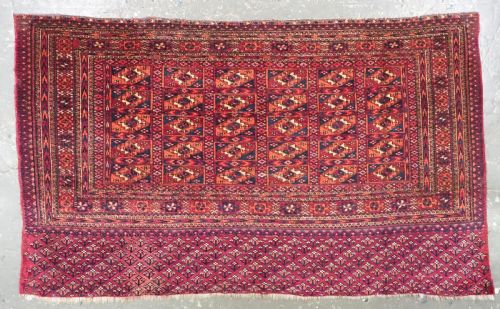


Nineteenth Century Turkmen Rug
A nineteenth century turkmen rug is a woven tribal textile prized for deep madder tones and precise geometric gul motifs.
Nineteenth Century Turkmen Rug
A nineteenth century turkmen rug encompasses various forms such as main carpets, tent bands, prayer rugs, and functional storage bags like chuvals and torbas. These textiles originate from nomadic and tribal groups across Central Asia, including the Tekke, Yomut, Ersari, and Saryk tribes.
The pieces met most frequently on this page date from the middle to the late nineteenth century, spanning decades of traditional weaving practice. Buyers encounter complete rugs alongside bag faces and fragments that preserve the intricate primary and secondary ornamentations characteristic of the region.
Each weaving reflects specific tribal iconography, utilised for domestic furnishings and portable architecture within nomadic encampments. The distinct formats range from square wall hangings and wedding rugs to large floor carpets designed for communal living spaces.
How They Were Made
The foundational structure relies on wool for pile and warp foundations, supplemented by cotton and silk accents found in specific highlights and detailing. Weavers employed natural dyes to achieve rich crimson, madder, and deep brown palettes that mellow gracefully over decades of use.
Intricate knotting techniques create dense pile surfaces, paired with plain weave backs and sturdy selvedges designed to withstand practical demands. Artisans incorporated supplementary materials like white cotton and crimson silk to define complex geometric patterns and border arrangements.
Current listings feature pieces spanning from eighteen fifty to nineteen hundred, constructed predominantly from wool with natural dyes and occasional cotton or silk highlights.
What Varies in Quality
The refinement of the drawing and the crispness of the gul geometry separate standard examples from superior ones. Finer weaves allow for sharper definition within intricate secondary motifs and borders, displaying exceptional control over the loom.
The depth and saturation of the natural dyes significantly influence overall visual impact, alongside the physical condition of the pile and the presence of original backs. Examples retaining wide borders and complete structural edges command greater appreciation among collectors.
The Nineteenth Century Turkmen Rug Glossary
- Gul
- A primary medallion motif repeated across tribal rugs, often specific to particular clans or geographic lineages.
- Chuval
- A large tent bag utilised by nomads for household storage, frequently encountered today as a flat panel or complete face.
- Torba
- A smaller storage bag format produced by tribal weavers, typically wider than it is tall and finished with hanging loops.
- Ensi
- A tribal door hanging featuring a characteristic cross-panel design, traditionally placed at the entrance of a yurt.
- Madder
- A natural red dye derived from the root of the Rubia plant, forming the dominant chromatic foundation of these textiles.
Nineteenth Century Turkmen Rug: Frequently Asked Questions
What is a nineteenth century turkmen rug?
A nineteenth century turkmen rug is a hand-knotted tribal textile produced by nomadic groups in Central Asia, characterised by repeat gul medallions and deep red wool piles.
These pieces served functional roles within nomadic encampments as floor coverings, tent furnishings, and storage containers before entering the decorative arts market.
How were these rugs used originally?
Nomadic families utilised these textiles for daily domestic life, covering earthen floors inside yurts and storing household possessions within woven bags.
Special formats like wedding rugs and door hangings also played significant roles in tribal ceremonies and structural architecture.
How do you identify different tribal groups?
Tribal identification relies on the specific structure of the primary guls, secondary motifs, border arrangements, and the predominant shades of red utilised in the pile.
For instance, Tekke pieces often feature stacked octagonal guls, whilst Yomut designs display distinctive hooked motifs and different colour balances.
How should I care for a tribal rug?
Preserving these textiles involves gentle vacuuming without rotating beater bars and keeping them away from direct, prolonged sunlight to protect natural dyes.
Professional cleaning tailored to antique wool textiles ensures the structural integrity of the foundation remains undisturbed.