

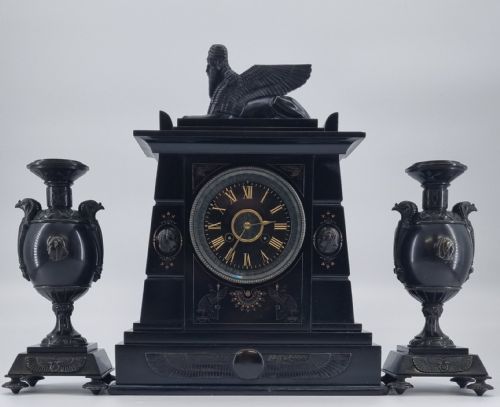
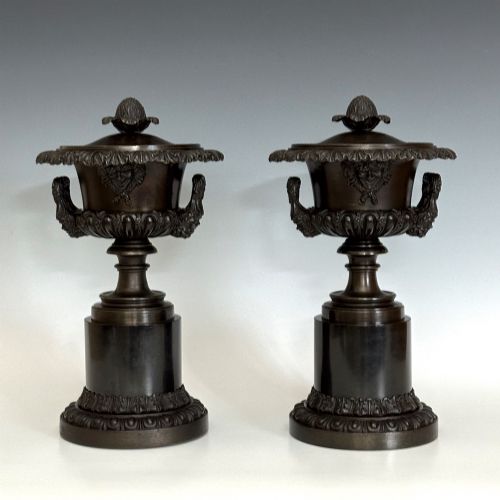

Nineteenth Century French Urns
Nineteenth century french urns combine porcelain, bronze and marble into decorative objects that anchor a room.

Nineteenth Century French Urns
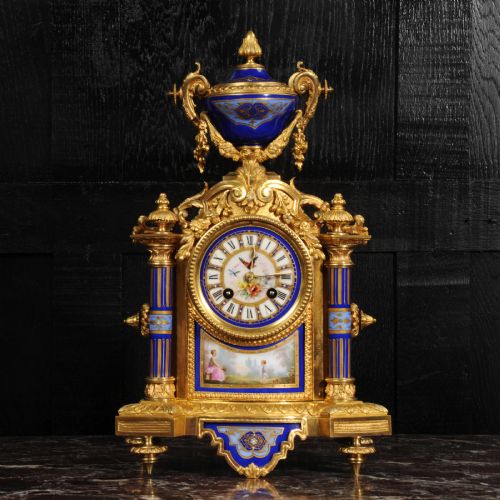
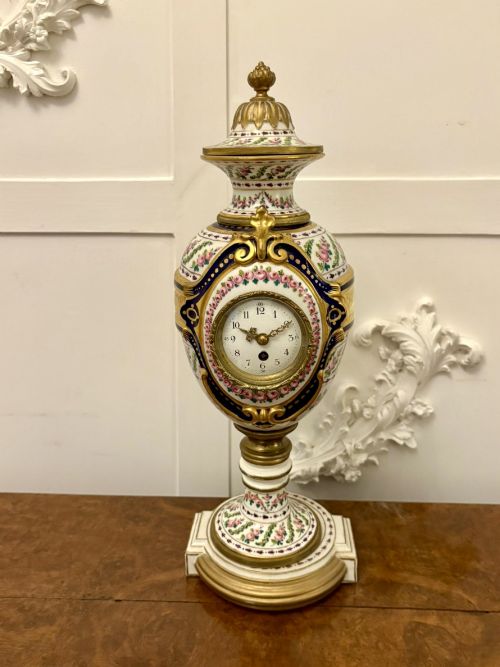
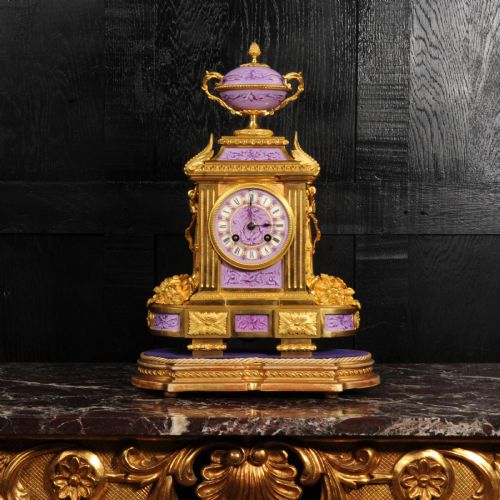
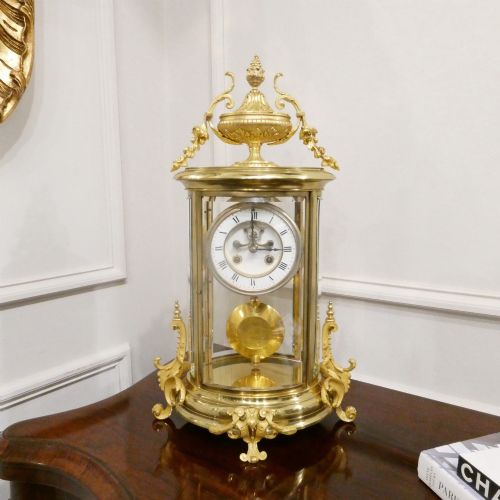
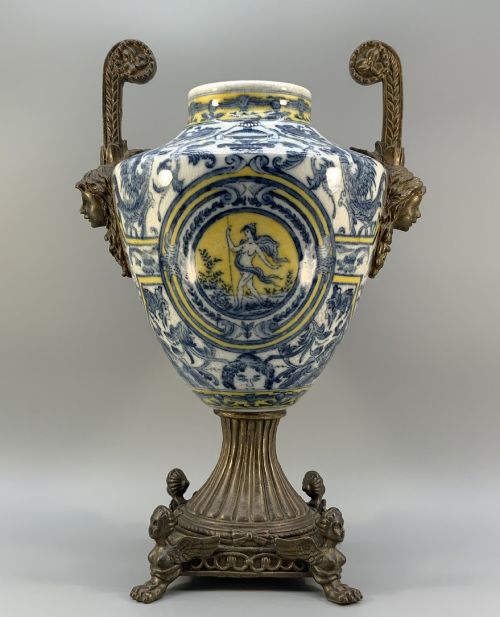
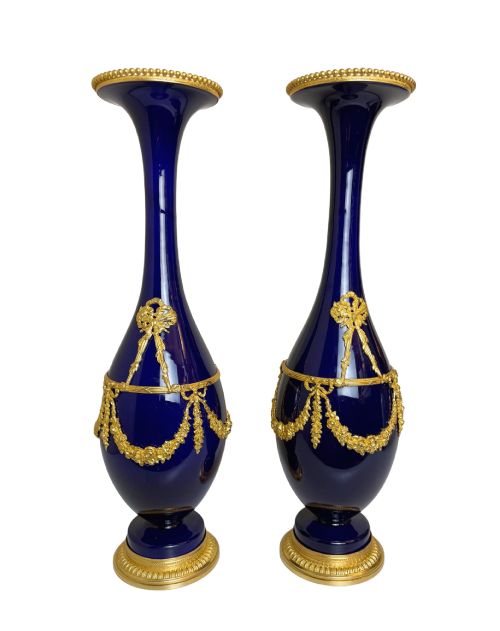
Nineteenth century french urns appear on this page as porcelain vessels, mantle clocks, and clock garnitures spanning the 1850s to the close of the century. Makers shaped these objects in styles that include French Empire, Louis XVI Revival, and Renaissance Revival.
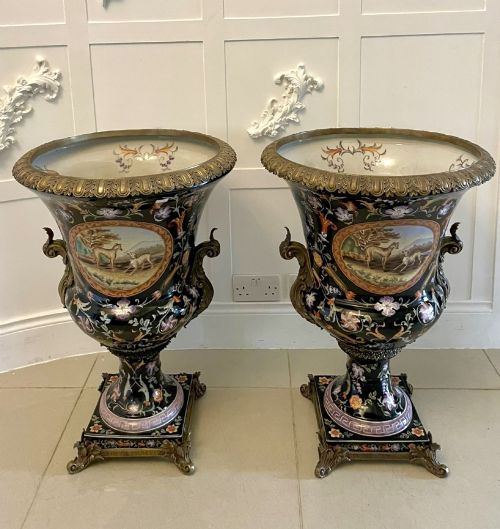
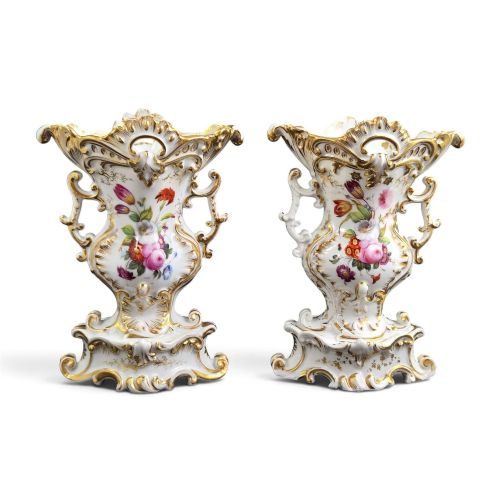
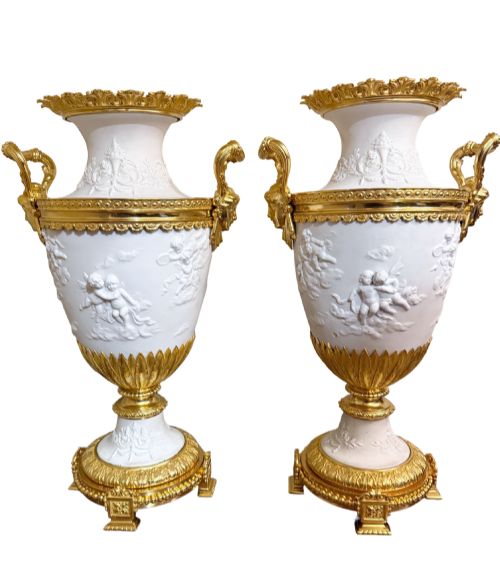
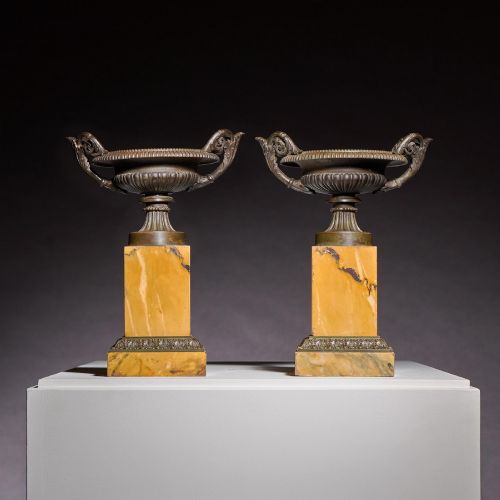
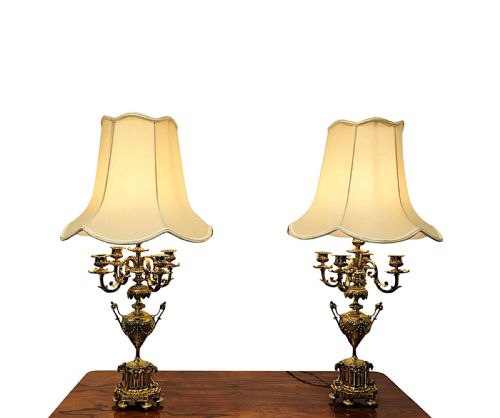
Pairs of decorative vases and lidded vessels dominate the selection, often accompanied by matching candelabra or mounted on siena marble bases. Buyers encounter both cabinet pieces and larger centrepiece urns originating from Parisian workshops and provincial potteries.
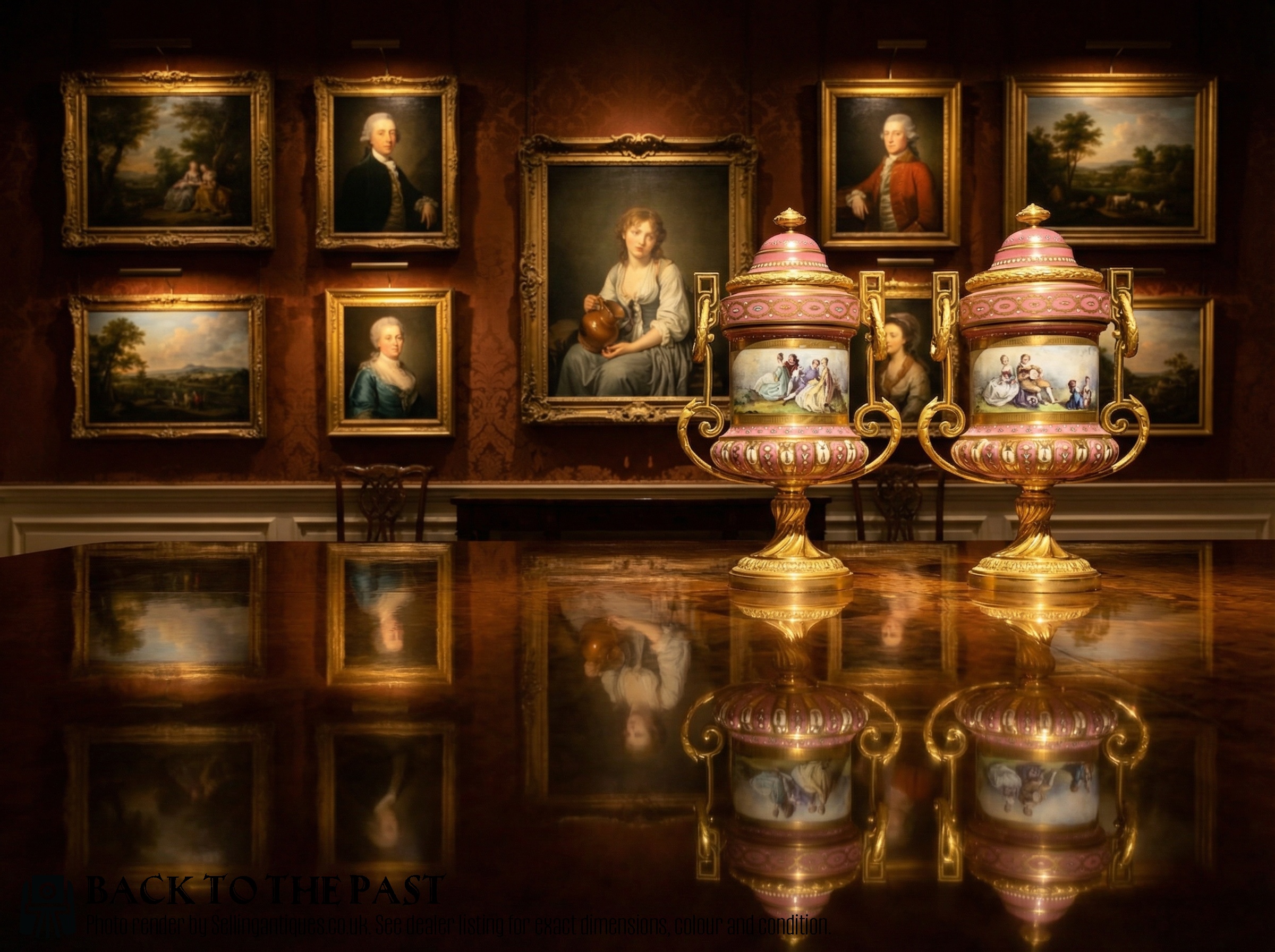
Materials and Technique
Foundries cast bronze and brass into intricate mounts, handles, and plinths, finishing many surfaces with fire-gilded ormolu or silvering. Artisans shaped other mounts from spelter, patinating the metal to resemble darker bronze.
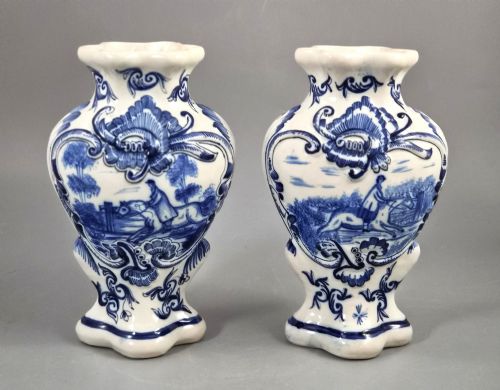
Potters threw and cast bodies in porcelain, earthenware, and faience, frequently applying hand-painted polychrome scenes, enamel details, and blue and white glazes. Stonemasons carved supporting bases from block marble, onyx, and Siena marble.
Distinctions in Execution
The refinement of the cast metal mounts separates standard production from exhibition pieces, where chasers sharpened foliage and figures by hand after casting. Crisp definition in ormolu and deep, clean chisel work indicate superior studio output.
Painted ceramic surfaces show variation through the brushwork of the porcelain artist, with finely detailed hand-painted panels commanding greater attention than printed or transfer-applied decoration. The structural integrity of the ceramic body and the precision of the bronze fit establish the grade of the object.
Japy Freres·Achille Brocot·Jacob Petit·Samuel Marti·Fourmaintraux Courquin·Samson of Paris
The Nineteenth Century French Urns Glossary
- Ormolu
- Gilt bronze produced by applying a mercury and gold amalgam to a bronze object and heating it until the mercury vaporised. This technique created a durable, rich golden surface characteristic of fine nineteenth century metalwork.
- Garniture
- A set of three or more matching decorative objects, typically comprising a central clock flanked by two matching urns, vases, or candelabra. Such sets formed symmetrical centrepieces for mantlepieces.
- Cassolette
- A decorative vessel shaped as an urn or vase with a reversible lid that transforms the piece from a solid container into a perfume burner. The design reflects classical revival tastes popular across the period.
- Campana
- A bell-shaped classical urn profile featuring a flaring rim and a tapering body, often set upon a square plinth base. Foundries produced these in bronze, spelter, and cast iron.
Nineteenth Century French Urns: Frequently Asked Questions
How were nineteenth century French urns used?
These urns served primarily as decorative ornaments displayed on mantelpieces, consoles, and tables in formal rooms. Some functioned as burners for perfumes or oils, while others were paired with clocks as part of larger decorative sets.
Many pieces were designed during the Grand Tour period as souvenirs for travellers returning from continental Europe. Their presence signalled cultural refinement and an appreciation for classical antiquity.
How do I live with these urns?
Place these urns on stable, level surfaces away from direct sunlight and strong heat sources to protect delicate porcelain glazes and painted surfaces. Heavy marble and bronze pieces require sturdy furniture capable of supporting considerable weight.
Dust metal mounts and ceramic bodies gently with a soft, dry cloth without applying chemical cleaning agents. Allowing patinas to age naturally preserves the character of the bronze and ormolu.
How do I tell periods apart?
Distinguishing periods involves examining the specific decorative vocabulary and manufacturing techniques employed across different decades. Empire and Charles X pieces favour strict classical proportions and military motifs, while later Napoleon III and Victorian examples introduce eclectic revivals and ornate rococo curves.
Maker marks, dial signatures, and the evolution of cast bronze and porcelain styles help narrow down the decade of production. Finer details like hand-chased ormolu typically point toward the middle decades of the century.